From Shared Space to Productive Activities: UMI Lecturers Strengthen the Capacity of the Ko'mara Village Community
TAKALAR – Indonesian Muslim University (UMI) continues to strengthen the role of universities in community empowerment through the 2026 Internal Community Service (PkM) program. This time, the UMI lecturer team carried out socialization of the community empowerment program in Ko'mara Village, East Polongbangkeng District, Takalar Regency.
Carrying a theme"Community Empowerment in Optimizing Productive Space Utilization to Strengthen the Local Economy of Ko'mara Village", this activity aims to encourage people to utilize the space and facilities available in the village environment so that they are more optimal, functional and have productive value for local economic development.
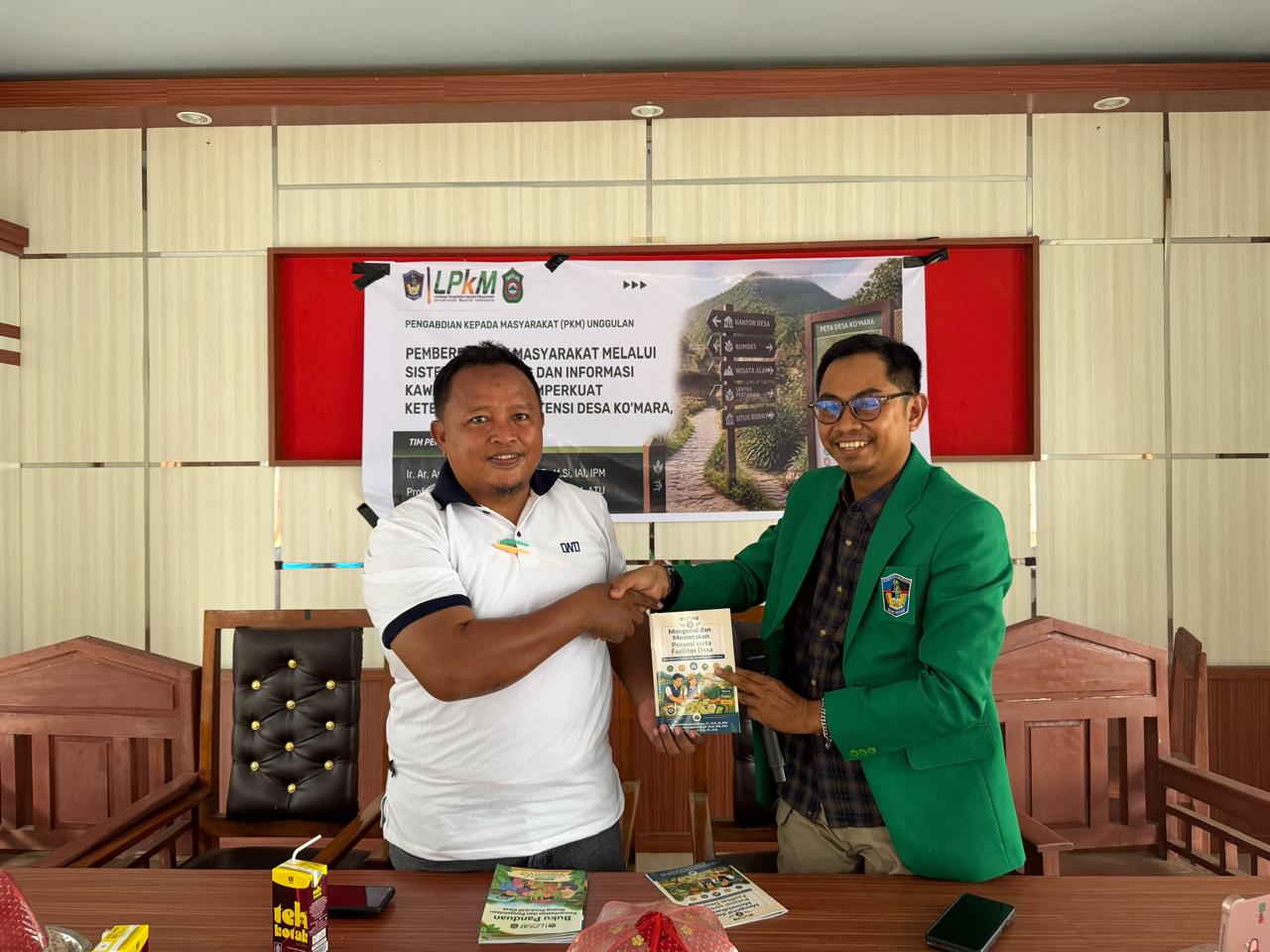
This activity was attended by the Head of East Polongbangkeng Subdistrict, the Head of Ko'mara Village, hamlet heads throughout Ko'mara Village, and the local community. The presence of government and community elements is the first step in building synergy and strengthening collaboration to support the implementation of sustainable empowerment programs.
In their remarks, the Head of East Polongbangkeng Subdistrict and the Head of Ko'mara Village welcomed the presence of the UMI lecturer team. Both of them hope that the service program will not stop at socialization activities, but can be continued through mentoring so that it provides real benefits for the village community.
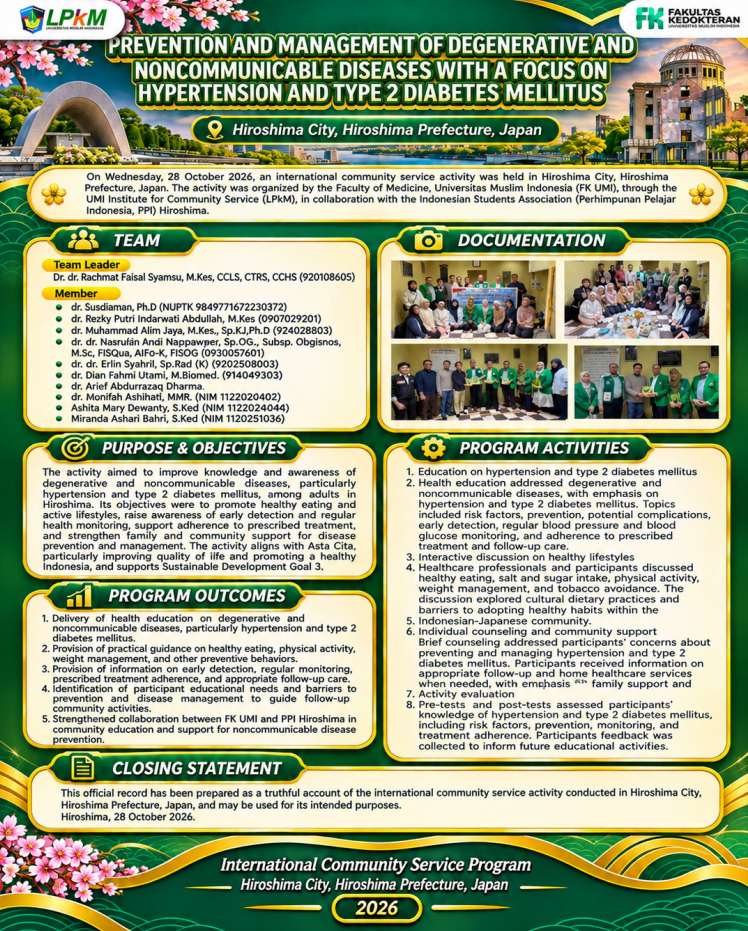
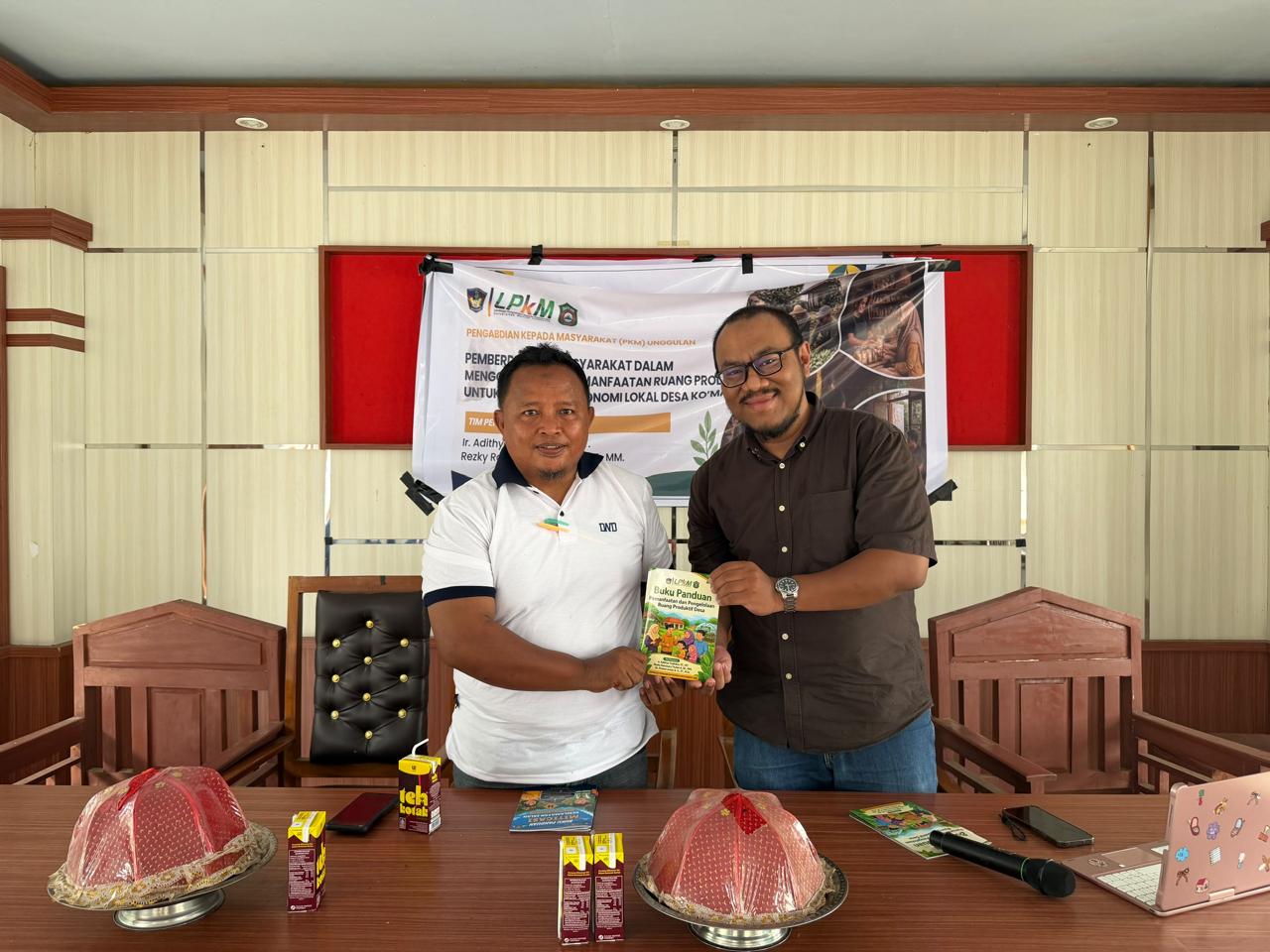
The series of activities were filled with program outreach, presentation of the Guidebook for the Use and Management of Productive Village Spaces, discussions, and introduction to community empowerment material. The material presented includes identifying residents' activities and needs, mapping space potential, utilizing available facilities, and principles of managing shared spaces.
One of the important points emphasized in this activity is that the development of productive space does not always have to start with the construction of new buildings or facilities. Communities can start by optimizing the available space by adjusting functions, user needs and types of activities to be carried out.
With proper management, shared spaces can be developed into places for economic, educational, training, social activities and various other productive activities that support the lives of village communities.
As part of the program, the UMI team also introduced a guidebook which was prepared as a practical reference for the community and village government. The guide contains the stages of identifying potential community activities, space mapping, structuring planning, meeting simple infrastructure needs, dividing roles and responsibilities, and preparing standard operating procedures (SOP) for the use and maintenance of space.
A participatory approach is the main basis for this program. The community is not only positioned as beneficiaries, but is also actively involved in identifying needs, conveying ideas, and determining forms of space use that are appropriate to the potential and conditions of the village.
Apart from that, aspects of accessibility, safety, availability of facilities and maintenance capabilities are also taken into consideration in planning the use of productive space. The involvement of various community groups, including women, youth and elements of village government, is expected to create inclusive and sustainable space management.
Through this activity, the people of Ko'mara Village got an initial idea of the importance of managing shared space as a resource that can support productive activities. The next stage is directed at an inventory of available space, a more in-depth introduction to residents' needs, and discussion of alternative uses that can be developed together.
Through the 2026 Internal PkM program, UMI hopes to build sustainable collaboration between universities, village government and the community. It is hoped that optimizing productive space will not only improve the function of village facilities, but also open up opportunities for the growth of various economic and social activities that can strengthen the independence and welfare of the Ko'mara Village community.