UMI Lecturers Equip Vocational School Students with Financial Literacy and Smart Money Management in the Cashless Society Era
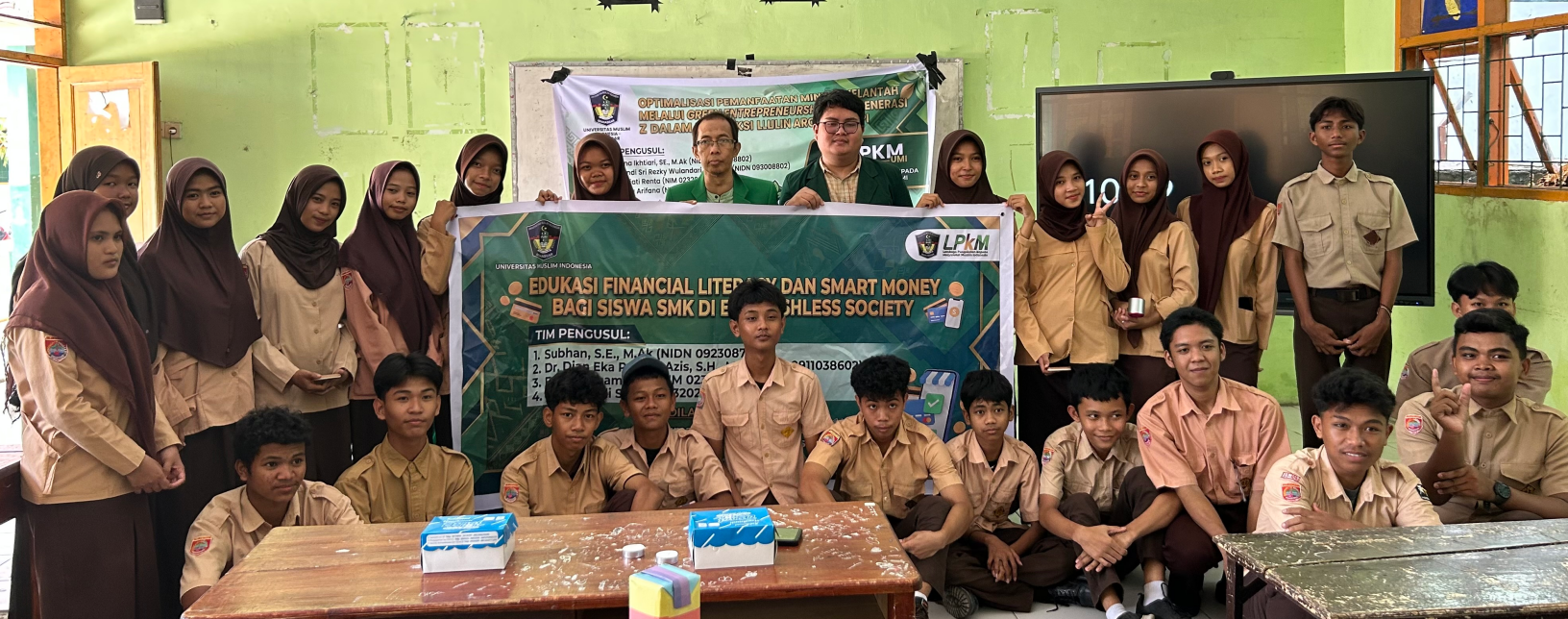
MAKASSAR– Indonesian Muslim University (UMI) through the Community Service Institute (LPkM UMI) carries out Community Service activities with the theme"Financial Literacy and Smart Money Management Education for Vocational School Students in the Cashless Society Era"at SMKS YPLP PGRI 1 Makassar.
This activity aims to increase students' understanding and awareness of the importance of financial literacy and the ability to manage finances wisely amidst the rapid development of digital technology and the increasing use of non-cash transactions (cashless society).
The service team is chaired bySubhan, S.E., M.Ak., with faculty membersDr. Dian Eka Pusvita Azis, S.H., M.H., and involving two students, namely Fadel Muhammad and Fandi Sandi S. This collaboration between lecturers and students is a form of UMI's contribution in providing financial education that is relevant to the needs of the younger generation.
In its implementation, students gain an understanding of basic conceptsfinancial literacyor financial literacy, namely the ability to understand, manage and make financial decisions appropriately and responsibly. The material provided includes how to distinguish between needs and wants, preparing a personal financial budget, managing pocket money, building savings habits, and the importance of financial planning from an early age.
Apart from financial literacy, participants are also introduced to conceptssmart money management, namely the skill of managing finances intelligently, planned and responsibly. This discussion becomes important along with the development of digital transaction services, such as electronic wallets (e-wallet), mobile banking, QRIS, and various other non-cash payment methods that are increasingly close to the lives of the younger generation.
The service team emphasized that ease of digital transactions must be accompanied by the ability to control expenses. Without good management, the use of non-cash payments has the potential to encourage consumer behavior, impulsive purchases, and a lack of awareness of the amount of money that has been spent.
The security aspect of digital transactions is also an important part of this education. Students are given an understanding of the importance of maintaining the confidentiality of PINs and passwords, not sharing OTP codes with other parties, and increasing awareness of various modes of digital financial fraud. Thus, participants are expected to be able to utilize financial technology safely and responsibly.
Service team leader,Subhan, S.E., M.Ak., said that financial literacy is an important skill that needs to be instilled from school. It is not enough for the younger generation to just understand how to use digital payment technology, but they must also have the ability to manage finances, determine priority needs and make wise financial decisions.
Through this activity, students are expected to be able to apply healthy financial habits in their daily lives, such as planning expenses, setting aside money for savings, and using digital financial services according to their needs and abilities.
This activity is also a form of implementation of the Tri Dharma of Higher Education, especially in the field of community service. Through LPkM UMI, Indonesian Muslim University continues to strive to present educational programs that provide real benefits to society, including increasing financial knowledge and skills among students.
Through educational programsfinancial literacyAndsmart money managementIn this regard, UMI hopes to form a young generation that is financially intelligent, independent, disciplined, and able to adapt to developments in financial technology. With adequate literacy provisions, vocational school students are expected to not only become users of digital financial services, but also be able to manage their finances wisely and prepare for a better economic future.