UMI Lecturers Encourage the Development of Farmers' Resting Houses Based on Local Materials in Paddinging Village
TAKALAR –Efforts to improve the comfort and welfare of farmers continue to be encouraged through the development of appropriate and sustainable agricultural facilities. One of them is realized through Community Service (PkM) activities at the Indonesian Muslim University (UMI) by initiating the design of a farmer's resting shelter based on the use of local materials in Paddinging Village.
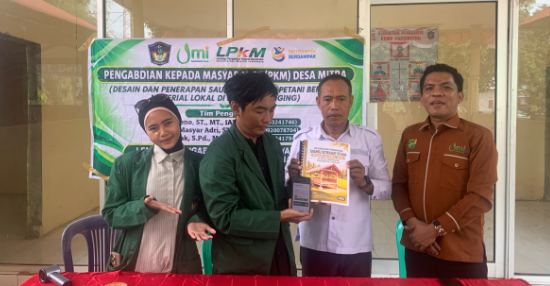
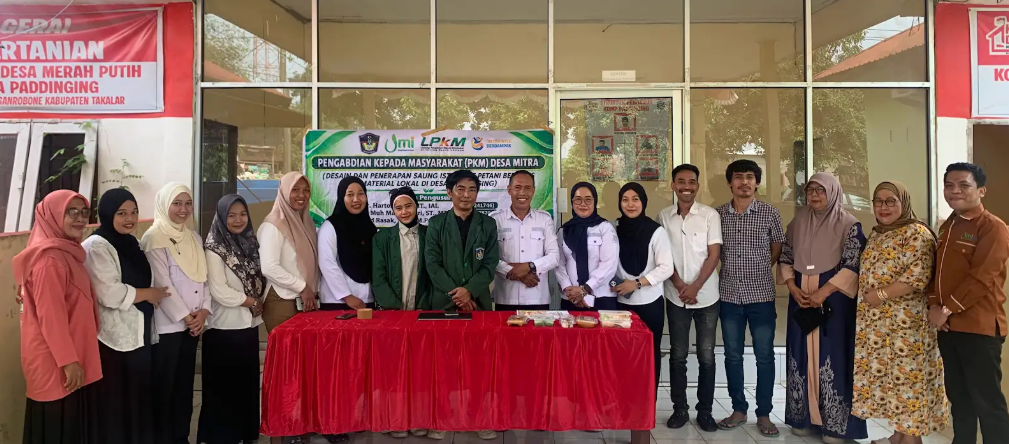
These activities are carried out throughFocus Group Discussion(FGD) with the theme "Design and Implementation of Farmers' Resting Saung Based on Local Materials in Paddinging Village" on Wednesday, November 18 2026, at the Paddinging Village Office Hall.
The PkM team was accompanied by a UMI lecturer in the field of Infrastructure and Architectural Planning, Ar. Hartono, S.T., M.T., IAI, together with team member Ir. Muh. Masyar Adri, S.T., M.T., and Abd. Rasak, S.Pd., M.Pd.
This FGD was attended by village government officials, hamlet heads and community representatives. Also present represented the Head of Paddinging Village, Muhammad Arifin, as Village Secretary.
This activity aims to help the Paddinging Village community improve the quality of farmers' rest facilities in agricultural areas. Through this discussion forum, the PkM team together with the village government and community explored the needs of farmers, identified the condition of available facilities, and formulated a hut design that was safe, comfortable, functional, and utilized local materials.
Generate Saung Designs Based on Local Potential
Through discussions and input from village officials, hamlet heads and the community, the PkM team succeeded in formulating a design for farmers' resting huts based on local materials. The results of the design are then outlined in the form of a guidebook which can become a technical reference for the community and village government in building or renovating farmer hut facilities.
The manual contains hut designs taking into account various aspects, starting from farmers' needs, user comfort, structural safety, air circulation, to protection from exposure to the sun's heat.
Apart from that, the use of materials available in the village environment is one of the main considerations in design. It is hoped that the use of local materials can reduce construction costs, simplify the maintenance process, and create buildings that are in harmony with the character of the local environment.
Saung is Worthy of Supporting Farmers' Health and Productivity
In the FGD, it was revealed that a number of farmers' rest huts in Paddinging Village still did not meet the eligibility criteria. This condition causes farmers to lack a comfortable place to rest after carrying out activities on agricultural land.
Limited facilities for protection from the sun's heat also have the potential to increase the risk of health problems, especially when farmers are exposed to hot temperatures for a long time. This condition can trigger fatigue, dehydration, headaches and various other health problems.
Therefore, the existence of a proper resting hut is an important requirement to support the health, comfort, productivity and welfare of farmers.
Through a design that pays attention to aspects of function, safety and comfort, it is hoped that the hut will not only be a place to rest, but also support the community's agricultural activities more optimally.
Has the potential to become a tourist attraction and source of village economy
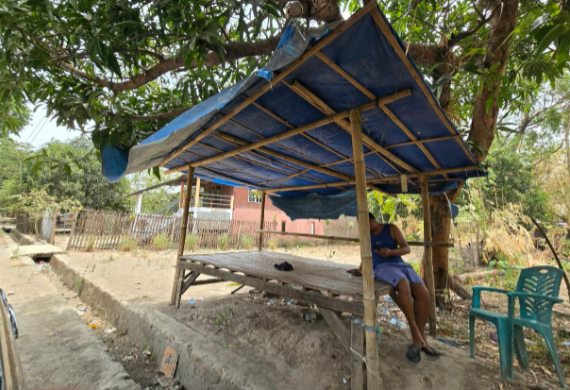
Apart from being a supporting facility for agricultural activities, the development of huts based on local materials also has the opportunity to be developed into a village tourist attraction.
A number of regions in Indonesia have utilized the saung concept as part of developing tourist destinations. Among them is Saung Angklung Udjo in Bandung which integrates a performance space, bamboo crafts and music education activities. Other examples are Saung Bambu Pelangi in Banyuasin and Saung Rindu Alam in the Malino and Gowa areas, South Sulawesi.
Similar development can also be seen in the Cikaso Tourism Village, Kuningan Regency, West Java, through the Sawah Lope area which features dozens of bamboo huts as tourism, recreation and agricultural education facilities. The Sambandete Tourism Village in Takalar Regency has also developed bamboo and rattan huts as part of the village's natural and cultural tourist attraction. Meanwhile, Saung Nila Tourism in Sungai Deras Village, West Kalimantan, is developing 16 saung units as a place for family relaxation and recreation.
The development of saung-based tourism has the potential to provide added economic value to villages through tourist fees, hut rentals, sales of agricultural products and local culinary delights, guide services, and agricultural education activities.
As an illustration, a study in Todo Village shows an increase in Village Original Income (PAD) from IDR 16.88 million in 2018 to IDR 51.94 million in 2021 in line with the increase in tourist visits. Meanwhile, a study in Luk Panenteng Village recorded an increase in PAD from IDR 75.69 million in 2018 to IDR 404.24 million in 2023, even though it experienced a decline during the pandemic.
In this way, farmers' resting huts can not only function as supporting facilities for agricultural activities, but also have the potential to become an economic asset and tourist attraction for Paddinging Village if they are developed and managed jointly by the village government, BUMDes, farmer groups and the community.
Encourage Sustainable Village Development
Through this PkM activity, the team hopes that the farmer's resting shelter design guidebook based on local materials can become a reference in building more appropriate, safe, comfortable and sustainable agricultural facilities in Paddinging Village.
Collaboration between UMI lecturers, students, village government, hamlet heads and the community is expected to be able to provide solutions according to farmers' needs while optimizing the potential of local resources.
In the future, the development of saung is not only expected to improve the comfort and health of farmers, but also opens up opportunities for the development of agricultural-based tourism which can provide economic benefits and support an increase in Village Original Income (PAD).
This activity is a form of UMI's contribution in presenting innovation based on community needs through the use of science, technology and local potential to support sustainable village development.