Integration of Vernacular Architectural Concepts and Sanitation Infrastructure in Healthy Homes Training for the Saotengnga Village Community, Central Sinjai District, Sinjai District
Sinjai, South Sulawesi – An interesting breakthrough is taking place in Saotengnga Village, Central Sinjai District. The Indonesian Muslim University (UMI) through the Community Service Institute (LPKM) presents a smart solution that proves that progress does not have to sacrifice tradition.
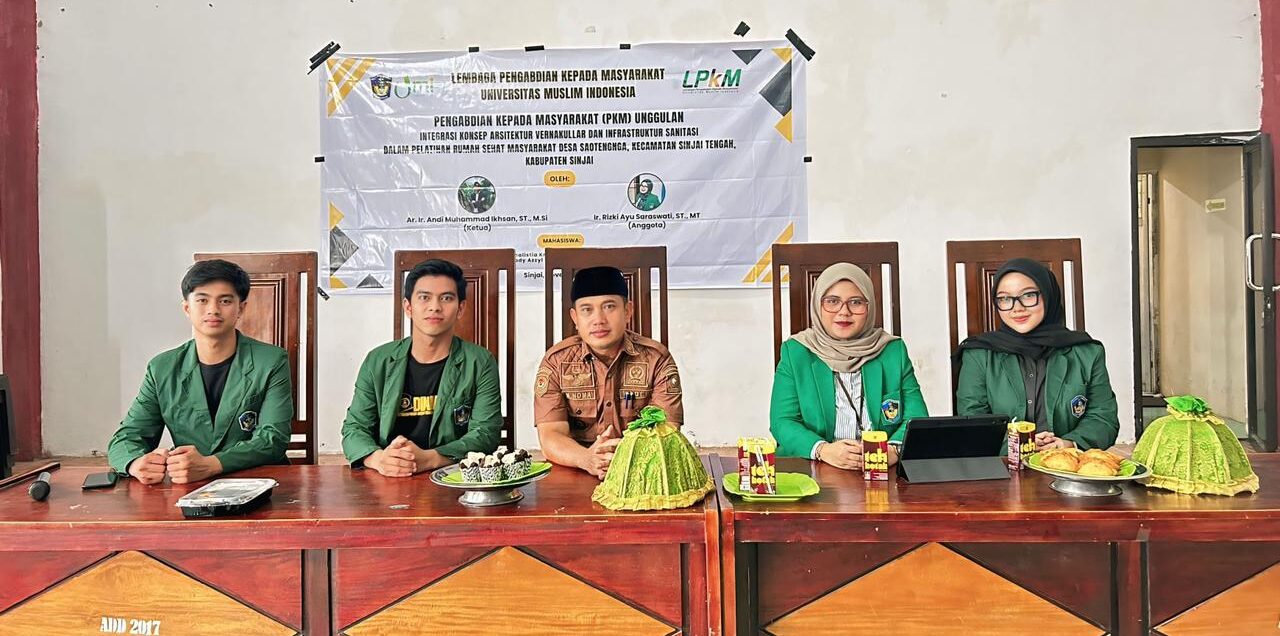
This initiative entitled "Integration of Vernacular Architectural Concepts and Sanitary Infrastructure" is an answer to the dilemma faced by many villages in South Sulawesi: how to maintain local wisdom while meeting adequate environmental health needs.
The service team led by Ar. Ir. Andi Muhammad Ikhsan, ST., M.Sc. from the Architecture Study Program and Ir. Rizki Ayu Saraswati, ST., M.T. from Civil Engineering, together with two UMI Faculty of Engineering students, brought a new perspective to the residents of Saotengnga. This program is part of LPKM UMI which prioritizes the application of academic research for real benefits.
The problems facing Saotengnga Village reflect development challenges in many rural areas. The typical Bugis-Makassar stilt house with its natural ventilation system is slowly being replaced by modern concrete construction. Meanwhile, basic infrastructure such as proper septic tanks, clean water sources and adequate drainage systems are still urgent needs for the majority of the population.
“We want to show that tradition and health are not mutually exclusiveeliminate. "Both can be harmonized with the right approach," said RizkiAyu Saraswati when opening the training session which was attended by residents, community leaders, andvillage officials.
The training session at the village hall was full of warmth and active participation. Residents don'treluctant to ask detailed questions about how to apply the conceptsdisplayed. The discussion flows from discussing the optimal building facing direction, selectiondurable local materials, to techniques for placing sanitation facilities that are effective and safe.The material presented highlights the advantages of traditional architecture. House on stilts,for example, it naturally already has sanitary advantages thanks to its high elevationlifting the building from the ground. The orientation of the building follows the wind directionable to create optimal air circulation. All this is ancestral knowledgerelevant today.
The team also shares a practical guide to building an environmentally friendly septic tank, as wellthe importance of designing a communal drainage system to prevent potential waterloggingbecome a source of disease.
"Our ancestors understood building science very well. Houses on stiltsnot just a matter of cultural heritage, but an intelligent response to wet tropical climate conditionsWe. All that is needed is to enhance it with a suitable sanitation system"today's health standards," explained Rizki Ayu Saraswati.
The Head of Saotengnga Village, Mappima Noma, S.Pd highly appreciates this program andhopes that collaboration with UMI can continue to realize the regionhealthy settlements that do not lose their cultural character.
This initiative is more than just outreach. He represents UMI's dedication in providing solutionsapplicable to real problems in society. This program also supports achievementIKU 2 and IKU 5, by involving students in socially meaningful activities, all at oncetransforming the results of academic research into concrete benefits for the public.