The Ko'mara Village Community was Introduced to the Regional Information System and Directions through the UMI PkM Program
Takalar, 13 November 2026 — Indonesian Muslim University (UMI) through Internal Community Service (PkM) 2026 activities is implementing an empowerment program
community in Ko'mara Village, East Polongbangkeng District, Takalar Regency, on Friday, November 13 2026. This activity has the theme "Community empowerment
After the presentation of the material, the activity continued with a discussion with the participants. The discussion became a space to introduce an empowerment approach that places the community as an important part in recognizing information needs, understanding regional conditions, and determining information that is relevant for everyday life.
One of the principles emphasized in the guidebook is that "Regional information maps help us show potential locations, facilities, routes and important village points so that they are easy to understand and use together." This principle is an important basis for building information systems that not only provide locations, but also help people understand
connectedness between places in the village environment.
It is hoped that this PkM program will be the first step to strengthen the capacity of the Ko'mara Village community in managing regional information in a more structured, accurate and easily accessible manner. Sustainability of the program also requires collaboration between universities, local government and the community so that the knowledge gained can be applied and developed according to village needs.
community in Ko'mara Village, East Polongbangkeng District, Takalar Regency, on Friday, November 13 2026. This activity has the theme "Community empowerment
through the Wayfinding and Regional Information System to Strengthen the Connectivity Potential of Ko'mara Village, Takalar Regency.”
This program is implemented by a service team consisting of:Ir. Ar. Andi Muhammad Ikhsan, ST., M.Sc., IAI, IPMAndProf. Ir. Lambang Basri Said, MT., Ph.D., IPM, ATU.The activity was attended by 25 participants consisting of elements of the sub-district government, village government, hamlet heads, and the Ko'mara Village community.
The activity was also attended by the Head of East Polongbangkeng District, Muhammad Arif, S.E., M.A.P., and the Head of Ko'mara Village, Ruslam Adi Putra, ST., Dg. Taba. The presence of the sub-district government and village government is an important part of supporting program implementation
empowerment of the community. Both of them welcomed the arrival of the service team and expressed the hope that the activities could continue and provide benefits to the people of Ko'mara Village.
empowerment of the community. Both of them welcomed the arrival of the service team and expressed the hope that the activities could continue and provide benefits to the people of Ko'mara Village.
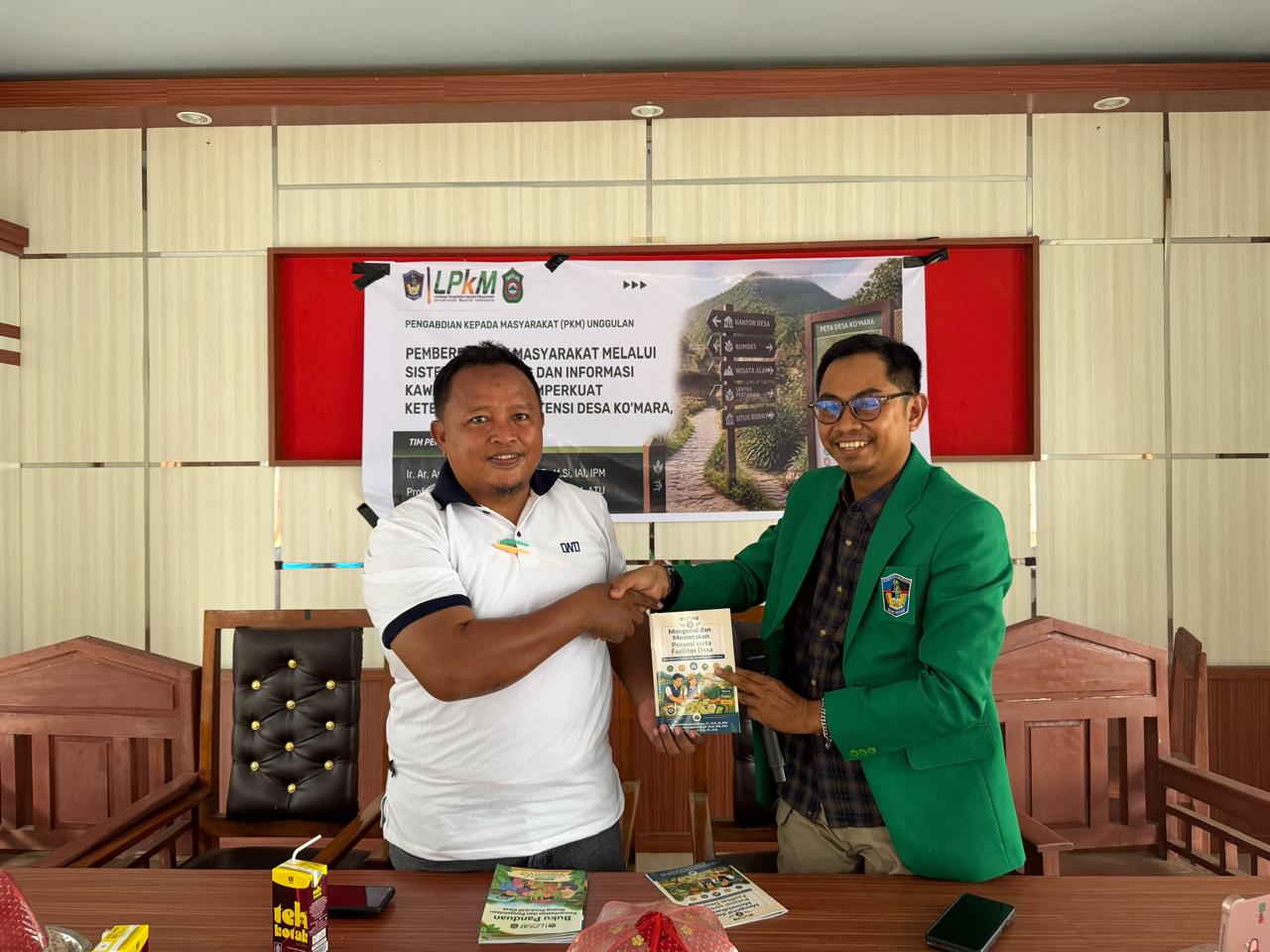
The activity began with program outreach, followed by a presentation of the material and an introduction to the field guide book entitledRecognizing and Mapping Village Potential and Facilities. The guidebook was prepared as a practical guide for the community to recognize village potential and facilities, carry out information inventory, understand relationships between locations, and design regional information systems and directions.
In their presentation, the team introduced four main points of material. First,mapping village potential and facilities, namely recognizing various important points, recording the names and functions of facilities, and collecting reliable information. Second,connectivity, accessibility and route systems, which discusses connections between points, path conditions, ease of achievement, and user safety considerations.
Third, wayfinding and signage systems, namely understanding orientation maps, directions, location information, as well as sign design principles that are easy to read and understand. Fourth, digital information management and QR Codes as a means of supporting the delivery of regional information that can be updated and managed responsibly.
Third, wayfinding and signage systems, namely understanding orientation maps, directions, location information, as well as sign design principles that are easy to read and understand. Fourth, digital information management and QR Codes as a means of supporting the delivery of regional information that can be updated and managed responsibly.
After the presentation of the material, the activity continued with a discussion with the participants. The discussion became a space to introduce an empowerment approach that places the community as an important part in recognizing information needs, understanding regional conditions, and determining information that is relevant for everyday life.
One of the principles emphasized in the guidebook is that "Regional information maps help us show potential locations, facilities, routes and important village points so that they are easy to understand and use together." This principle is an important basis for building information systems that not only provide locations, but also help people understand
connectedness between places in the village environment.
Through this activity, the community is introduced to the initial stages of developing a regional information system which can be continued through the process of data collection, participatory mapping, route tracking, direction design, and joint management and maintenance of information.
It is hoped that this PkM program will be the first step to strengthen the capacity of the Ko'mara Village community in managing regional information in a more structured, accurate and easily accessible manner. Sustainability of the program also requires collaboration between universities, local government and the community so that the knowledge gained can be applied and developed according to village needs.