Understanding the Values and Noble Character of Bugis Humans
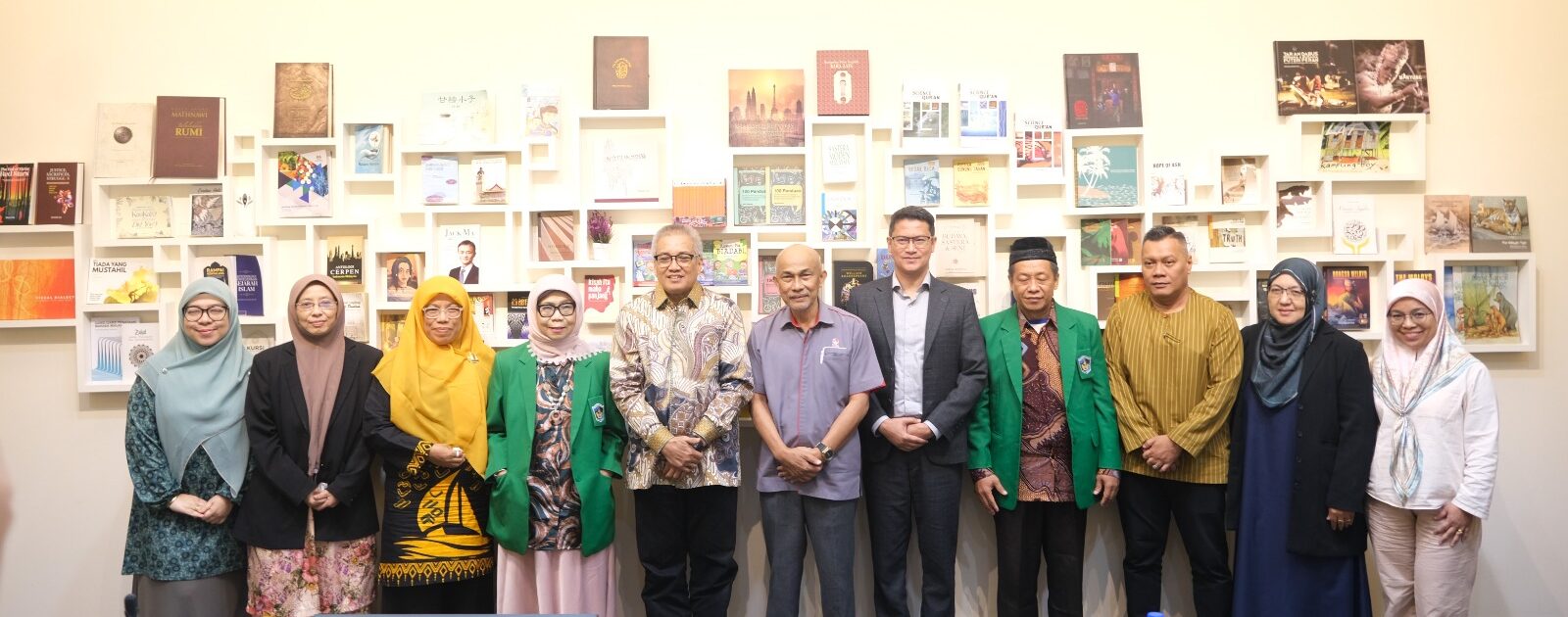
Kuala Lumpur, Malaysia – The local wisdom of the Bugis community has once again received the spotlight in international activities. This was seen by a lecturer at the Indonesian Muslim University (UMI) at the Malaysian Institute of Translation and Books (ITBM), Wisma ITBM, Wangsa Maju, Kuala Lumpur, Friday (24/10/2025).
This activity is part of Community Service (PKM) which aims to build understanding of Bugis traditions in the neighboring country. The PKM raised a topic entitled 'The Meaning of the Noble Values and Character of the Bugis Man' based on the meaning and perspective of Raja Ali Haji's masterpiece through the Book Tuhfat al-Nafis (transliteration of Andi Ima Kesuma and Taufik Ahmad) published by the Malaysian Institute of Translations and Books (ITBM).
In his presentation, the Head of the PKM Team, Prof. Dr. Ir. H Muh Hattah Fattah, M.S together with Service Team members Dr.Ir.Siti Rahbiah, Ramdan Satra,SKom.,MKom,MTA, and Dr.Fatmah Afrianty Gobel, explained that the Bugis people have a strong identity that is adaptive without losing their identity.
The overseas philosophy of "Kegisi monro sore'lopie situ alatlabu sengereng" has become a symbol of the Bugis spirit of life: wherever the boat docks, that is where life is established.
"Bugis people migrate not to leave their origins, but to find peace of mind (ininnawa) and freedom to live while still carrying ancestral values," explained Hattah.
Siri' na Pesse, Moral and Social Foundations
Furthermore, he emphasized the two main values in Bugis culture, namely siri' (self-respect) and pesse (solidarity). Both are the basis for building civilized and just social relations.
"Siri' teaches us to maintain honor, while pesse fosters empathy and a sense of togetherness. These two values are the foundation of the Bugis people who are not willing to lose their dignity, even if their lives are at stake," he said.
These values are combined in the Pangngadereng system, which includes ade' (custom), speech (law), wari (social status), and sara' (Islamic law). Hattah considers this system to be an early form of social order that balances religion, law and local culture.
Bugis Leadership and Diplomacy
In the context of leadership, Hattah explained the six main principles that guided Bugis kings and nobles, namely lempu (honest), acca (intelligent), getteng (firm), reso (hard work), assitinajang (proper), and tenri atta (self-aware).
This principle not only forms a strong leader, but also emphasizes the moral responsibility of a leader who is always at the forefront in difficult situations.
Bugis political wisdom is also reflected in the concept of 'Tellu Cappa' or three-pronged diplomacy, which includes communication, kinship and military power as a last resort. Through this concept, the Bugis people are known to prioritize dialogue and friendship in resolving conflicts.
Bugis Democracy Predates the West
Hattah Fattah also highlighted the Bugis democratic system which existed long before Rousseau's Social Contract concept was introduced in Europe.
The Bugis king, We Tenrirawe, in the 16th century already practiced a form of participatory democracy, where the king could not act arbitrarily without deliberation from the people.
"Bugis democracy is not secular, but based on Islam and moral values. The king is responsible to Allah and his people," stressed Hattah.
Relevant Heritage in the Modern Era
This activity closed with a reflection that the values of siri' na pesse and lempu' have strong relevance in building modern leadership with integrity.
The Bugis cultural heritage was not only influential in Sulawesi, but also left an important trace in the Johor-Riau region through the leadership of the Opu Daeng Brothers who brought about a period of political and economic glory in the 18th century.
"This heritage proves that Bugis culture is able to adapt without losing its values. This is an important lesson for the current generation in building dignified character and leadership," he concluded.
ITBM Malaysia's appreciation for UMI
Meanwhile, ITBM Malaysia expressed its highest appreciation and thanks for the implementation of International Community Service (PKM) in the form of knowledge sharing which was carried out at ITBM on October 24 2025.
This appreciation was expressed directly through an official letter from ITBM Malaysia to UMI dated 3 November 2025 by Sakri Bin Abdullah as Chief Executive Officer of ITBM Malaysia. "The knowledge sharing involved two topics, namely: Lontara Script and Bugis Communication which was presented by YBhg. Prof. Dr. Muhammad Yunus and the Meaning of the Noble Values and Character of Bugis Humans which was presented by YBhg. Prof. Dr. Ir. Muhammad Hattah Fattah," he wrote. ITBM also really appreciates the contribution and commitment given by the UMI Waqf Foundation in this activity. (*)