Development of Fine Motor Therapy Media for Autistic Children Based on Mini Production Process Simulation at the Bunda Autism Special School (SLB) Makassar City
PkM UMI Lecturers Present Innovation in Fine Motor Therapy Media for Autistic Children at SLB Bunda Makassar

Makassar, November 2025 – The Indonesian Muslim University (UMI) lecturer team has once again demonstrated a real contribution in the development of inclusive education through the superior Community Service (PkM) program with the theme "Development of Fine Motor Therapy Media for Autistic Children Based on Mini Production Process Simulation" at the Bunda Autism Special School (SLB) Makassar City. This program is a new innovation in the world of educational therapy for children on the autism spectrum, who so far still depend on conventional methods.
The program chaired by Ir. Arfandi Ahmad, S.T., M.T. from the UMI Faculty of Industrial Technology, and accompanied by Nurfathana Mazhud, S.Pd., M.Pd. from the Faculty of Letters presents therapeutic media designed to resemble simple work processes, such as sorting, packing, assembling and packaging miniature objects. This concept adopts the principles of industrial engineering work systems, but is packaged in a safe, attractive and friendly way for autistic students.
"We want to present a therapy medium that is not only interesting, but also really trains children's hand coordination, focus and independence. This mini-production process simulation-based approach has proven to be more effective than therapy that is static or repetitive," said Ir. Arfandi Ahmad.
Apply the 'Learning by Doing' Model
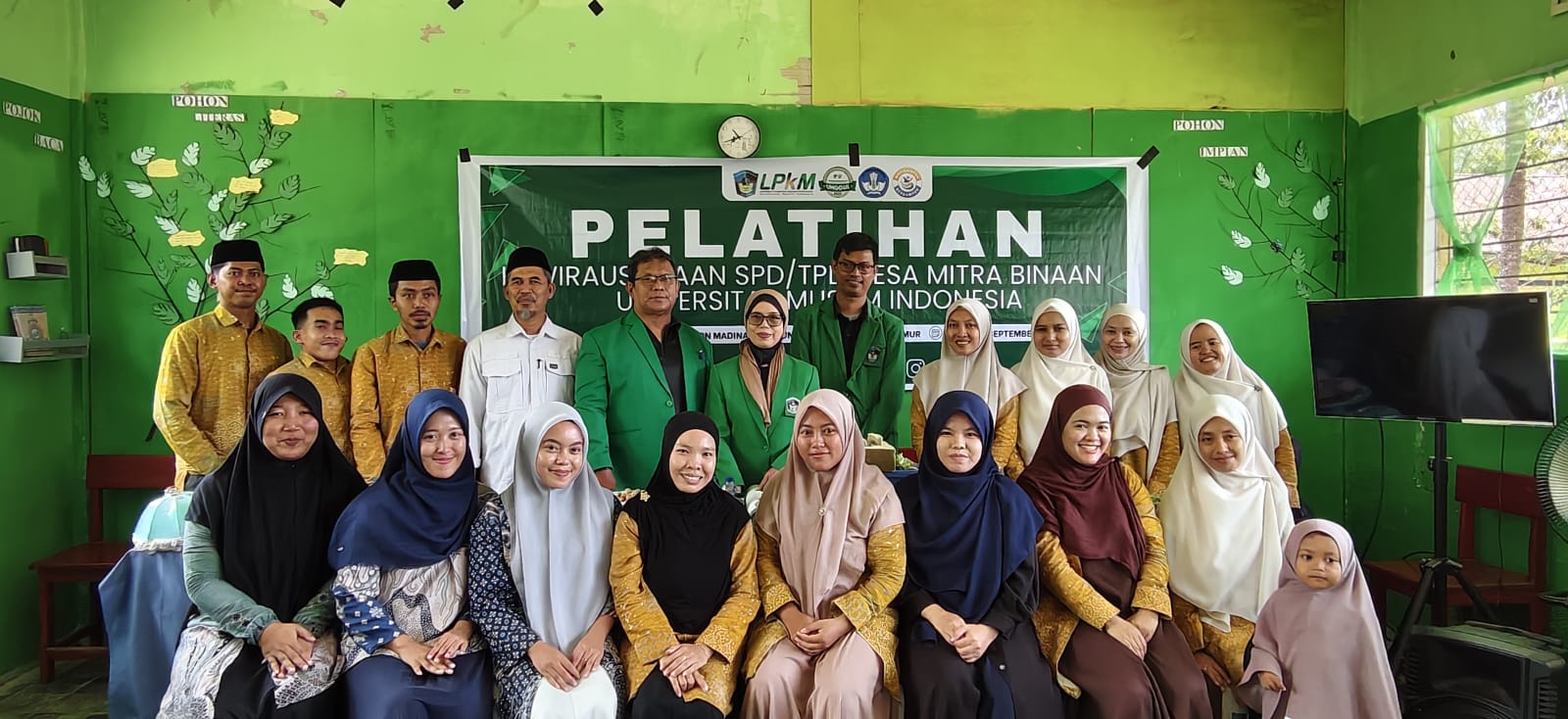
The activity lasted for three months in Bulurokeng Village, Biringkanaya District, and involved teachers, parents, therapists, as well as two accompanying students — Shaddam Zainal and Indi Amelia. The program is designed not only to provide training, but also direct implementation in the classroom, structured mentoring, and evaluation of student progress.
At the training stage, more than 80% of participants were able to operate therapeutic media independently. The media is then used in learning and therapy sessions, where students engage in activities that resemble games but are still educational.
As a result, around 70% of students experienced significant improvements in fine motor skills, especially in the activities of moving and arranging small objects. Students look more focused, motivated, and enthusiastic about following instructions because the media resembles everyday games.
"Children are more interested because they feel they are playing, not undergoing therapy. Teachers and parents now have a guide that can be used at home, so practice doesn't stop at school," said Nurfathana Mazhud.
Impact for Teachers, Parents, and Schools
Not only does this program provide benefits for children, it also increases the competence of teachers and parents in accompanying therapy. The UMI PKM team handed over a complete therapy media package—along with modules and replication guides—to the school as a form of program sustainability. Teachers can now integrate this media into routine learning activities, while parents can apply it at home without requiring tools that are difficult to obtain.
The Head of SLB Autism Bunda expressed her appreciation and assessed that this program brought benefitspositive change.
"This media is very useful. The children are much more responsive, and we get inspirationnew to continue to innovate in learning," he said.
Aligned with MBKM and University IKU
This program also supports the Independent Campus Learning (MBKM) policybecause it involves students directly in social-educational activities outside campus.In addition, these activities contribute to the achievement of several Key Performance Indicators(IKU) of higher education, such as the involvement of lecturers in community empowerment,use of lecturers' work by partners, as well as students' experience in the field.
Development Plan to Other Inclusive Schools
Seeing the success of the program, the UMI team plans to expand the application of this therapeutic media toinclusive schools and other special schools in Makassar City. Apart from that, the team is also preparingscientific articles and media publications to disseminate program results as a practice modelgood (best practice) development of work simulation-based fine motor therapy.
Through this program, UMI confirms its commitment to presenting real solutionsbased on cross-disciplinary collaboration—combining industrial and engineering approachesinclusive education—to build adaptive, child-friendly, learning environmentsinclusive for all.