PKM for Empowerment of Coastal Communities, Sanrobone District, Takalar Regency
In an effort to increase the food security of fishermen's households and encourage the economic independence of coastal communities, the Community Service Team (PkM) of the Indonesian Muslim University (UMI) carried out the activity "Educating Fishermen to Grow Hydroponic Plants in Their Yards" in Laguruda Village, Sanrobone District, Takalar Regency, on Tuesday, 28 October 2025.
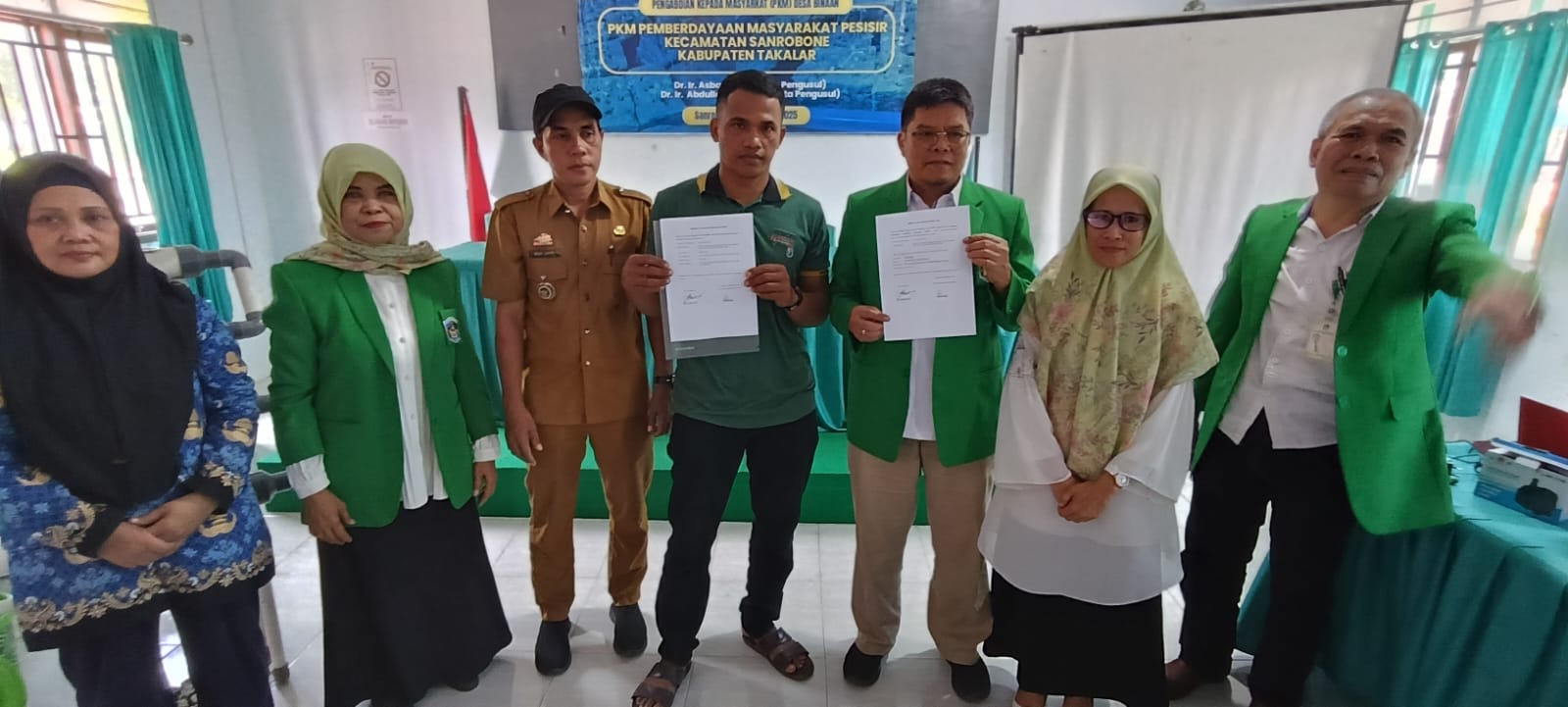
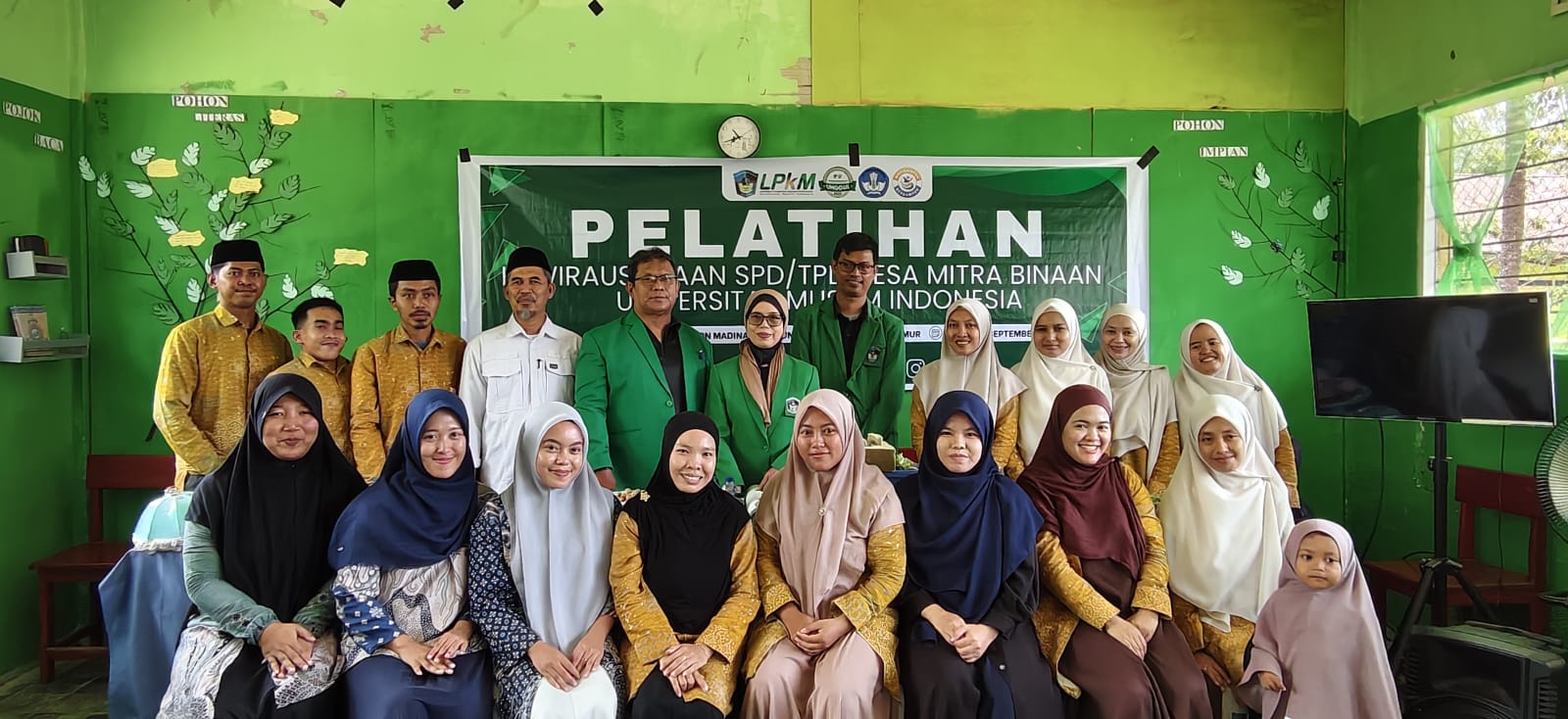
This activity is part of the Community Service Program (PkM) initiated by the UMI Community Service Institute (LP2M), with full support from the Faculty of Fisheries & Marine Sciences; and the Faculty of Agriculture and Mining Land Bioremediation. The implementation team consists of lecturers, students and experts in the fields of agronomy and fisheries. The main aim is to transfer knowledge and technology for cultivating simple hydroponic plants to fishing communities so they can utilize the small land in their home gardens as a source of vegetables and additional income.
The coastal area in Takalar Regency is known as one of the fishing (fishing) centers in South Sulawesi. However, people's dependence on the fisheries sector often creates economic vulnerability, especially during the lean season or when extreme weather limits fishing activities. On the other hand, limited land and minimal soil fertility in coastal areas make it difficult for people to develop conventional agriculture. Through hydroponic technology, we want to introduce a method of growing crops without soil that can be done in the yard of the house, even in small spaces. "With this system, fishermen not only depend on fish catches, but can also fulfill their family's vegetable needs every day," said Dr. Ir. Abdullah, S.P., M.Sc., as a member of the UMI PkM implementation team.
Dr. Ir. Asbar, M.Si, as Head of the UMI PkM Team, added that hydroponics is a sustainable agricultural alternative that is very relevant to be implemented in coastal areas, because it is able to save water, does not require large areas of land, and can be run with cheap local materials such as used bottles, PVC pipes, or simple bamboo shelves.
The PkM activities began with an outreach session at the Fishermen's Meeting Hall which was attended by more than 25 participants consisting of fishermen, housewives and youth youth organizations. The UMI PkM lecturer team explained the basic concept of hydroponics, its benefits for health and the family economy, as well as how to make a simple hydroponic installation.
The material is delivered interactively in language that is easy to understand, equipped with video shows, posters and real examples of plants brought directly from the laboratory of the UMI Tambag Faculty of Agriculture and Land Biorediation. The participants seemed enthusiastic about following the explanation and actively asked questions about how to care for plants, the type of fertilizer used, and the potential for selling hydroponic vegetable crops.
After the counseling session, the activity continued with direct practice in making a household-scale NFT (Nutrient Film Technique) hydroponic system installation. The PkM team of lecturers, assisted by students, demonstrated how to put together an installation using materialssimple ones that are easy to obtain in the local environment, such as styrofoam, used buckets, used hoses, and paralon.
Participants are invited to prepare vegetable seeds such as mustard greens, spinach and bok choy using rockwool media and AB Mix nutritional water. Each group of participants was given the opportunity to try directly, from sowing to installing the seeds into hydroponic containers. "At first I thought hydroponics was complicated and expensive, but it turns out it can be made from materials found around the house. It's very interesting and can be an additional income if you run it with your family," said …….., one of the fishermen participating in the training, while showing the results of a simple installation made by his group.
The UMI PkM Lecturer Team does not just stop at one day's training. As part of the program's sustainability, the team also prepared pilot hydroponic installation packages for several participant homes. Each package contains a planting container, vegetable seeds, liquid nutrition, and a care guide. The student team is also scheduled to provide regular assistance for three months to monitor plant growth and assist participants in resolving technical obstacles.
"Continuous assistance is very important so that people are truly able to independently manage the NFT hydroponic system in their own homes. We want to ensure that the knowledge provided does not stop at training, but is actually implemented," explained Hasmawati, S.P., Fisheries Extension team, Takalar Regency.
Apart from the technical aspects of cultivation, the team also introduced a hydroponic-based household entrepreneurship model. Participants were invited to calculate the economic potential of hydroponic vegetable production, starting from material costs, harvest time, to marketing opportunities through vegetable stalls, social media and fishermen's cooperatives.
This PkM activity received a positive response from local government officials. Head of Laguruda Village, Mr. JUFRI, SM. In his speech he expressed his appreciation for UMI's concern for coastal communities. He considered this activity not only relevant to the economic conditions of fishermen, but also a concrete manifestation of the role of universities in supporting sustainable development in the region.
"Programs like this really help our community, most of whom are coastal residents. With simple technology, they can learn to grow their own vegetables in their yard, save costs, and can even sell their harvest. We hope this activity will continue and be expanded to other villages on the Takalar coast," he said.
The UMI PkM team believes that the application of NFT hydroponic technology among fishing communities can be a small but significant step towards a more sustainable socio-economic transformation. Amid the challenges of climate change, fluctuations in fish catches, and increasing costs of living, food independence through hydroponics is a practical, environmentally friendly solution.
"Farming does not always have to be done in rice fields. With hydroponics, coastal communities can also plant in small yards, on sand, even on wooden shelves. The principle is resource efficiency and sustainability," said Dr. Abdullah closed the activity.
He added that this activity is also a learning tool for students to understand social dynamics in the field and apply agricultural and fisheries knowledge effectivelydirectly in the context of community empowerment. "This is the spirit of the tridharma of higher education: education, research and service which are integrated with each other," he stressed.
The success of this activity has encouraged further plans in the form of an Independent Hydroponic Village Program which will be developed in several other coastal villages in Takalar Regency. The UMI PkM team is targeting the formation of hydroponic-based fishermen farmer groups that can manage vegetable production collectively and with a market orientation. Apart from that, the team also plans to establish partnerships with the Food Security Service and the Maritime Affairs and Fisheries Service to expand the impact of the program and ensure the sustainability of post-mentoring activities.
With a spirit of collaboration and simple, applicable innovation, the Fishermen Education activity for Hydroponic Planting in the Home Yard is clear proof that modern agricultural technology can be applied in coastal environments, bringing new hope for food independence and the welfare of fishing communities in Takalar.