UMI PkM Lecturer Team Trains Coastal Communities in Sanrobone Village How to Make Compost
The Indonesian Muslim University community service team (PkM) consisting of Dr. Asbar, M.Si as Team Leader accompanied by Dr. Ir. Abdullah as Member together with two lecturers Dr.Ir.Ilmiah M.Si and Dr.Ir Hamsiah,M.Si. and students train fishing community groups how to process organic waste into compost which is more useful as plant fertilizer and reduces organic waste in the environment. The community group involved in this activity is the Tamajannang Lama 1 fishermen group in Banyuara Village, Sanrobone District, Takalar Regency.
Compost is fertilizer made from organic materials that are rich in nutrients so that it can be used as soil and plant fertilizer. Compost is produced from processing organic waste, both wet and dry, through a fermentation process involving microorganisms such as bacteria and fungi which can break down organic material into humus. In this training activity, the UMI PkM Team used EM4 as a source of bacteria and fungi for composting organic waste. This compost fertilizer is healthier and friendlier to the environment. EM4 is available in agricultural shops and is affordable for fishing communities.
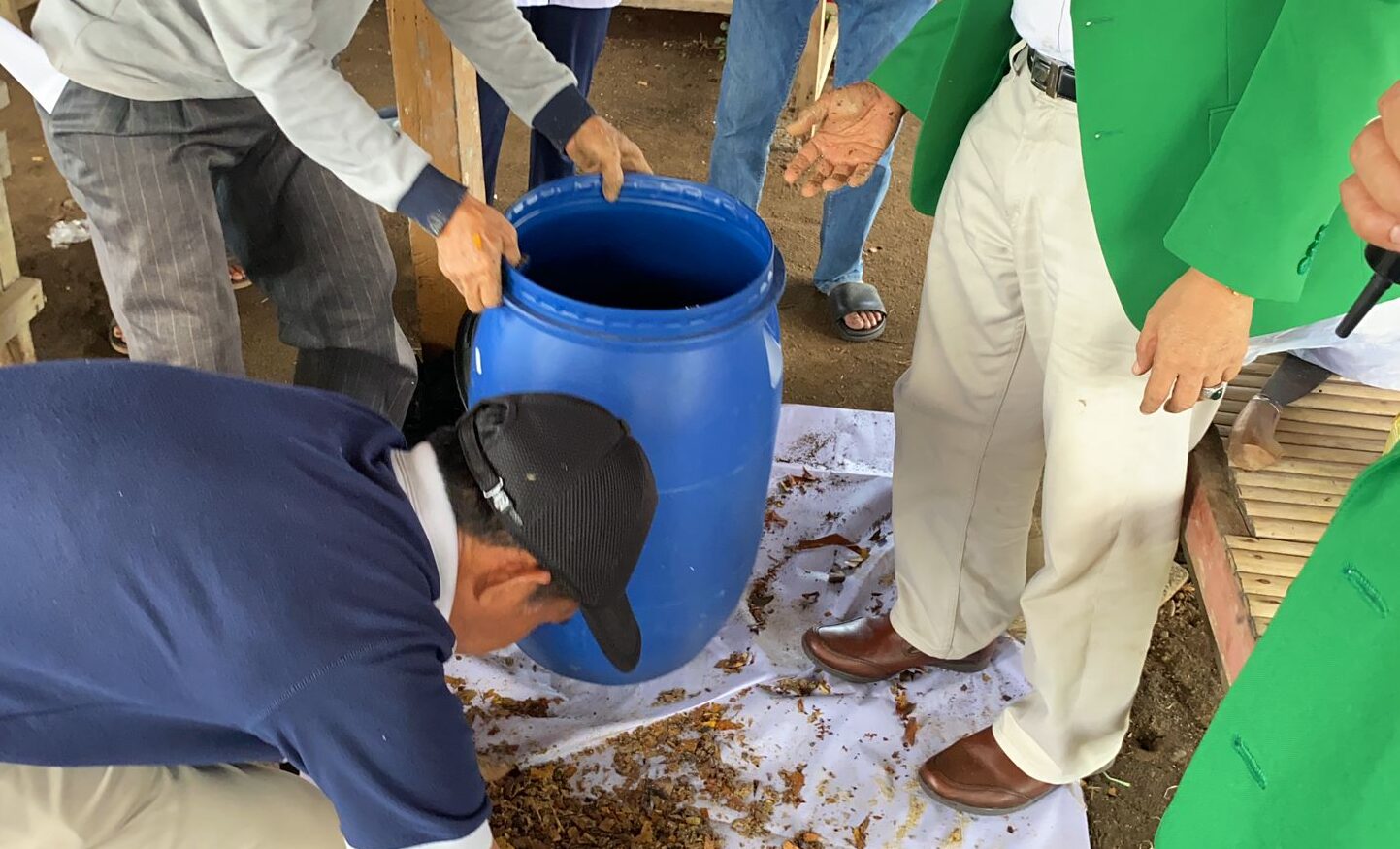
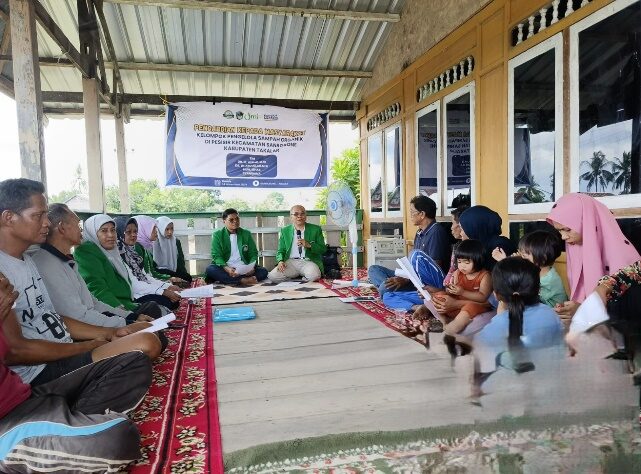
On Thursday (14/11) a team of PkM lecturers and students from the Indonesian Muslim University provided socialization and training on making simple organic compost fertilizer using mangrove plant waste and other plant waste in Banyuara Village, Sanrobone District, Takalar Regency, and was attended by approximately 20 people.
The PKM Lecturer and Student Team at Indonesian Muslim University Makassar (UMI) demonstrated direct composting with the involvement of fishing communities in Banyuara Village, Sanrobone Takalar District, Thursday (14/11). It is hoped that people can understand and do it themselves after being given training. This activity also educates the fishing community to increase awareness and concern for a healthy and clean environment.
The implementation of this socialization and training received positive attention and showed high enthusiasm by the fishing community and community leaders in Banyuara Village, Sanrobone District. The training participants gain knowledge and understanding regarding the management of organic waste, mangrove leaves and other organic waste, which can be used as raw material for making compost. Apart from that, fishing communities also gain practical skills, because they are directly involved in processing household waste into compost.
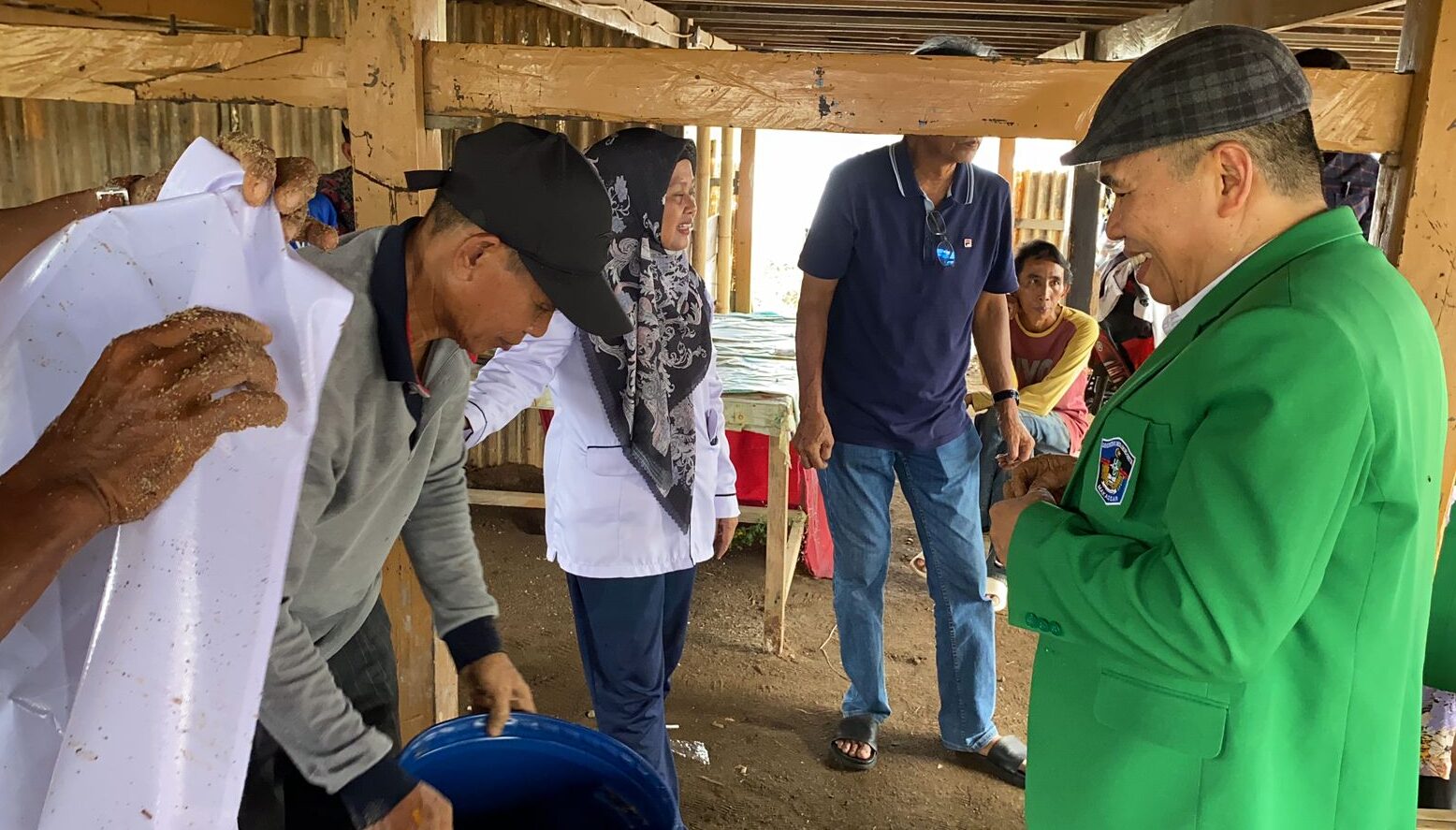
The compost making process introduced is one that is easily carried out by fishing communities and does not require large costs. To make compost made from organic waste from mangrove plants, 50 kg of mangrove leaves collected by the community are used, then 10% rice bran is added and mixed evenly. A mixture of chopped mangrove leaves and rice bran is moistened with an activator. The EM4 activator material is activated by means of 100 ml EM4 and 200 grams of granulated sugar dissolved together in 1000 ml of water, explained Team member Dr. Ir. Abdullah, M.Si. After the process of mixing the ingredients and applying the activator is carried out, it is then put into the fermentation drum and closed tightly. During the fermentation process, the compost material in the drum must be turned or stirred every week for 1 month and the compost is mature and ready to be harvested.
The fishing community felt satisfied and gained knowledge with the training program for making compost by UMI PkM lecturers and students. H. Muhammad Basir, S.Sos, as head of the Tamajannan 1 fishermen group who was a training participant, said that the training in making compost fertilizer would raise awareness among residents to manage the organic waste around them to make it more useful. H. M. Basir added that it is hoped that activities like this can be sustainable, because they are very beneficial for community members, he concluded during the interview.
The implementation of this training also involved partners from the Tamajannan 1 pond fishermen/farmers group in Banyuara Village, Sanrobone District, Takalar Regency, chaired by H. Muh. Baris, S.Sos, District fisheries instructor. Takalar Ibu Hasmawati, S.Pi and the head of Tamajennang Hamlet Muh. Rusli Dg Nompo, as well as all members of the local group.