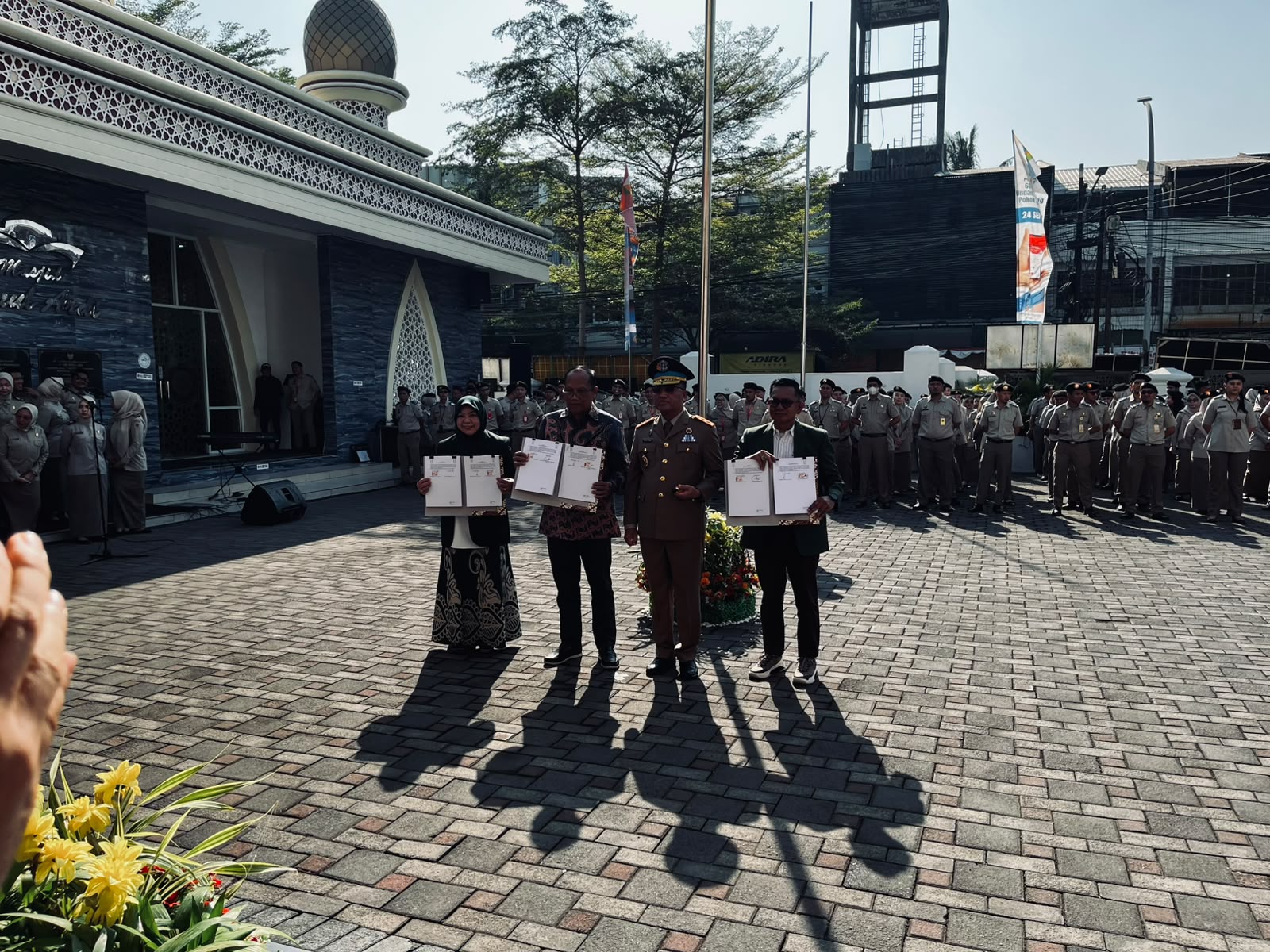
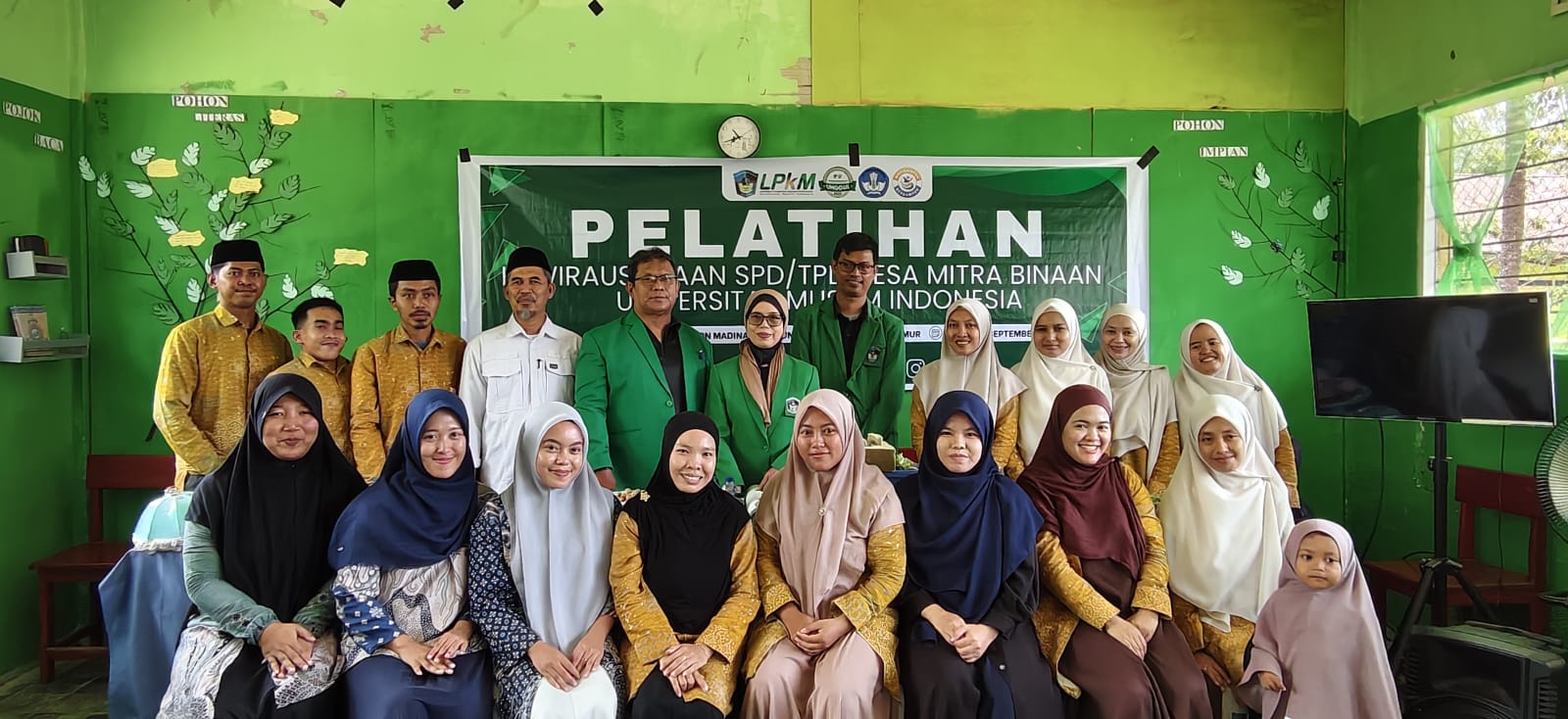
Indonesian Muslim University (UMI) Makassar, through the Superior Service Scheme, is again holding a Community Service Program (PKM) with the theme "Innovation in Sweet Potato Processing through Making Glucose Syrup as a Small and Micro Business in the Village
Nisombalia, 13 October 2024– New innovations in the use of agricultural products have been introduced again in Nisombalia Village, Maros. This time, the community service program highlighted the potential of sweet potatoes as a raw material for making glucose syrup, which is expected to become a small and micro business opportunity for the local community. Through proper processing, sweet potatoes, which are usually only sold fresh, can now be processed into glucose syrup which has added economic value.
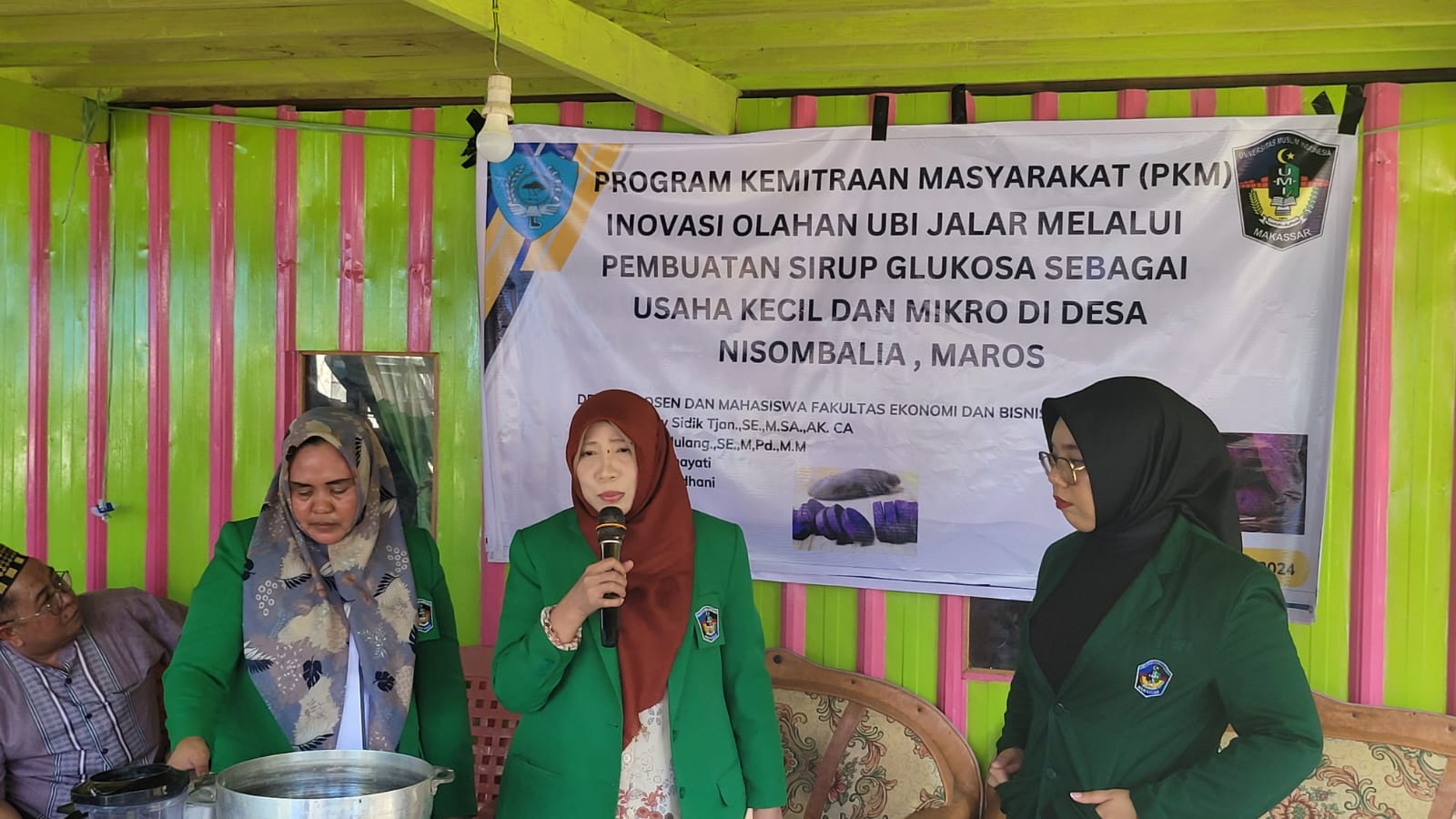
Sweet potatoes are known as one of the agricultural commodities that are often found in Nisombalia Village. However, so far many farmers only sell sweet potatoes in raw form at relatively low prices. For this reason, the community service team from the Indonesian Muslim University together with the Nisombalia Village Government, in this case represented by Mr. Syafri as secretary of Nisombalia Village, conducted training and assistance to the community to process sweet potatoes into glucose syrup. This glucose syrup can be used as a natural sweetener in various processed products, such as drinks, cakes and other processed foods.
Nisombalia Village Secretary Mr. Syafri said, "We really support this program because apart from being able to increase the selling value of sweet potatoes, it also opens up business opportunities for housewives and youth in our village. This is a very good step to improve the community's economy, especially in the MSME sector."
The process of making glucose syrup from sweet potatoes goes through several stages, including washing, cooking, and filtering and separating the liquid extract from the sweet potatoes. The result is a glucose syrup that not only lasts longer, but also has a healthier natural sugar content when compared to other commercial syrups. Apart from that, glucose syrup from sweet potatoes can be an environmentally friendly alternative sweetener, because it is made from local ingredients that are abundant around the village.
Dr. Juliyanti Sidik Tjan, SE., MSA., Ak., CA who led the implementation of this activity, stated in her speech regarding "The benefits of consuming purple sweet potatoes" Then continued by Dr. Hastuti Mulang, SE., M.Pd., MM in providing training in making glucose syrup. We also provide knowledge about product packaging and marketing. "In this way, people can not only produce their own products, but also market their processed products to local and even national markets."
This program provides extensive opportunities for the people of Nisombalia to develop small and micro businesses based on value-added food processing products. In the long term, it is hoped that this program can encourage the emergence of various derivative businesses, such as the manufacture of other processed products that use glucose syrup as a raw material, as well as reducing dependence on imported raw materials.
The Nisombalia Village community, especially sweet potato farmers, welcomed this training. "We now have new insight into how to process sweet potatoes into a more profitable product. This is a great opportunity to increase family income and open up new job opportunities," said Ibu Fitri "as one of the training participants.
With the growing development of the business of processing sweet potatoes into glucose syrup, it is hoped that this program can become a model for agricultural-based economic empowerment that can be applied in other villages. In the future, the people of Nisombalia Village plan to market this glucose syrup product to a wider market, both through local markets and a larger distribution network.
Through this innovation, it is hoped that Nisombalia Village can become a pioneer in developing small and micro businesses based on locally processed products, which are sustainable and provide long-term benefits for the village economy.