CHOCOLATE ICE STICK AS AN INNOVATION FOOD PRODUCT TO IMPROVE CHILDREN'S NUTRITION AT MADRASAH IBTIDAIYAH AL – FITRAH LANRAKI MAKASSAR
The nutritional problem of school-aged children is still an important issue in Indonesia, including in Makassar City. Based on basic health research data from the Indonesian Ministry of Health, the prevalence of school-age children with poor nutritional status is still quite high, which has an impact on reducing learning concentration, endurance and academic achievement.
This condition is exacerbated by the habit of consuming unhealthy snacks such as snacks high in sugar, salt and trans fat which are sold freely around schools.
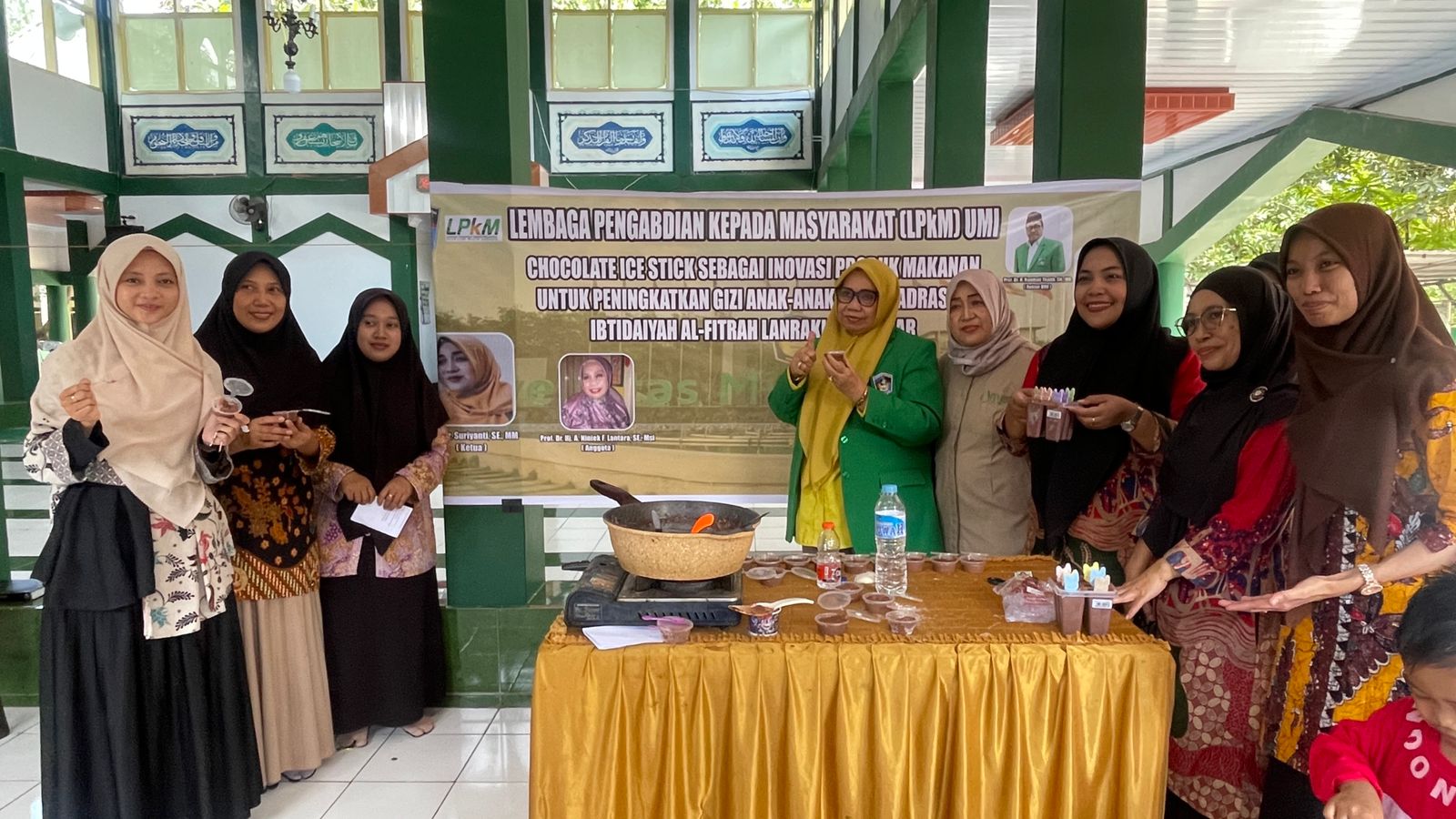
Prof. Dr. Suriyanti SE., MM and Prof. Dr. H A. Niniek F. Lantara, SE., M.Sc, Lecturer at FEB UMI Makassar together with 2 FEB UMI Makassar Students on behalf of Novia Suci Rahmadani and Nur Hidayah Jamaluddin, on October 1 2025 carried out Community Service (PkM) at the Madrasah Ibtidaiah (MI) AL-Fitrah Lanraki Makassar.
Initial observation results show that most students prefer instant snacks to healthy food. Teachers and parents also do not fully have the understanding and skills in providing nutritious snacks that are attractive to children. The lack of innovation in healthy food products in the school environment exacerbates this situation.
Prof. Dr. Suriyanti, SE., MM said that Chocolate Ice Stick is a food product that has the potential to be a solution. Chocolate and milk as basic ingredients contain energy, protein, essential vitamins and minerals, the form is simple and the taste is liked by children.
Through the community service program, the Team provides nutritional education as well as training in making chocolate ice sticks to students, teachers and parents, so that it is hoped that they will not only increase awareness about the importance of balanced nutrition but also create practical skills in providing attractive and affordable nutritious food.
Prof. Dr. Suriyanti hopes that teachers will continue routine nutrition education in teaching and learning activities, including parents of students who are expected to practice making healthy snacks at home as an effort to foster a culture of healthy eating from an early age.