Coastal Villages Against Stunting
In the middle of the expanse of ponds and coastal seas in Pangkep Regency, South Sulawesi, Tamangapa Village is facing a problem that is not simple. Behind the abundance of tilapia and milkfish, this village has struggled with high rates of stunting among toddlers. This condition is ironic because areas that are rich in food sources still face nutritional and environmental health problems.
Stunting is not just a child's body being shorter than his age. This problem is closely related to the quality of future generations. Children who experience stunting are at risk of experiencing impaired brain development, learning difficulties, and reduced productivity as adults. Therefore, handling it is not enough just by providing additional food, but also requires improving sanitation, parenting patterns, health education and environmental conditions.
This problem is clearly visible in Tamangapa Village. Some people still use floating latrines around ponds, household waste channels are inadequate, and access to clean water is still limited. Environmental conditions increase the risk of infectious diseases, one of which
causes of stunting in children.
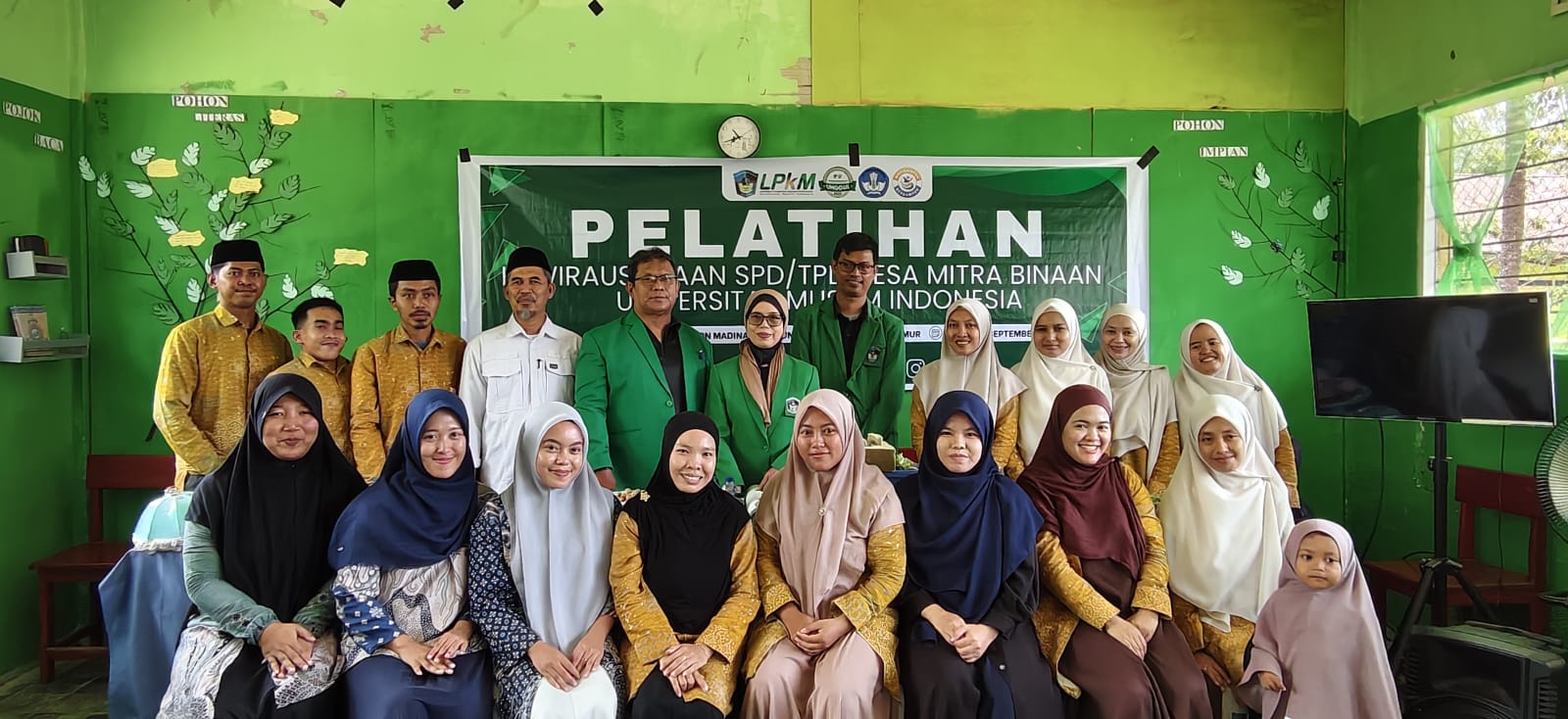
Based on this problem, the community service team from the Indonesian Muslim University together with the Makassar College of Economics (STIEM) Bongaya implemented a community empowerment program based on environmental health and local food diversification. The program, which is supported by the Directorate of Research and Community Service (DPPM) of the Ministry of Education and Technology, is being carried out in stages by involving the village government, health cadres, youth organizations, and local health centers.
A participatory approach is the main key. The community is not only the recipient of the program, but is also involved in every change process. Education regarding stunting and sanitation is carried out directly through posyandu activities, community discussions, and household assistance. Slowly, people are starting to understand that stunting is not just a hereditary factor, but a condition that can be prevented.This program also presents various simple innovations but has real impacts. One of them is the construction of model healthy latrines in pond areas to reduce environmental pollution. Apart from that, the community is provided with clean water filtration equipment so that their daily water needs become safer and healthier.
In the food sector, the potential of tilapia and milkfish is used as a source of animal protein to prevent stunting. So far, pond products are mostly sold raw without processing. Through training, housewives are taught to process fish into nuggets, meatballs, dim sum, sausages, and even fish floss which is more attractive to children.
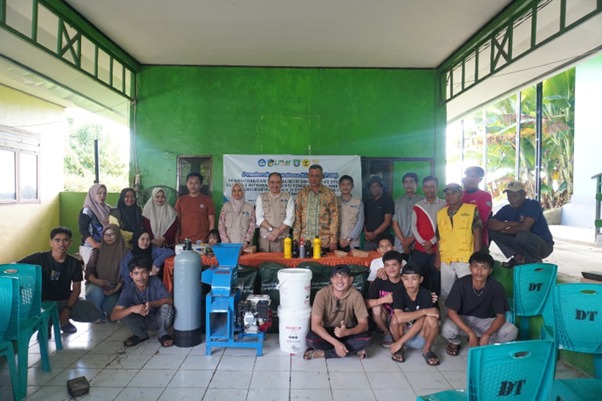
Not only does it increase protein consumption among toddlers, the training also opens up new business opportunities for the community. Various food processing equipment such as meat grinding machines, meatball makers, and shredded processing equipment are provided to support local fish-based food businesses.
The waste problem has not gone unnoticed. Village youth organizations are trained to process plastic waste into paving blocks and ecobricks, while organic waste is processed into compost. This approach encourages people to see waste as not just waste, but also an economic resource if managed well.
Health cadres are the spearhead of the program through monitoring the growth and development of toddlers and family education. To support early detection of stunting, the service team provides anthropometric tools such as stadiometers, infantometers and digital scales for babies and children.
Change doesn't happen overnight. However, mentoring that is carried out consistently is starting to show positive results. Public awareness of sanitation is increasing, clean living habits are starting to be implemented, and children's fish consumption is getting better.
The evaluation results show a quite significant impact. In two years of implementing the program, the stunting rate in Tamangapa Village fell from 59 cases to 20 cases. This reduction is proof that handling stunting requires an integrated approach involving environmental health, local food and community empowerment.
The story of Tamangapa Village shows that coastal villages have great strength to rise by relying on local potential and mutual cooperation. When communities move together to protect the environment, improve sanitation, and make optimal use of fisheries resources, real change can be created.
From the coast of Pangkep, new hope grows. Tamangapa Village is slowly moving towards a healthy, independent village free of stunting, as well as being an example that solutions to health problems do not always have to be complicated. Sometimes, big changes start from simple steps taken together.
Change doesn't happen overnight. However, mentoring that is carried out consistently is starting to show positive results. Public awareness of sanitation is increasing, clean living habits are starting to be implemented, and children's fish consumption is getting better.
The evaluation results show a quite significant impact. In two years of implementing the program, the stunting rate in Tamangapa Village fell from 59 cases to 20 cases. This reduction is proof that handling stunting requires an integrated approach involving environmental health, local food and community empowerment.
The story of Tamangapa Village shows that coastal villages have great strength to rise by relying on local potential and mutual cooperation. When communities move together to protect the environment, improve sanitation, and make optimal use of fisheries resources, real change can be created.
From the coast of Pangkep, new hope grows. Tamangapa Village is slowly moving towards a healthy, independent village free of stunting, as well as being an example that solutions to health problems do not always have to be complicated. Sometimes, big changes start from simple steps taken together.