UMI Lecturers Encourage Environmental Awareness through Digital Waste Management Education at SDN 127 Inpres Moncongloe
MAROS –Lecturers at the Faculty of Computer Science, Indonesian Muslim University (FIKOM UMI) carry out community service to strengthen understanding of waste management and digital literacy in elementary school environments. The activity will take place on November 7 2026 at SD
The service team is led byAmaliah Faradibah, S.Kom., M.Kom.,togetherDewi Widyawati, S.Kom., M.Kom.,AndSyariful Mujadid, S.Kom., M.T.This activity also involved two students from the Informatics Engineering Study Program, namelyMuhammad Rifky Saputra ScaniaAndFarah Tsabitaputri Az Zahra,in supporting technical preparation, student assistance, and documentation.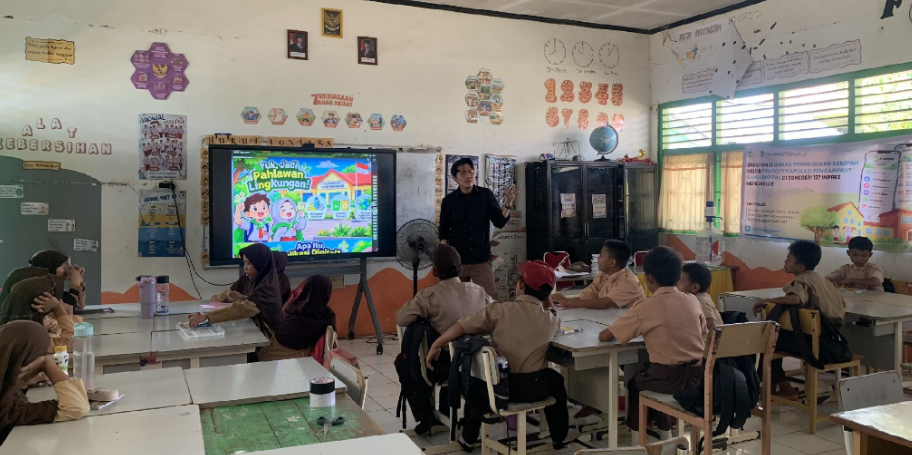
The team also introduced a digital waste collection application prototype as an educational tool. The application design displays a waste reporting menu, transportation schedule, pick-up location, and waste management information. This introduction provides students with an overview of the use of technology to help deal with environmental problems.
The prototype was developed from research into interface design and application user experience using the Design Thinking method. In this service activity, the prototype is used as a trial product for learning and introducing digital technology.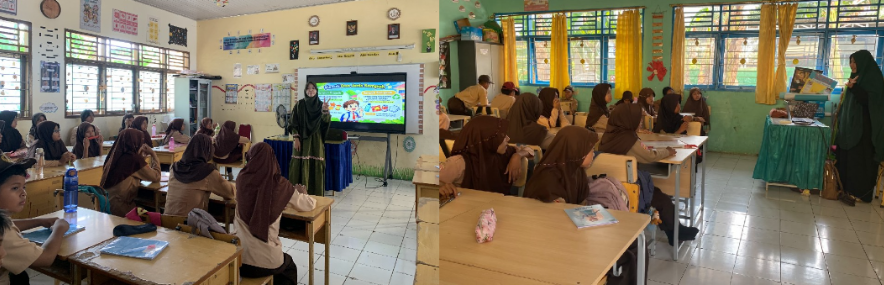
Negeri 127 Inpres Moncongloe, Maros Regency, involving students and teachers.
The activity entitled "Digitalization of Waste Management Education through Digital Waste Transporter Application Prototype at SD Negeri 127 Inpres Moncongloe” this is part of
Beginner PKM program under the UMI Community Service Institute (LPkM). The program is directed at supporting the habit of sorting waste from an early age through easy-to-understand digital learning media.
Beginner PKM program under the UMI Community Service Institute (LPkM). The program is directed at supporting the habit of sorting waste from an early age through easy-to-understand digital learning media.
The service team is led byAmaliah Faradibah, S.Kom., M.Kom.,togetherDewi Widyawati, S.Kom., M.Kom.,AndSyariful Mujadid, S.Kom., M.T.This activity also involved two students from the Informatics Engineering Study Program, namelyMuhammad Rifky Saputra ScaniaAndFarah Tsabitaputri Az Zahra,in supporting technical preparation, student assistance, and documentation.
Photo 1. Waste management education for students at SD Negeri 127 Inpres Moncongloe
The series of activities began with education for students in the classroom. Using a digital screen and projector, the team explained the sources of waste in everyday life, the differences between organic and inorganic waste, and the importance of sorting. The material is presented through illustrations and examples that are close to student activities, such as food waste, dry leaves, plastic bottles and snack wrappers.
Through this explanation, students are invited to understand that maintaining cleanliness needs to be accompanied by the habit of recognizing and sorting waste. The use of visual media helps connect the material with the conditions they encounter in the classroom and school environment.
The team also introduced a digital waste collection application prototype as an educational tool. The application design displays a waste reporting menu, transportation schedule, pick-up location, and waste management information. This introduction provides students with an overview of the use of technology to help deal with environmental problems.
The prototype was developed from research into interface design and application user experience using the Design Thinking method. In this service activity, the prototype is used as a trial product for learning and introducing digital technology.
Photo 2. Explanation of types of waste and the importance of sorting them through digital visual media.
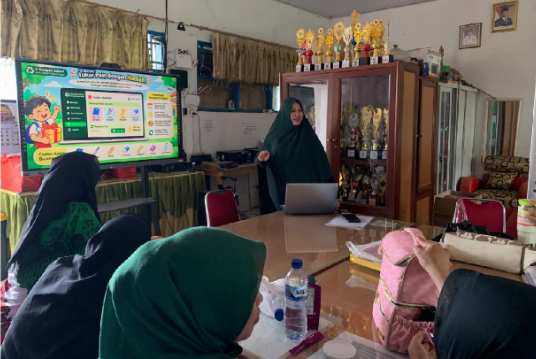
After the session with students, the activity continued with education for teachers. Teacher involvement is expected to support the continuity of waste management learning, so that the material that has been introduced can be strengthened through mentoring and habituation to environmentally caring behavior in schools.
After the session with students, the activity continued with education for teachers. Teacher involvement is expected to support the continuity of waste management learning, so that the material that has been introduced can be strengthened through mentoring and habituation to environmentally caring behavior in schools.
Photo 3. After the student session, the team continued to deliver waste management material to the teacher.
This program is expected to help schools develop a more interesting learning environment while introducing the positive use of technology. The habit of sorting waste and maintaining cleanliness is a goal that needs to be developed sustainably through the involvement of students and teachers.
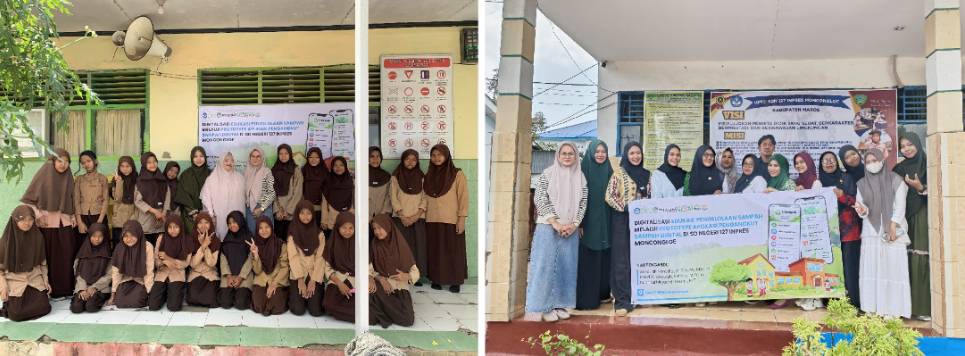
Photo 4. Group photo of teachers and students during community service activities on November 7 2026.
This activity is an implementation of the Tri Dharma of Higher Education by UMI lecturers and students through community service. The collaboration between the service team, LPkM UMI, and schools is expected to strengthen environmental education from an early age and expand the use of research results as a learning medium for the community.