Indonesian Muslim University Lecturers Empower Pregnant Women in Tonasa Village through the Gentle Birth Smart-Flipbook to Reduce Anxiety and Manage Labor Pain
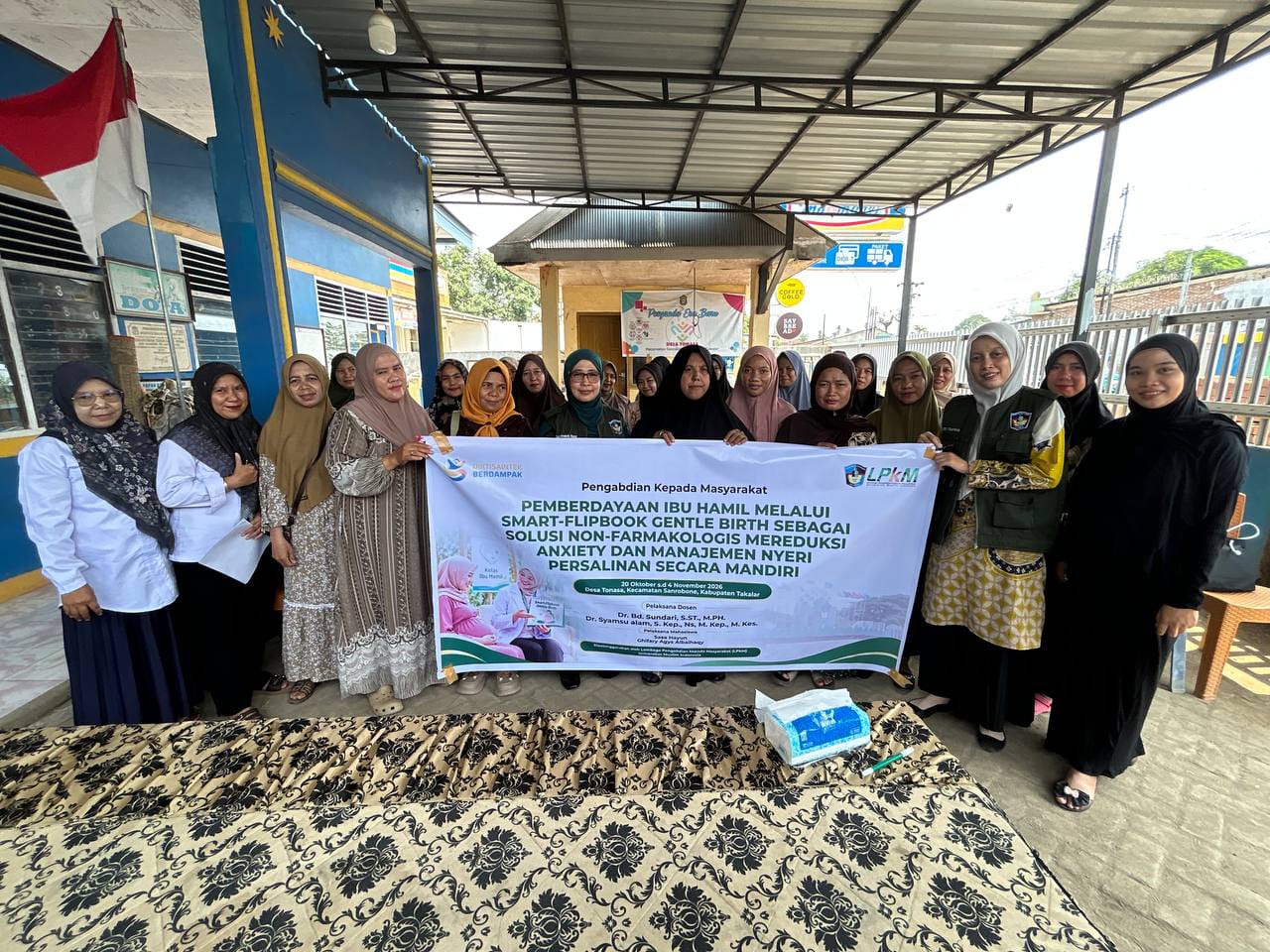
Makassar, 19 November 2025, Lecturers at the Indonesian Muslim University (UMI) carried out Community Service (PKM) activities entitled "Empowering Pregnant Women through Smart-Flipbook Gentle Birth as a Non-Pharmacological Solution for Reducing Anxiety and Independent Labor Pain Management in Tonasa Village, Sanrobone District, Takalar Regency." This activity is an effort to empower the community through innovative maternal health education to increase the knowledge, psychological readiness and skills of pregnant women in facing childbirth.
The aim of this Community Service (PKM) activity is to empower pregnant women in Tonasa Village, Sanrobone District, Takalar Regency, through the use of the Gentle Birth Smart-Flipbook as an innovative, practical and easily accessible digital educational medium to increase knowledge and psychological readiness in facing childbirth, especially in recognizing and managing anxiety, understanding the relationship between fear, tension and pain through the concept of Fear–Tension–Pain, and building positive perceptions of the birthing process. This activity also aims to improve pregnant women's skills in applying non-pharmacological methods, such as breathing techniques, relaxation, positive affirmations, and childbirth comfort strategies independently according to the mother's condition and the direction of health workers, as well as encouraging the involvement of husbands, families, health cadres, and village midwives in providing emotional support and ongoing assistance to realize positive, safe, and oriented birth preparations for the health and safety of mother and baby.
Service Lecturer Team
This service activity was led by Dr. Sundari, SST., MPH, with Dr. Samsualam, S.KM., S.Kep., Ns., M.Kes., as well as team members Sasa Hayun and Ghifary Agys Albaikhaqy. In its implementation, the service team provides education regarding childbirth preparation, anxiety management, and labor pain management through non-pharmacological approaches. Activities are carried out through counseling, introduction to the Smart-Flipbook Gentle Birth media, demonstrations, as well as practicing breathing techniques, relaxation, positive affirmations, and childbirth comfort strategies. Participants are also encouraged to use this media as a learning resource that can be accessed again outside of educational sessions. Thus, the empowerment process is not only oriented towards conveying information, but also towards developing skills that can be practiced independently according to the mother's condition and the direction of health workers. Through this approach, the Smart-Flipbook Gentle Birth is expected to become an educational tool that supports pregnant women in building self-confidence, managing anxiety, and preparing themselves for childbirth in a more positive way.
Partner Participation and Family Support
The success of the empowerment program for pregnant women requires the involvement of various parties, including village government, village midwives, health cadres, husbands and families. Partner support is needed to help disseminate information, facilitate the participation of pregnant women, and encourage sustainable use of educational media.
Family involvement is an important part of this program. Husbands and family members are expected to be able to provide emotional support, help mothers learn educational material, and accompany relaxation and breathing exercises during the preparation period for childbirth.
Meanwhile, village midwives and health cadres have a strategic role in strengthening maternal health education through pregnancy class activities and mentoring at the community level. It is hoped that this collaboration can create a more supportive environment for pregnant women and help reduce the influence of inaccurate information regarding the birth experience.
Program Evaluation and Sustainability
To determine the program's achievements, evaluation can be carried out by measuring knowledge and anxiety levels before and after education, observing practical skills, and assessing pregnant women's ability to access and use the Gentle Birth Smart-Flipbook.
This evaluation is important to find out the changes that occur after the intervention as well as being the basis for preparing follow-up activities. The measurement results need to be documented so that the benefits of the program can be assessed objectively and become material for developing subsequent service programs. Sustainability of activities is directed at utilizing the Gentle Birth Smart-Flipbook as a supporting medium for maternal health education through collaboration with village midwives and health cadres. This empowerment model has the potential to be adapted to maternal education activities in other regions by considering community needs and the availability of technology access.
Sources of Funds and Hope
This service activity is funded by the UMI Research and Community Service Institute (LPkM). Through this funding, it is hoped that this activity can reach more participants and have a broad impact on improving the health of pregnant, maternity and postpartum women in the area.
This activity is expected to be a form of contribution from universities in supporting improving the quality of maternal and child health through educational innovation and community empowerment. Information regarding funding sources for activities needs to be included in accordance with the applicable funding documents. Through the Smart-Flipbook Gentle Birth program, the UMI service team hopes that pregnant women in Tonasa Village can get easier access to education, increase psychological readiness, and have the knowledge and skills to help manage anxiety and increase comfort during childbirth.
This community service activity is part of UMI's commitment to continue to play an active role in supporting the government in public health programs. This program is also expected to strengthen collaboration between universities, village government, health workers, cadres and families in building awareness that good childbirth preparation requires knowledge, mental readiness, social support, and access to appropriate health services. In the end, empowering pregnant women through digital education is expected to support the realization of birth preparation that is more positive, safe, and centered on the needs of the mother and baby, without replacing pregnancy checks or birth assistance by professional health workers.