PKM DIVERSIFICATION OF PROCESSED TILA FISH PRODUCTS AS A STRATEGY FOR IMPROVING THE HOUSEHOLD ECONOMY IN THE PARANGLOE GOWA CULTIVATION AREA
PKM Diversifies Processed Tilapia Fish, FPIK UMI Encourages the Household Economy of Cultivators in Parangloe Gowa
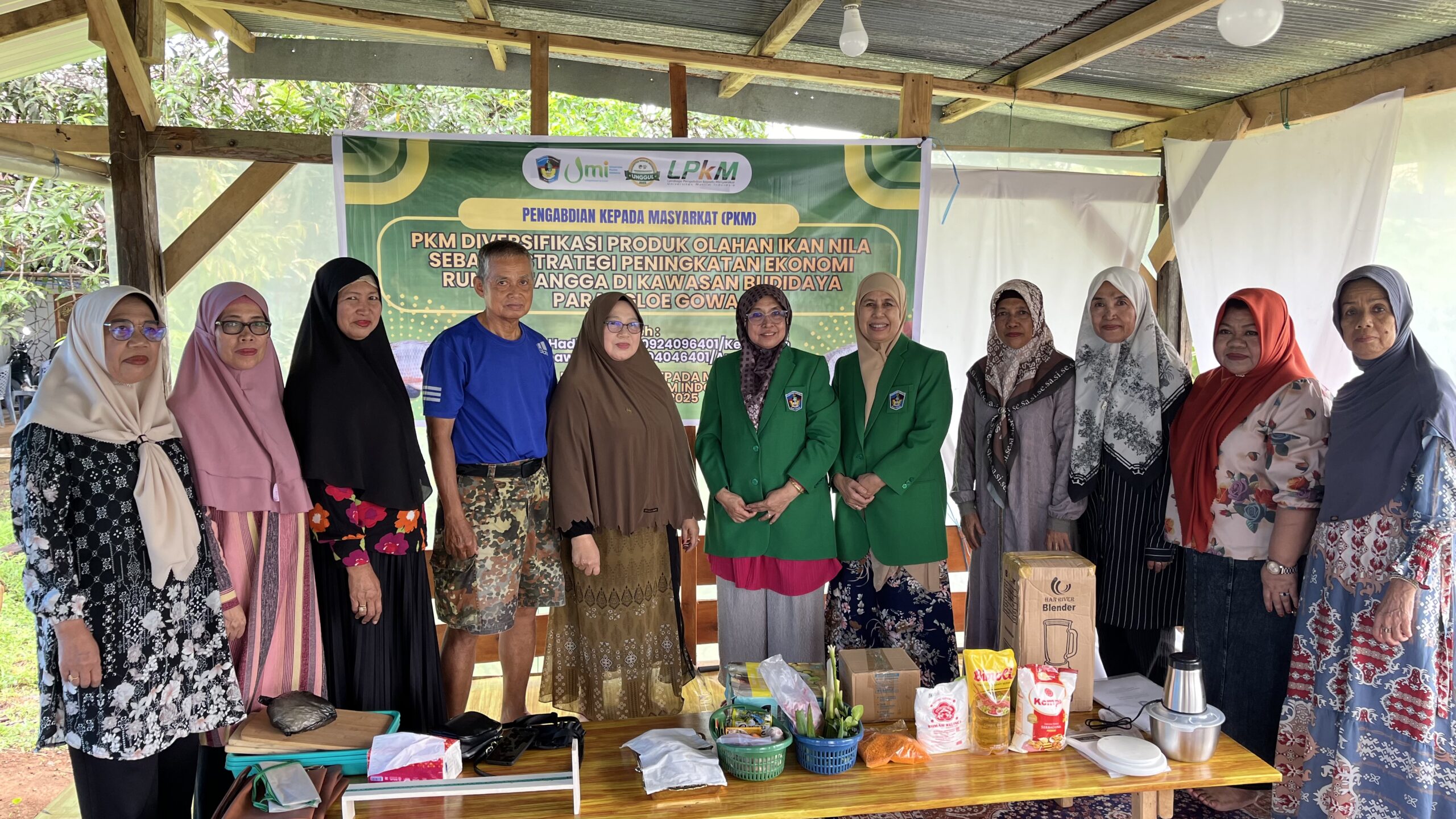
Gowa— The Community Service Team (PKM) from the Faculty of Fisheries and Marine Sciences, Indonesian Muslim University (FPIK UMI) is again carrying out community empowerment activities through a program entitled "PKM Diversification of Processed Tilapia Fish Products as a Strategy to Improve the Household Economy in the Parangloe Cultivation Area, Gowa." The organizer of this activity is Dr. Ir. Siti Hadijah, MP as team leader and Dr. Ir. Kasmawati, MP as a member, based on a direct mandate from the UMI Chancellor through the UMI Community Service Institute (LPkM). This program targets the POKDAKAN Sejahtera partner group, a fish cultivator group chaired by Baksoan Dg. Tunru. This group has relied on tilapia harvest as a source of income, however processing of the harvest is still very simple so the added value of the product is not yet maximized. Responding to this need, the UMI PKM team is here to provide education and processing skills to increase the economic value of tilapia.
The activity began with a socialization session with all POKDAKAN Sejahtera members. During the meeting, the service team explained that this PKM was a follow-up to previous discussions, where partners conveyed the need for tilapia processing training in order to increase the income of cultivator households. "We see great potential for tilapia as a commodity that can be processed into various high-value products. However, the cultivating community still needs assistance so that they can process their harvest into products that are ready to sell, not just selling fresh fish," said Dr. Siti Hadijah in the opening session.
On this occasion, several equipment were handed over to support the sustainability of this processed tilapia fish production business. The team also distributed leaflets containing practical recipes for processed tilapia fish. This leaflet is designed to be an easy guide for group members in learning basic formulas before practice.
Technical training was carried out, namely making nuggets, meatballs and shredded tilapia sauce—threea type of product with good market potential, affordable prices, and easy to produce at scalehousehold. All POKDAKAN Sejahtera members are actively involved in this training process.Participants are also given space to try each stage for themselves so that they really do itmaster processing skills.
Dr. Kasmawati explained that this training was designed to be as easy as possible but consistent
meet sanitation and food safety standards. “We want people not only to be able tomake the product, but also understand how to maintain quality, cleanliness and competitivenessproducts," he said. Apart from technical processing training, the PKM team also provides trainingbusiness management and simple bookkeeping. This material is provided so that partners are able to calculateproduction costs, determining competitive selling prices, recording income and expenses,and managing micro businesses independently and sustainably. This program is expected to opennew economic opportunities for the tilapia farming community in Parangloe, Gowa. Withability to process tilapia into value-added products, POKDAKAN groupSejahtera can reach a wider market, both offline and through marketingdigital.
Group leader, Baksoan Dg. Tunru, expressed his gratitude for the assistance fromUMI team. "It really helped us. Up until now we only knew how to sell fresh fish. Now we canmake nuggets, meatballs and shredded chili sauce. "This is a great opportunity to increase income," he said.
The service team hopes that these skills can be continued and developed by partners so thatbecome a sustainable small business and have an impact on improving welfarepublic.