Improving the Safety of MSME Workers, K3 Team Holds Hot Work Climate Risk Mitigation at Lambengi Bontoala Tofu Factory
BONTOALA– Efforts to create a safe and healthy work environment for
Micro, Small and Medium Enterprises (MSMEs) continue to be intensified. The team implementing service activities is chaired bySri Sudarmi Amir Rumae, S.K.M., M.Kes, with team membersUlfa Kurnia, S.S., M. Hum, Fachriza Meydiva Chairani Ali, and St. Nur Ridha Lutfiah, successfully held a series of programs entitled "Optimizing Safety Culture through Mitigating the Risks of Hot Work Climate in Factories
Furthermore, on Saturday (10/10/2026), the team carried out hazard identification, risk assessment and formulation of risk controls on 21 work activity items at the factory
know that. The analysis results show a significant distribution of risk levels:
Micro, Small and Medium Enterprises (MSMEs) continue to be intensified. The team implementing service activities is chaired bySri Sudarmi Amir Rumae, S.K.M., M.Kes, with team membersUlfa Kurnia, S.S., M. Hum, Fachriza Meydiva Chairani Ali, and St. Nur Ridha Lutfiah, successfully held a series of programs entitled "Optimizing Safety Culture through Mitigating the Risks of Hot Work Climate in Factories
Know Lambengi Bontoala Hamlet".
This program, which will run intensively throughout October 2026, targets home tofu industry workers who are exposed every day to high temperatures and various potential physical dangers in the workplace.
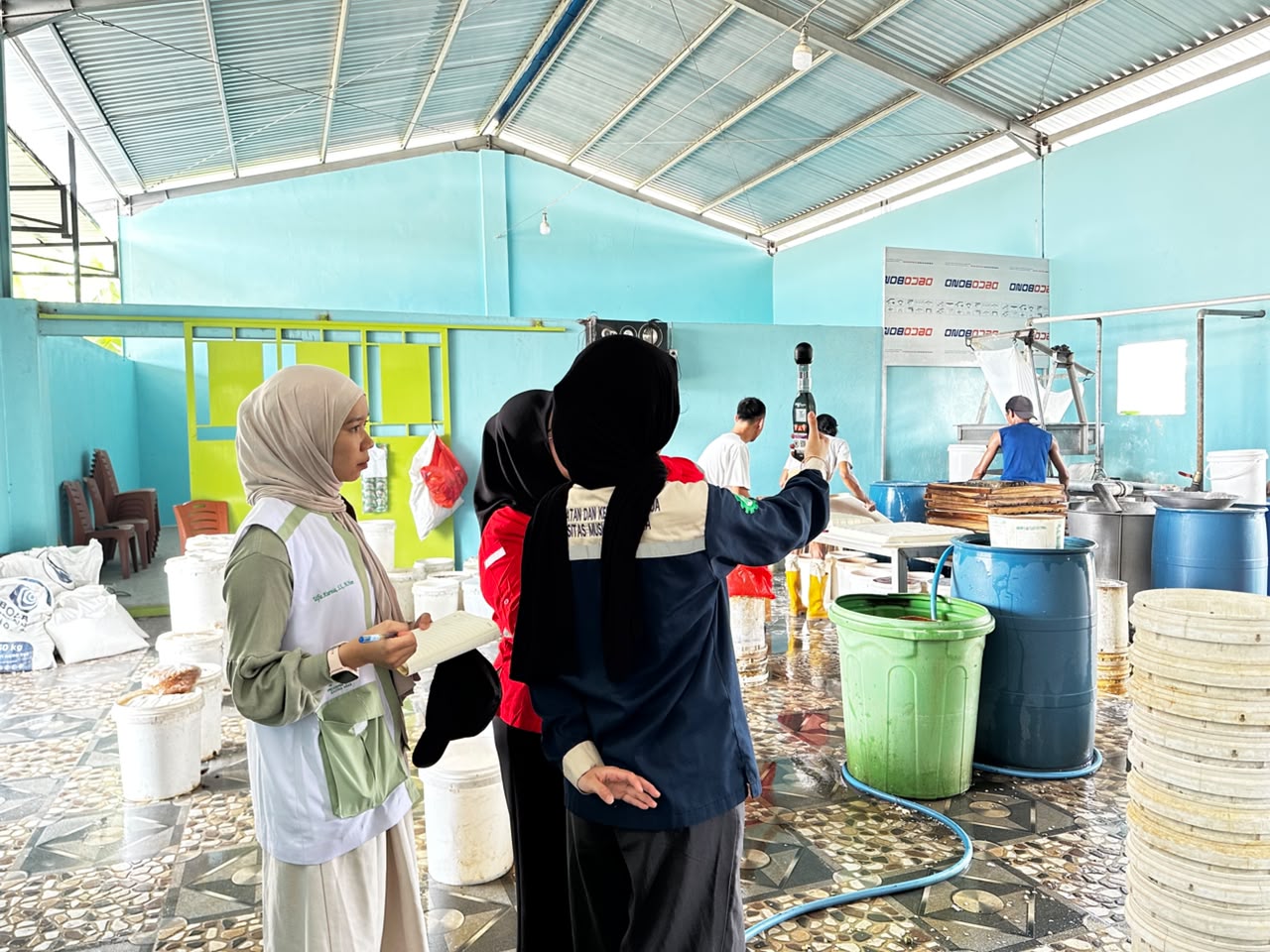
Risk Measurement and Mapping StageThe series of activities began on Saturday (3/10/2026) by taking measurements
hot working climate using the Heat Stress Monitor tool at various production points,
both in indoor and outdoor areas. Based on the results of measurements of the Wet and Ball Temperature Index (ISBB/WBGT), the recorded temperature in the soybean boiling area reached 32.1°C, while in the open yard area it was at 30.6°C. The high temperature in the boiling area has the potential to trigger heat stress in workers.
Furthermore, on Saturday (10/10/2026), the team carried out hazard identification, risk assessment and formulation of risk controls on 21 work activity items at the factory
know that. The analysis results show a significant distribution of risk levels:
- Extreme Risk (Score 20): Found in 1 main activity, namely the process of boiling soybeans due to exposure to furnace heat radiation and high air temperatures.
- High Risk (Score 10–15): Available in 10 activities, including the grinding process (risk of entrapment and electric shock in wet areas), furnace preparation (burns and exposure to smoke), boiling (boiling steam), filtering hot slurry, molding, pressing, and cleaning machines that are still energized.
- Moderate Risk (Score 6–9): Found in 10 activities dominated by ergonomic hazards (lifting heavy sacks and bent posture), risk of slipping due to slippery floors, knife cuts, and exposure to clumping and cleaning agents.
Education, PPE Assistance, and Technical Engineering
Following up on these findings, the implementation team held educational sessions and
counseling on Occupational Safety and Health (K3) on Saturday (17/10/2026). Through counseling methods, interactive discussions, and evaluation of understanding (pre-test and post-test), workers are provided with knowledge about the dangers of heat stress, preventing work-related diseases, and the urgency of building a safety culture.
On the same day, the team also handed over Personal Protective Equipment (PPE) assistance tailored to the risk characteristics of the tofu factory, complete with demonstrations and assistance on how to use it correctly and consistently.
As a form of technical control (engineering controls) to reduce
exposed to hot temperatures, the team installed a blower fan unit in the production area on Saturday
(24/10/2026) to facilitate air circulation. At the same time, various visual educational media in the form of K3 posters were also installed at strategic points in the factory as daily reminders for workers regarding the prevention of heat stress and compliance with the use of PPE.
Ongoing RecommendationsAs a strategic output of the program, the team prepared a comprehensive K3 hierarchy-based risk control recommendation document to be implemented by factory managers. These recommendations include eliminating sources of danger before cleaning the machine, installing machine guarding and improving non-slip floor drainage, setting work-rest schedules (acclimatization) and implementing Lockout/Tagout (LOTO) procedures, to the discipline of using non-slip footwear and heat-resistant gloves.
"Through direct assistance, providing facilities to support air circulation, and familiarizing ourselves with safe work behavior, we hope that workers' awareness and commitment to implementing K3 can grow sustainably, so that tofu factory productivity is maintained without sacrificing health and safety.
the workers," said the Head of the Implementation Team, Sri Sudarmi Amir Rumae.
the workers," said the Head of the Implementation Team, Sri Sudarmi Amir Rumae.