UMI Lecturers Implement Virtual Reality-Based PKM to Increase Knowledge of Diabetes Group in Jeneponto
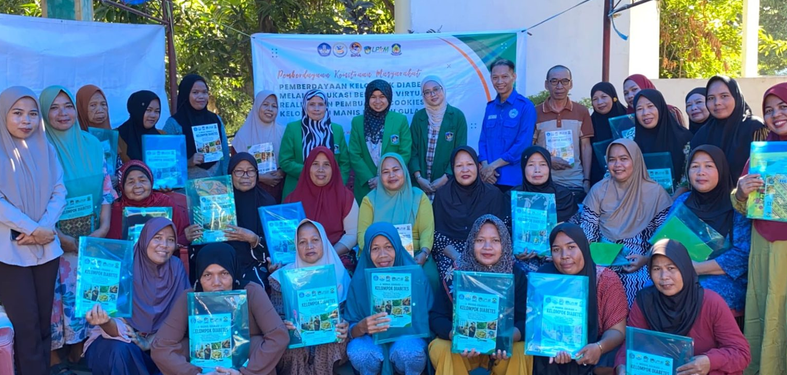
Jeneponto – The Indonesian Muslim University (UMI) lecturer team carried out the Community Partnership Empowerment Program (PKM) with the theme "Empowering Diabetic Groups through Virtual Reality-Based Education and Making Low-Sugar Moringa–Cinnamon Cookies" in Tino Village, Tarowang District, Jeneponto Regency, on July 26 2026.
This activity is an implementation of Higher Education Caturdarma in supporting improving the quality of public health through educational technology innovation and empowerment based on local potential.
The service program was implemented in several stages from May to July 2026 and involved 30 participants who were members of the Diabetes Group (Prolanis) in the working area of the Tino Community Health Center. Activities are designed to increase participants' knowledge, skills and motivation in managing diabetes mellitus through an educational approach that is more interactive and easy to understand.
The PKM team is chaired by Nur Wahyuni Munir, S.Kep., Ns., M.Kep., Sp.Kep.MB, with members Dr. Sitti Patimah, SKM., M.Kes and Ahmad Martani, S.Kom., M.Kom. Two students from the Indonesian Muslim University Nursing Study Program also participated as facilitators during the implementation of activities in accordance with their role in supporting the education and community assistance process.
The head of the service team, Nur Wahyuni Munir, explained that the increasing number of people with diabetes requires innovative educational methods so that people can more easily understand how to manage the disease independently.
"Through Virtual Reality media, participants not only listen to explanations, but also gain a more real learning experience. They can understand diabetes management, the importance of healthy eating patterns, physical activity, medication adherence, stress management, and prevention of complications through media that is interesting and easy to understand," he explained.
The activity begins with a pretest and ends with a posttest to evaluate the increase in participants' knowledge. The evaluation results show an increase in knowledge after attending education and training. The participants' enthusiasm was also seen from their active participation in discussion sessions and practice in using Virtual Reality technology. One of the participants said "the taste of the cookies made was delicious and tasted of moringa".
Through this activity, the service team hopes that Virtual Reality-based educational media, learning modules, as well as training in making Moringa-cinnamon cookies can be utilized sustainably by the Tino Community Health Center as part of Prolanis' activities in increasing the independence of people with diabetes in managing their disease. This hope is also in line with the program's objectives, namely increasing knowledge, skills, motivation, and supporting the development of community-based healthy local food.
The service team would like to express their gratitude to the Directorate of Research and Community Service, Directorate General of Research and Development, Ministry of Higher Education, Science and Technology of the Republic of Indonesia (Kemendiktisaintek) for funding the 2026 Community Partnership Empowerment Program (PKM) so that this activity can be carried out well. Thanks are also expressed to the Tino Village Government, Tino Community Health Center, all Diabetes Group (Prolanis) participants, as well as all parties who have supported the implementation of this activity.
This activity is an implementation of Higher Education Caturdarma in supporting improving the quality of public health through educational technology innovation and empowerment based on local potential.
The service program was implemented in several stages from May to July 2026 and involved 30 participants who were members of the Diabetes Group (Prolanis) in the working area of the Tino Community Health Center. Activities are designed to increase participants' knowledge, skills and motivation in managing diabetes mellitus through an educational approach that is more interactive and easy to understand.
The PKM team is chaired by Nur Wahyuni Munir, S.Kep., Ns., M.Kep., Sp.Kep.MB, with members Dr. Sitti Patimah, SKM., M.Kes and Ahmad Martani, S.Kom., M.Kom. Two students from the Indonesian Muslim University Nursing Study Program also participated as facilitators during the implementation of activities in accordance with their role in supporting the education and community assistance process.
The head of the service team, Nur Wahyuni Munir, explained that the increasing number of people with diabetes requires innovative educational methods so that people can more easily understand how to manage the disease independently.
"Through Virtual Reality media, participants not only listen to explanations, but also gain a more real learning experience. They can understand diabetes management, the importance of healthy eating patterns, physical activity, medication adherence, stress management, and prevention of complications through media that is interesting and easy to understand," he explained.
In this activity, Dr. Sitti Patimah, SKM., M.Kes delivered material regarding the nutritional content of Moringa leaves and their use as part of a healthy diet. Meanwhile, Ahmad Martani, S.Kom., M.Kom provided training on the use of Virtual Reality (VR) glasses and accompanied participants in operating 360 degree video-based educational media using smartphones and VR Box devices. The VR material consists of three main modules, namely diabetes nutrition education, stress management using a Cognitive Behavioral Therapy (CBT) approach, and a practical simulation of making low-sugar Moringa–cinnamon cookies.
Apart from taking part in Virtual Reality-based education, participants also received practical training in making low-sugar cookies made from Moringa leaves and cinnamon. This product was developed using local food ingredients as a healthier snack alternative for people with diabetes and also has the potential to be developed into a group-based household business.
As a form of support for the sustainability of the program, the service team also handed over several equipment to partners, including Virtual Reality glasses (VR Box), ovens, mixers, and other training support equipment which will be used in ongoing educational and practical activities in the Tino Village Diabetes Group.The activity begins with a pretest and ends with a posttest to evaluate the increase in participants' knowledge. The evaluation results show an increase in knowledge after attending education and training. The participants' enthusiasm was also seen from their active participation in discussion sessions and practice in using Virtual Reality technology. One of the participants said "the taste of the cookies made was delicious and tasted of moringa".
Through this activity, the service team hopes that Virtual Reality-based educational media, learning modules, as well as training in making Moringa-cinnamon cookies can be utilized sustainably by the Tino Community Health Center as part of Prolanis' activities in increasing the independence of people with diabetes in managing their disease. This hope is also in line with the program's objectives, namely increasing knowledge, skills, motivation, and supporting the development of community-based healthy local food.
The service team would like to express their gratitude to the Directorate of Research and Community Service, Directorate General of Research and Development, Ministry of Higher Education, Science and Technology of the Republic of Indonesia (Kemendiktisaintek) for funding the 2026 Community Partnership Empowerment Program (PKM) so that this activity can be carried out well. Thanks are also expressed to the Tino Village Government, Tino Community Health Center, all Diabetes Group (Prolanis) participants, as well as all parties who have supported the implementation of this activity.