UMI Lecturers Serve Through "Landslide Disaster Education for Mining Geology Vocational School Students"
Landslide disasters are one of the dangers that always lurk in people's lives, both on the edge of roads or in settlements on the edge of slopes, so it is very important for this disaster to be identified and prevented so that it can reduce or avoid casualties. In the mining sector, landslides or generally referred to as material instability cause soil and/or rock movement at a location. If it occurs, a landslide will result in significant losses for the company because it can damage equipment, hamper production activities, damage the environment, and even more fatal if there are fatalities.
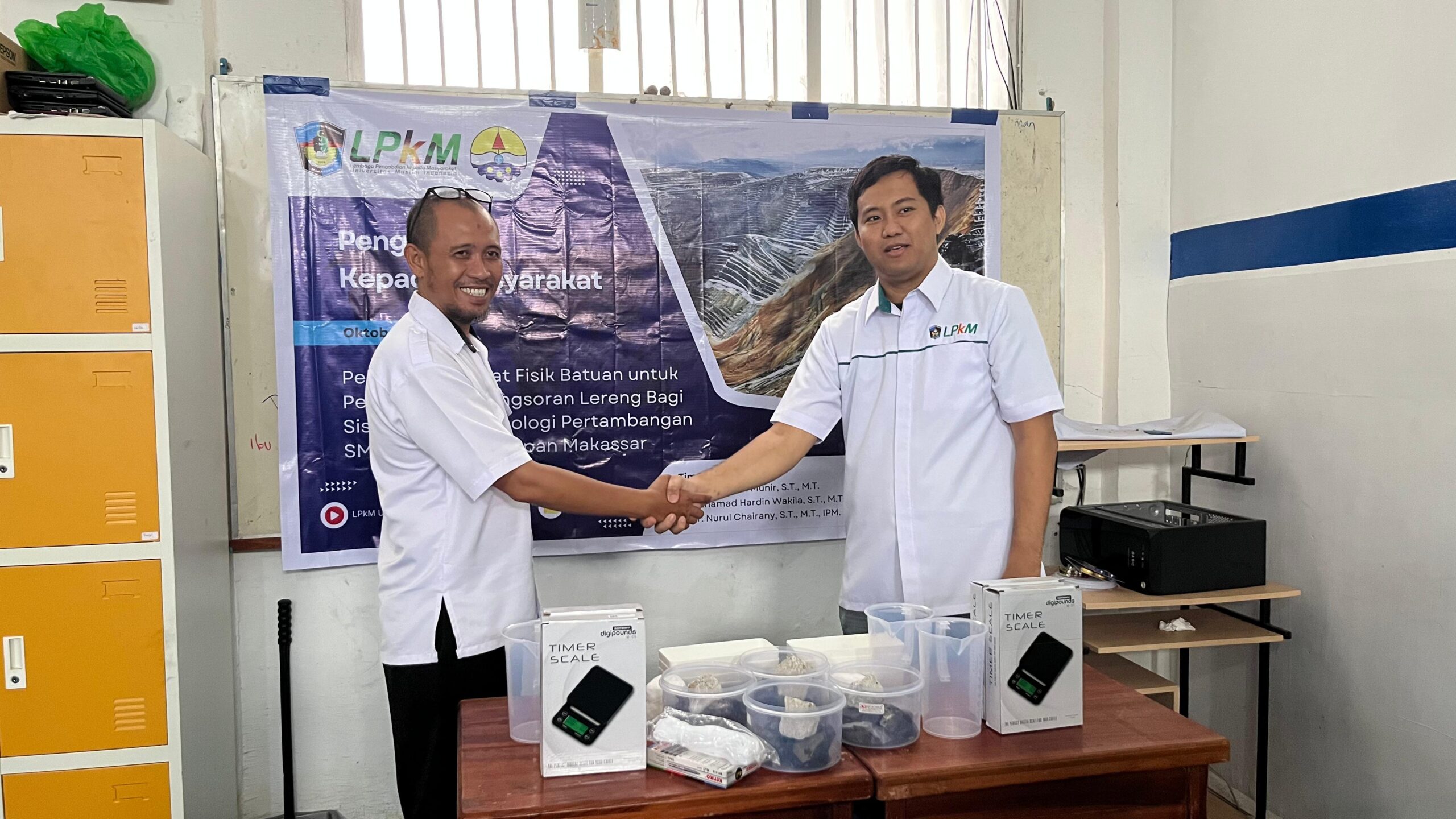 Knowledge about potential disasters is very important as an effort to mitigate this potential, so education must be carried out in the community. For this reason, lecturers from the Faculty of Industrial Technology, Indonesian Muslim University collaborate with each other in educating students from the Mining Geology Department, Makassar Applied Techno Aviation Vocational School. The lecturer team consists of three people from two different study programs, namely Ir. Abdul Salam Munir, S.T., M.T., and Ir. Muhamad Hardin Vicea, S.T., M.T. from the FTI UMI Mining Engineering Study Program who provided education regarding geotechnical conditions and rock identification, and Dr. Ir. Nurul Chairany, S.T., M.T., IPM., from the UMI Industrial Engineering Study Program who provided education regarding the management and provision of testing equipment.
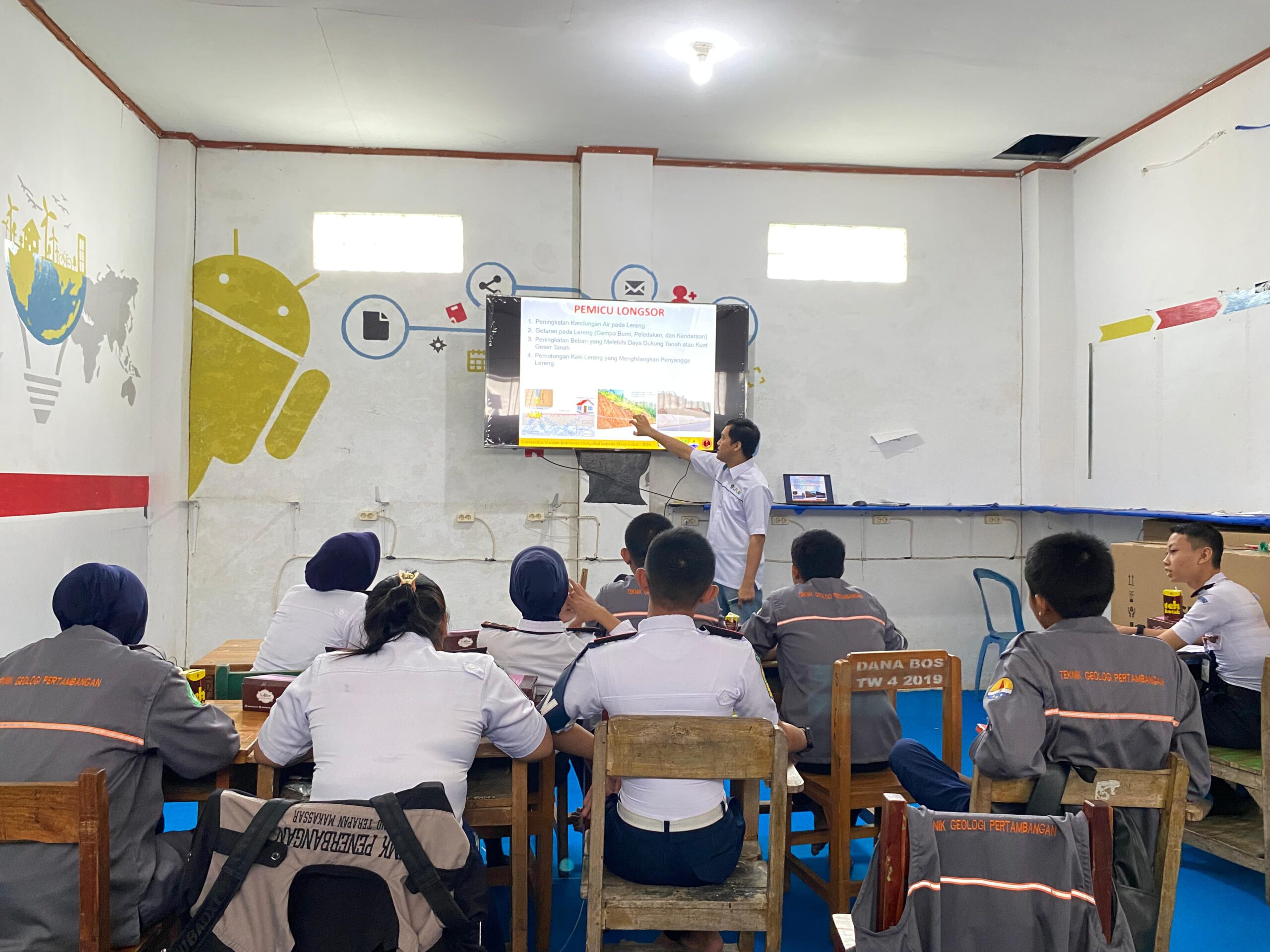
This activity was held by the Community Service Institute (LPkM), Indonesian Muslim University on Wednesday & Thursday (23-24 October 2024) in the Reso Temmapettu Hall, Makassar Applied Techno Aviation Vocational School, Jl. Sanrangan No. 24 B Makassar, which was attended by 28 students from the Department of Mining Geology with the activity title "Training on Testing Physical Properties of Rocks for Modeling Slope Landslides for Students of the Department of Mining Geology, Makassar Applied Techno Aviation Vocational School".
The training begins with a presentation of material regarding the basics of landslides, factors that influence slope stability, triggers and drivers of landslides, signs of impending landslides, and precautions that can be taken to avoid landslides. The training participants were very enthusiastic in receiving the material so that their understanding of landslide disasters increased, and even gained new insights such as the three main controllers of slope stability, namely: slope slope, rock conditions, and hydrological conditions. Each controller is explained in detail so that participants not only know but understand and can mitigate landslides through actions that can be taken to prevent landslides from occurring.
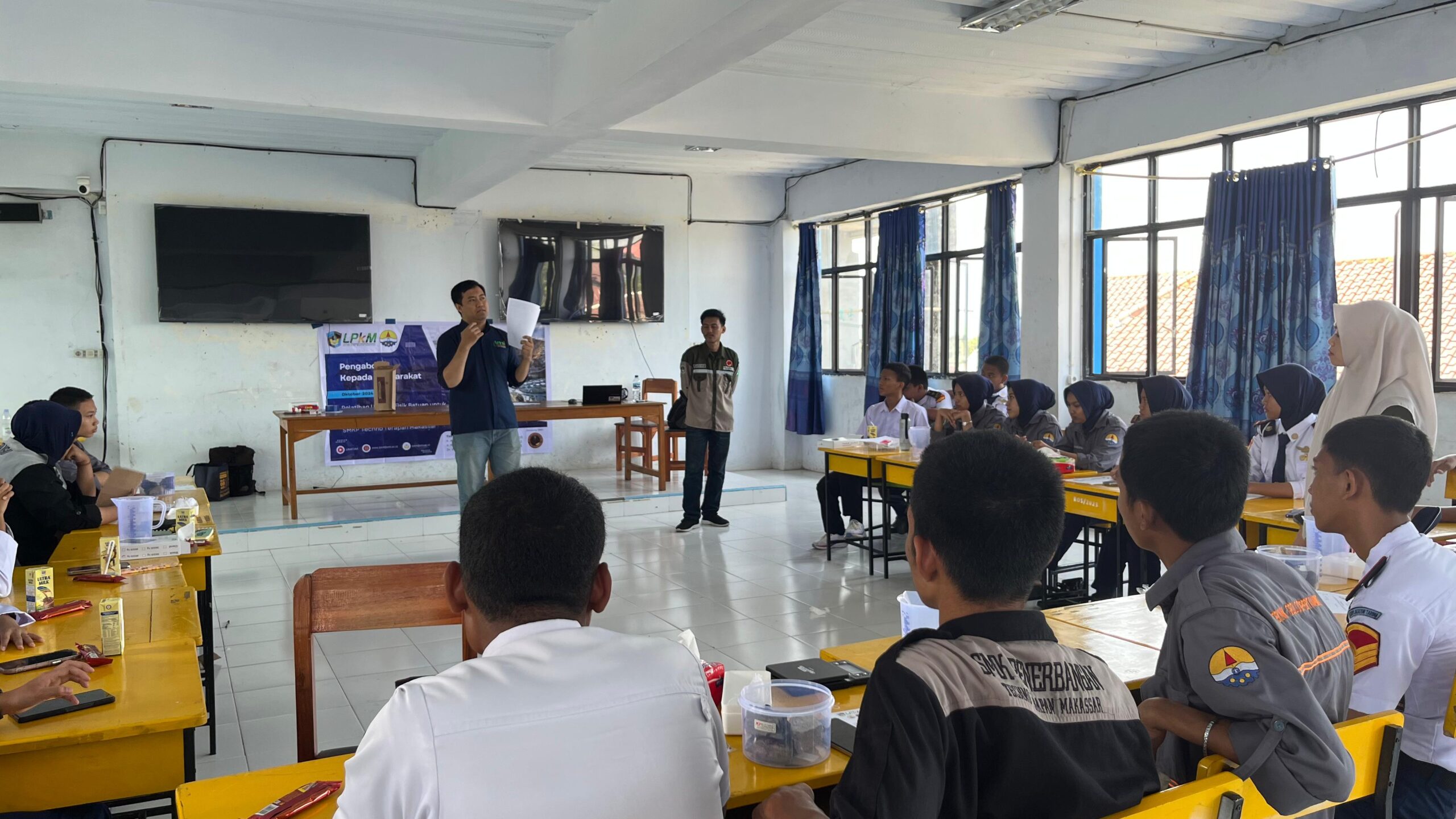
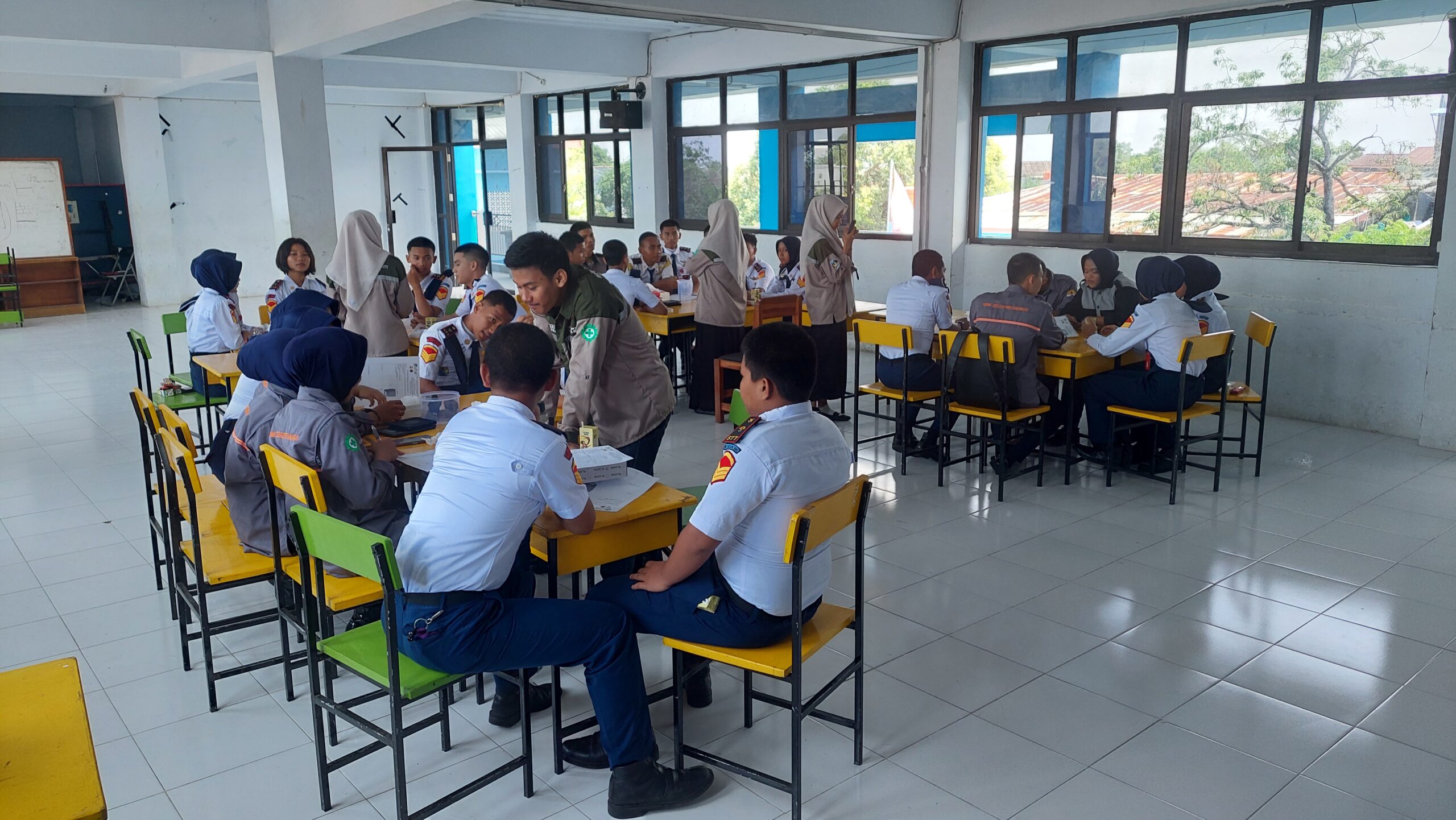
After providing the material, participants then carried out experiments by testing the physical properties of five types of rocks prepared using simple equipment and materials, such as scales, measuring cups, ropes and water, all of which were facilitated by the Community Service Institute (LPkM), Indonesian Muslim University. Physical properties testing is in collaboration with the FTI UMI Rock Mechanics Laboratory so that this training is assisted by several FTI UMI Rock Mechanics laboratory assistants who act as training instructors. The physical properties of rock are one of the main controlling factors for slope stability which is included in the rock condition category. The values of the physical properties of these rocks will later be used in further training, namely slope failure modeling using the rocscience program so that participants can assess and estimate the potential for landslides that occur on a slope. This activity ended with the screening of an educational video on landslides from the National Disaster Management Agency (BNPB).
This service is fully supported by the school through the Deputy Principal for Curriculum, Marlina Baso, S.T, S.Pd., advised that activities like this should continue to be carried out by universities to bring the campus closer to the community, especially in education in the field of mining geology where human resources are still limited. The tridharma of higher education which consists of education, research and service can be an excellent means of spreading benefits to our beloved country, especially in realizing the nation's independence and progress in the field of mining geology.