Collaboration between UMI Academics and Garudaya Pokmaswas, Presents Seagrass Restoration Technology on the Takalar Coast
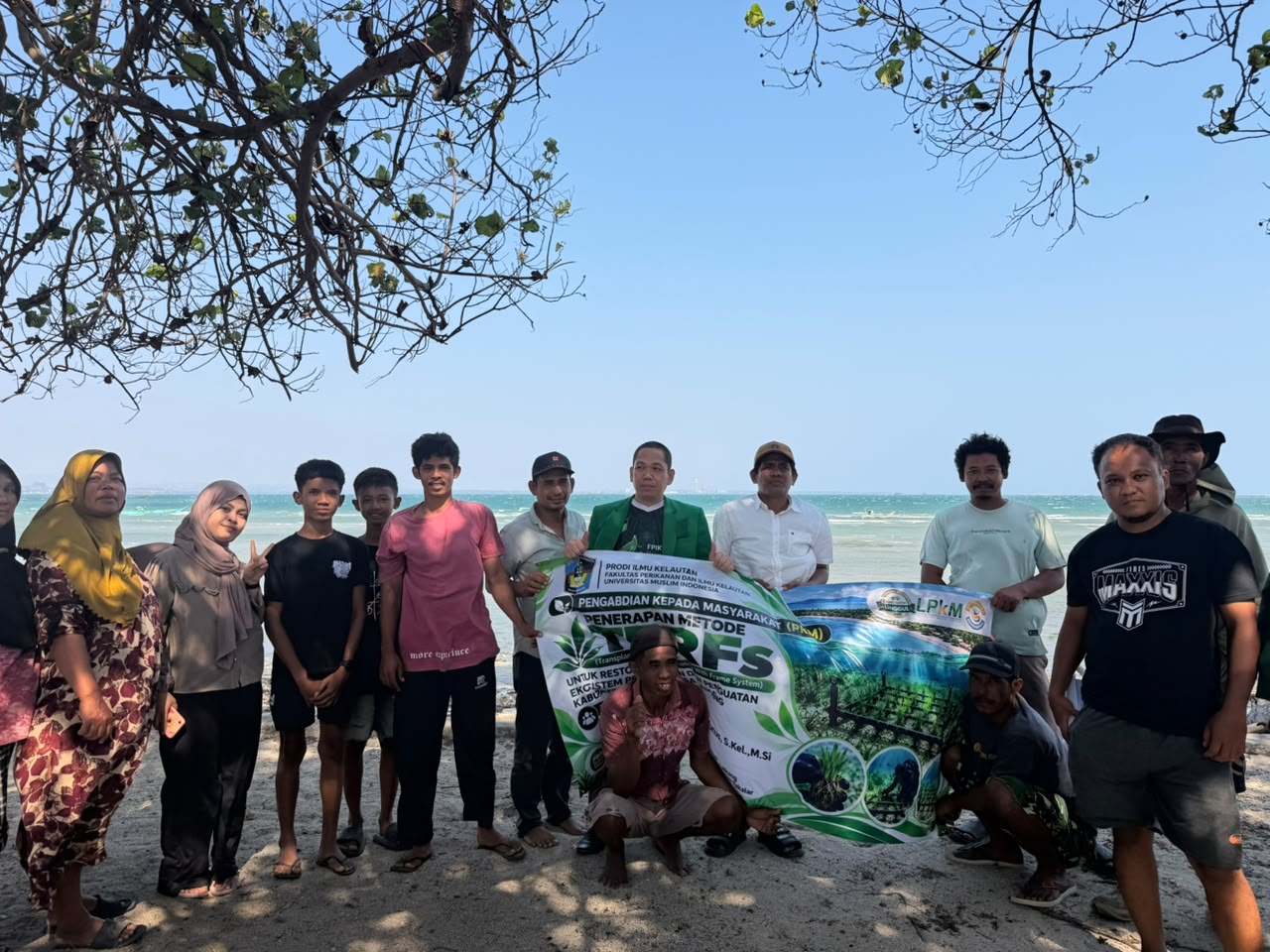
TAKALAR- The commitment to preserving coastal ecosystems continues to be strengthened through collaboration between universities and the community. The Marine Science Study Program, Faculty of Fisheries and Marine Sciences (FPIK), Indonesian Muslim University (UMI), carries out Community Service (PkM) activities through the application of theTransplanting Eelgrass Remotely With Frame System(TERFS) to support seagrass restoration in Puntondo Hamlet, Laikang Village, Takalar Regency, South Sulawesi, Saturday (26/9/2026).
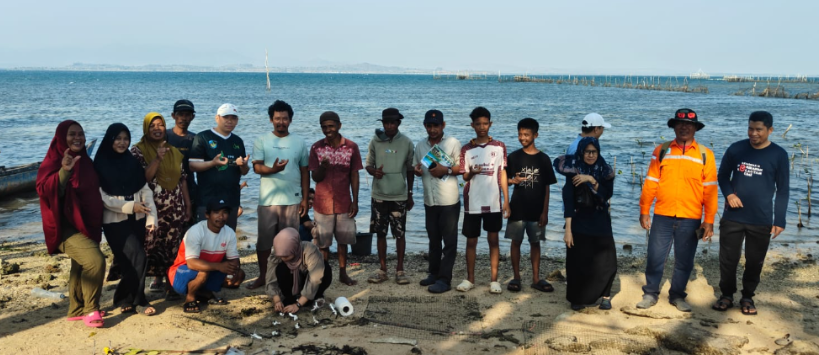
This activity was carried out by a team of FPIK UMI lecturers who were chairedDr. Ir. Muhammad Yunus, S.Kel., M.Sc., togetherIr. Sattar, Ph.D.,by involving the Garudaya Community Monitoring Group (Pokmaswas) as a local partner. This collaboration aims to increase community knowledge and skills in implementing seagrass restoration technology while strengthening sustainable management of coastal ecosystems.
(blue carbon). The decline in the condition of seagrass beds can affect the balance of the ecosystem and the sustainability of coastal fisheries resources. Through this activity, the FPIK UMI team introduced the TERFS method using a frame made from iron wire ram measuring 100 × 100 centimeters. Each frame is designed to place 25 seagrass seedlings in a regular planting pattern and is equipped with four iron stakes for security
stability at the bottom of the water. This technology functions to maintain the position of the seedlings during the initial phase of transplantation until the roots and rhizomes develop and are able to attach firmly to the substrate. Once the plant has grown steadily, the frame can be carefully removed
for reuse.
“Seagrass restoration is not just replanting seeds at the bottom of the waters, but is an effort to restore the ecological function of coastal ecosystems. Through implementation
"TERFS method, we want to introduce simple technology that is easy for people to apply, so that restoration activities can be carried out in a planned, measurable and sustainable manner,"said Muhammad Yunus.
He also emphasized the importance of community involvement in maintaining the success of restoration, especially at the maintenance and monitoring stages after transplantation.
Implementation of activities includes selecting the restoration location, preparing the iron wire ram frame, selecting healthy seagrass seeds, installing the seeds on the frame, and placing the transplant media on a suitable substrate. All stages are designed by taking into account the conditions of the aquatic environment and the characteristics of the seagrass habitat.
The involvement of the Garudaya Pokmaswas is an important part of this activity. Through technical assistance, community groups are expected to be able to understand the transplantation, maintenance and monitoring processes so that they can play an active role in maintaining the sustainability of the restoration program. Monitoring is carried out to evaluate the survival rate of seedlings, leaf growth, root and rhizome development, as well as the condition of the aquatic environment. It is hoped that the monitoring results will form the basis for assessing the effectiveness of TERFS methods and improving subsequent restoration activities.
Chairman of the Garudaya Pokmaswas, Muhammad Kasim, S.Kel., expressed his appreciation for the involvement of FPIK UMI in introducing seagrass restoration methods that can be implemented with coastal communities.
new skills in carrying out seagrass restoration. We hope that this collaboration will continue so that the Garudaya Pokmaswas can play a more active role in it
maintaining and restoring coastal ecosystems, especially seagrass beds in the Puntondo area," said Muhammad Kasim.
This PkM activity is a form of real contribution from FPIK UMI in applying science and technology to support the preservation of marine resources. This program also strengthens relationships between universities and the community in developing conservation approaches based on local participation. Through the collaboration of FPIK UMI and Pokmaswas Garudaya, the application of the TERFS method is expected to become a community-based seagrass restoration model that can be developed sustainably in the coastal areas of Takalar Regency.
managing coastal resources for future generations.