Utilization of Pomegranate Plants DPPM DIKTI Service Team Provides Assistance in Making Health Drinks as an Effort to Prevent Worm Worms in the District. Gowa
Water is a substance that has a very important role in human survival. Viewed from a public health perspective, water needs for haigen purposes must meet the requirements so that the quality of public health is guaranteed. One of the habits of the people of Ta'banga Hamlet is to consume the water directly without processing it first (only through 1 day settling). This is what causes the high number of cases of diarrhea and worm infections in partner locations. The results of field observations showed that wells owned by the community had iron and fluoride levels that did not meet the requirements for clean water and drinking water.
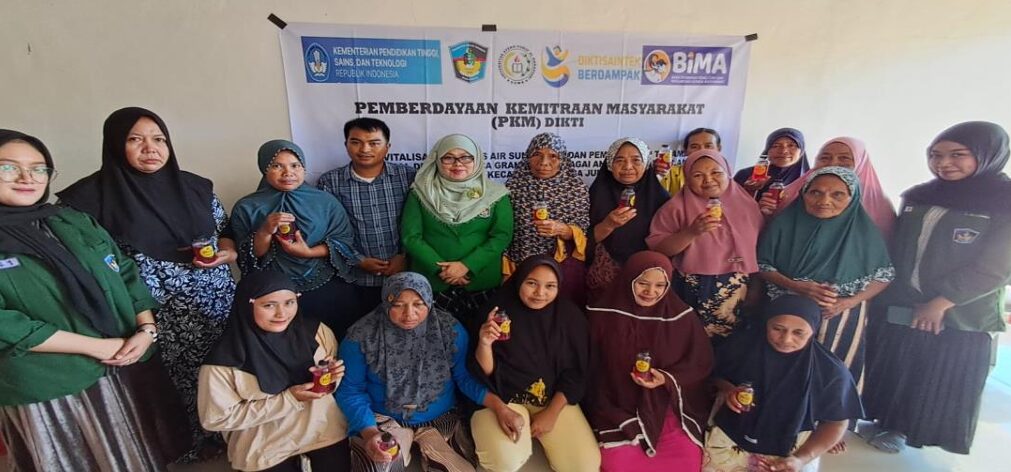
The presence of worm infection cases prompted the 2025 DPPM Dikti Service Team to Hold Community Service Activities in the Community Partnership Program (PKM) on Thursday (06/7/25). This activity was aimed at partners of the farmer group, housewives. This PKM activity was carried out by a service team consisting of the team leader, Mrs. Dr. Yuliati, ST,.M.Kes (Lecturer in Public Health Study Program FKM UMI),. And team member Mrs. Ir Siti Astycha Ananda Sofyan, ST.MT and collaborated with the team of Public Health lecturer Syech Yusuf Al Makassari Gowa, Mr. Hardi, SKM.M.M.Kes.
Head of the Service Team, Yuliati said that this activity received funding assistance from the Directorate of Research and Community Service (DPPM) with main contract number 126/C3/DT.05.00/PM/2025 (28 May 2025) and derivative contract number No. 892/LL9/PPM/2025 (03 June 2025) and "1503/C.06/UMI/VI/2025 (10 June 2025) and has been socialized to the government and community to make Julukanaya village, Gowa Regency, a model for implementing appropriate technology for well water filtration," he explained.
According to Yuliati, the partners' problems are: Production aspects (improving water quality), namely the quality of dug well water that does not meet standards, namely the water becomes cloudy and smells, lack of understanding of water purification techniques at the household level. The second problem is the social aspect in the form of efforts to improve health due to high cases of worm infections due to unhealthy water and environmental conditions, low community participation/empowerment in
Utilization of pomegranate plants.
According to Hardi as a member of the PKM TEAM, the aim of this activity is to improve the quality of clean water sanitation in drilled wells. Increasing clean and healthy living behavior (PHBS) in the community and preventing worm infections in the community by using natural herbal ingredients. He also revealed that 15 people and partners participated in the PKM activities and involved 3 students.
According to Siti Astycha, it is hoped that this activity will increase the scope of access to clean water and support one of the SDGs programs, namely Clean Water and Proper Sanitation: namely ensuring the availability and sustainable management of clean water and sanitation for all, she said. The solution offered is training and outreach on water filtration techniques which have also been carried out using the filtering method. From this socialization and training, the community became skilled in making water filter tools. Efforts to provide clean water are made by modifying modern water purification equipment for household consumption and making health drinks from pomegranates. Remembering that these fruits become potted gardens and residents' yards. Pomegranate is one of the TOGA that can help overcome worm infections because it contains active compounds that are anthelmintic. These compounds are found in the fruit skin, bark and roots of the pomegranate tree. Traditional medicinal plants contain compounds such as flavonoids, saponins, tannins and alkaloids which have potential as anthelmintics, he concluded.