Empowerment of Assisted Villages (GDP) Healthy Villages Maternal and Child Health Education Center Based on Integration of Virtual Reality Technology Systems and Diversification of Moringa Leaf Processed Products in Pucak Village, Tompobulu District, Maros Regency in 2024
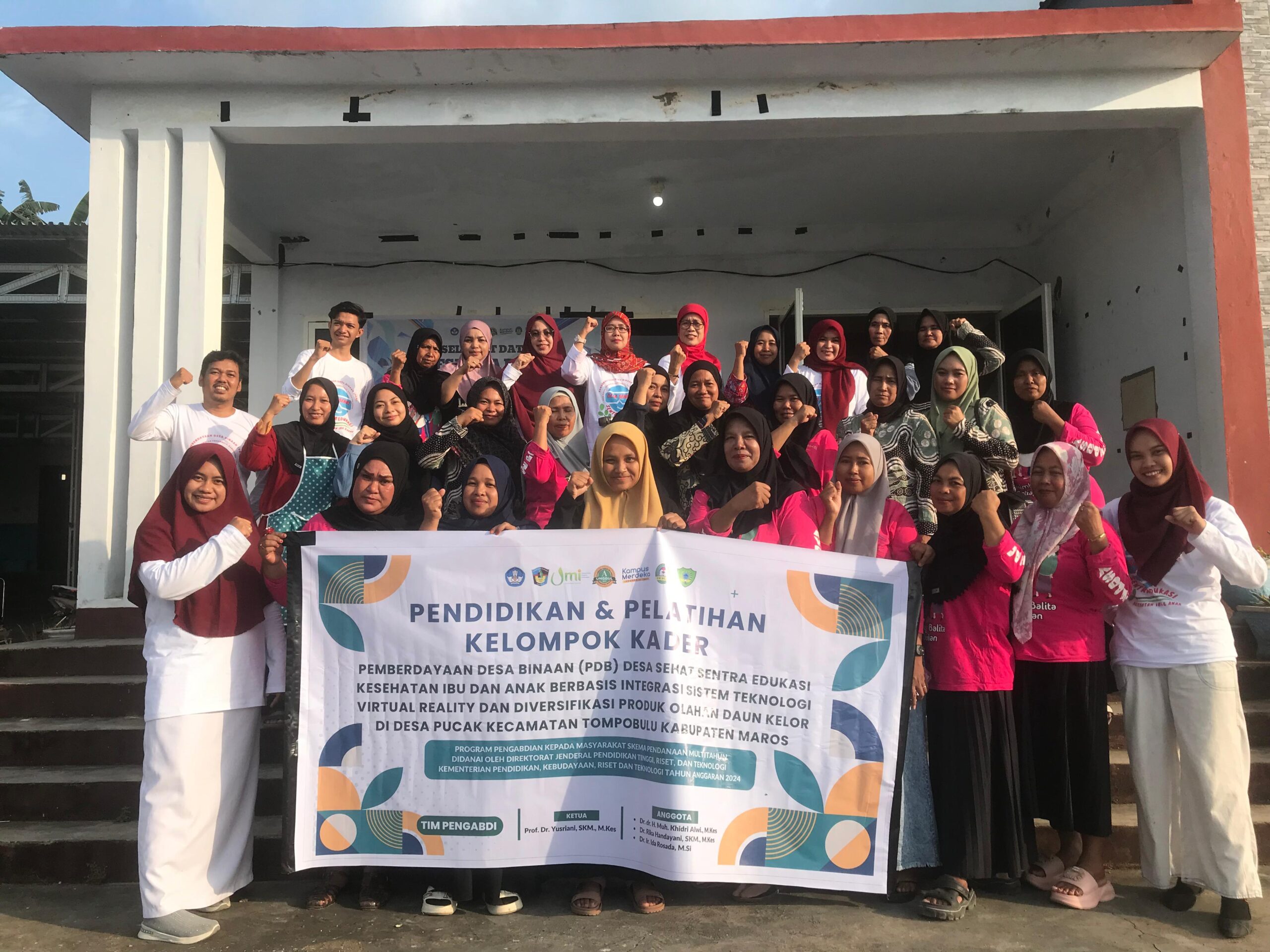
In an effort to improve the welfare and quality of life of village communities, the community service team led by Prof. Dr. Yusriani, SKM, M.Kes., implemented an empowerment program in Pucak Village. This program develops the Healthy Village as a center for maternal and child health education, which utilizes the integration of virtual reality (VR) technology systems and diversification of processed Moringa leaf products.
This program is a real effort to create an independent and competitive village through an innovative approach. In this program, VR technology is used as an interactive and immersive educational tool, allowing mothers and children to learn about health in a more interesting and effective way. The material presented includes the health of pregnant women, the health of women giving birth, the benefits of Moringa leaves for breastfeeding mothers, the health of postpartum mothers, the use of processed Moringa leaves and the nutrition of children which is simulated visually and realistically.
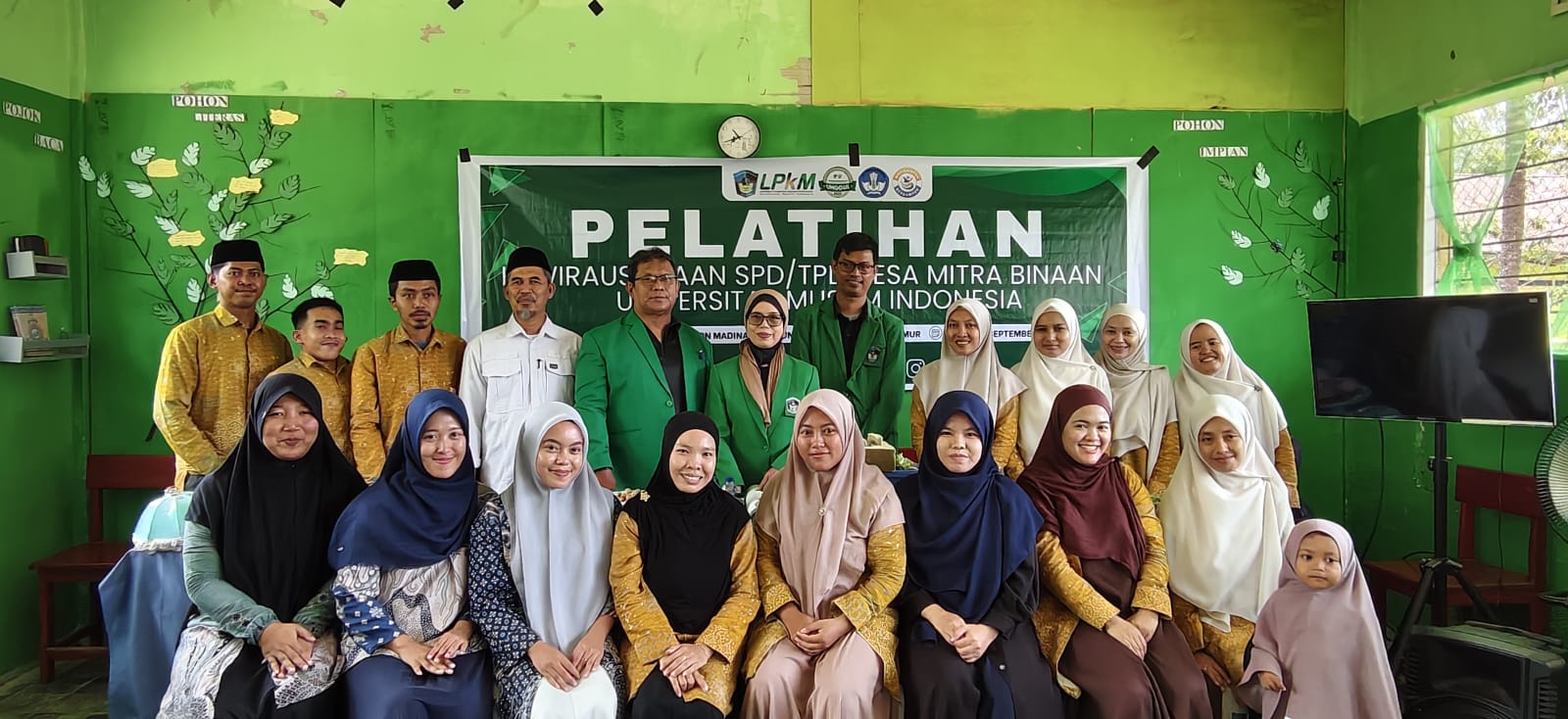
The Indonesian Muslim University Service Team collaborates with Megarezky University Service lecturers to increase the capacity of the Health Cadre Group and the Bukit Kemuning Karang Taruna Group to make Pucak Village, Tompobulu District, Maros Regency aHEALTHY VILLAGE CENTER FOR MOTHER AND CHILD HEALTH EDUCATION BASED ON VIRTUAL REALITY TECHNOLOGY SYSTEM INTEGRATION AND DIVERSIFICATION OF PROCESSED Moringa LEAF PRODUCTS through activitiesEMPOWERMENT OF GUIDED VILLAGES (GDP).
ActivityEMPOWERMENT OF GUIDED VILLAGES (GDP) This was carried out by the Service Team consisting of Prof. Dr. Yusriani, SKM., M.Kes, (Lecturer at the Faculty of Public Health) Dr. Ir. Ida Rosada, M.Si (Lecturer at the Faculty of Agriculture), Dr. Dr. H. Muh. Khidri Alwi, M.Kes (Lecturer at the Faculty of Public Health), Dr. Rika Handayani, SKM., M.Kes (Lecturer at Meharezky University, and collaborated with alumni and students from the Bachelor of Public Health Program, Master of Public Health students and Bachelor of Computer Science students at the Indonesian Muslim University who partnered with the Health Cadre Group and the Bukit Kemuning Karang Taruna Group to create Pucak Village, chaired by Ms. Saharia as cadre and Mr. Fathurrahman as head of the Bukit Kemuning Karang Taruna group, Pucak Village.
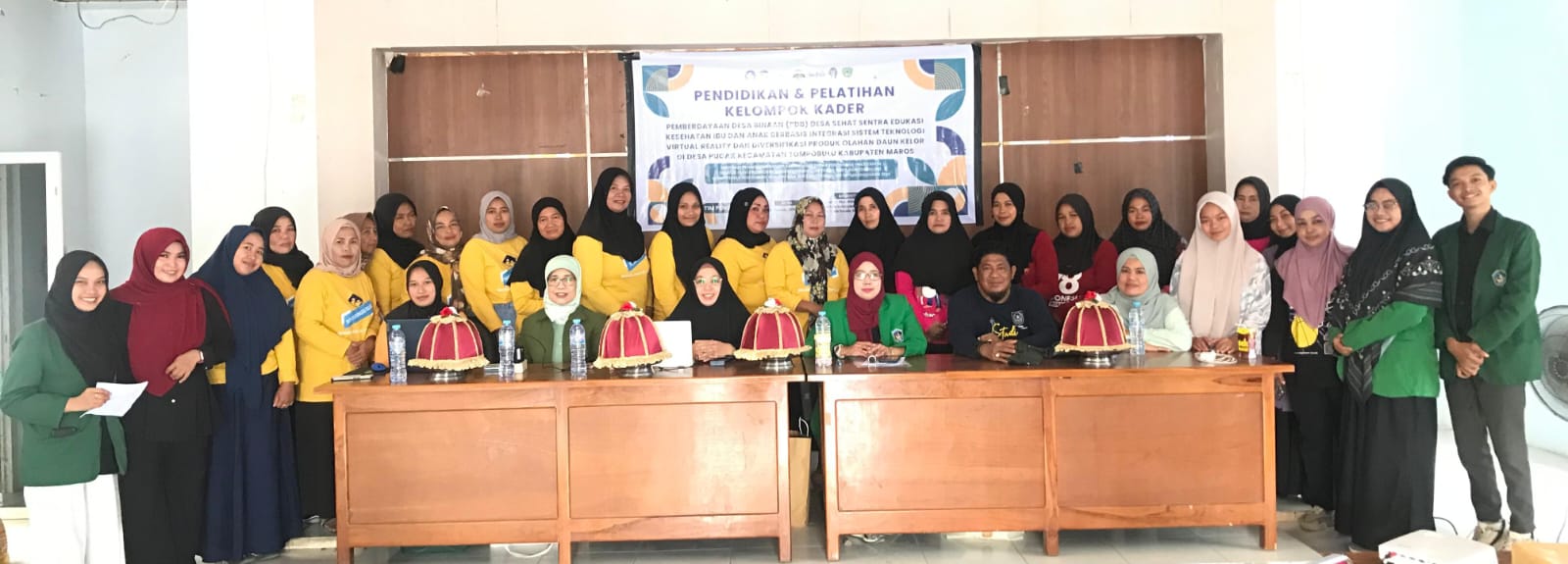
The Service Team together with students specializing in Health Promotion at the Indonesian Muslim University (UMI) Makassar held outreach activities and training on stunting prevention through education and making Moringa leaf-based food preparations in Tompobulu District, Maros Regency, South Sulawesi.
According to Dr. Yusriani, SKM., M.Kes, as Head of the service team, this GDP activity received second year Funding Assistance for a multi-year community service scheme from the Directorate of Research, Technology and Community Service. Directorate General of Higher Education, Research, Technology. Ministry of Education, Culture, Research and Technology in 2024 and has been socialized to the government and the community, the Health Cadre Group and the Bukit Kemuning Karang Taruna Group to make Pucak Village, Tompobulu District, Maros Regency a healthy village, a center for maternal and child health education.
This activity is part of ongoing efforts to increase public awareness regarding the importance of balanced nutritional intake in improving maternal and child health.
This activity was attended by posyandu cadres and also the Bukit Kemuning Youth Organization, Pucak Village, students of S1 Public Health FKM UMI and S2 Public Health PPS UMI (www.umi.ac.id) to participate in health education regarding the benefits of Moringa leaves, which are known to have high nutritional content, including vitamin A, vitamin C, iron and calcium, which are very necessary for children's growth. Moringa leaves are also considered a nutrient-rich source of vegetable protein, which can be an effective solution in fighting malnutrition.
Apart from education, the service team together with UMI students also held training in making various Moringa leaf-based food preparations that can be consumed daily. Some of the processed products taught in this training include:
- Moringa Leaf Stick: A simple preparation that can be used as a healthy and nutritious snack. These chips are easy to make and have a crunchy and savory taste, so they are liked by both children and adults.
- Moringa Leaf Bolu: Pudding that is not only delicious but also rich in nutrients. The manufacturing process is taught using natural ingredients, making it a healthy alternative for dessert.
- Peyek Moringa Leaves: Peyek, which is commonly known as a typical Indonesian snack, is prepared with the addition of Moringa leaves to increase its nutritional content. This duck can be a healthy snack choice for the family.
- Moringa Cookies: These cookies not only offer a distinctive taste, but also the health benefits of Moringa leaves. Moringa cookies are a choice for those looking for a healthy snack that is rich in nutrients, especially among those who are aware of the importance of nutritional intake in their daily diet.
These products not only help improve people's health, but also provide economic opportunities for village residents.
"This Moringa leaf processed product has been verified and recognized for its quality, so it can be a promising source of income for village communities," added Prof. Dr. Yusriani, SKM., M.Kes
Chair of the Service Team who also serves as Chair of the Master of Public Health Study Program, Postgraduate Program at the Indonesian Muslim University (https://pascasarjana.umi.ac.id/magister-kesehatan-community/), Prof. Dr. Yusriani., SKM., M.Kes said that this activity is expected to empower local communities to utilize existing natural resources, such as Moringa leaves, in an effort to improve health and prevent stunting, especially in Pucak village.
"We hope that with this training, the community can be more creative in processing nutritious food, while maintaining the sustainable use of local natural resources. With the right education, we can together prevent stunting in this area," said Prof. Dr. Yusriani., SKM., M.Kes.
The enthusiasm of the community in participating in this activity is very high. Residents who attended were also given the opportunity to receive video material on how to process Moringa leaves into healthy snacks and snacks and were also given the opportunity to taste the processed Moringa leaves, so they could easily apply them at home. This activity was also supported by village officials and the Tompobulu District who provided full facilities and support for the smooth running of the event.
At the end of the activity, the service team and UMI students expressed their appreciation for the partners' participation. It is hoped that the results of this outreach and training will not only increase people's knowledge about the importance of nutrition, but also encourage them to start producing healthy processed foods from Moringa leaves which can become a new source of income for families.
It is hoped that this service program can become a model for empowering other villages in Indonesia. By integrating technology and utilizing local resources, it is hoped that the Village [Pucak Village, Tompobulu subdistrict, Maros district] can continue to develop into a healthy and economically independent village.
Through the leadership of Prof. Dr. Yusriani, this program shows that technological innovation and community empowerment can go hand in hand to achieve a more advanced, healthy and prosperous village.
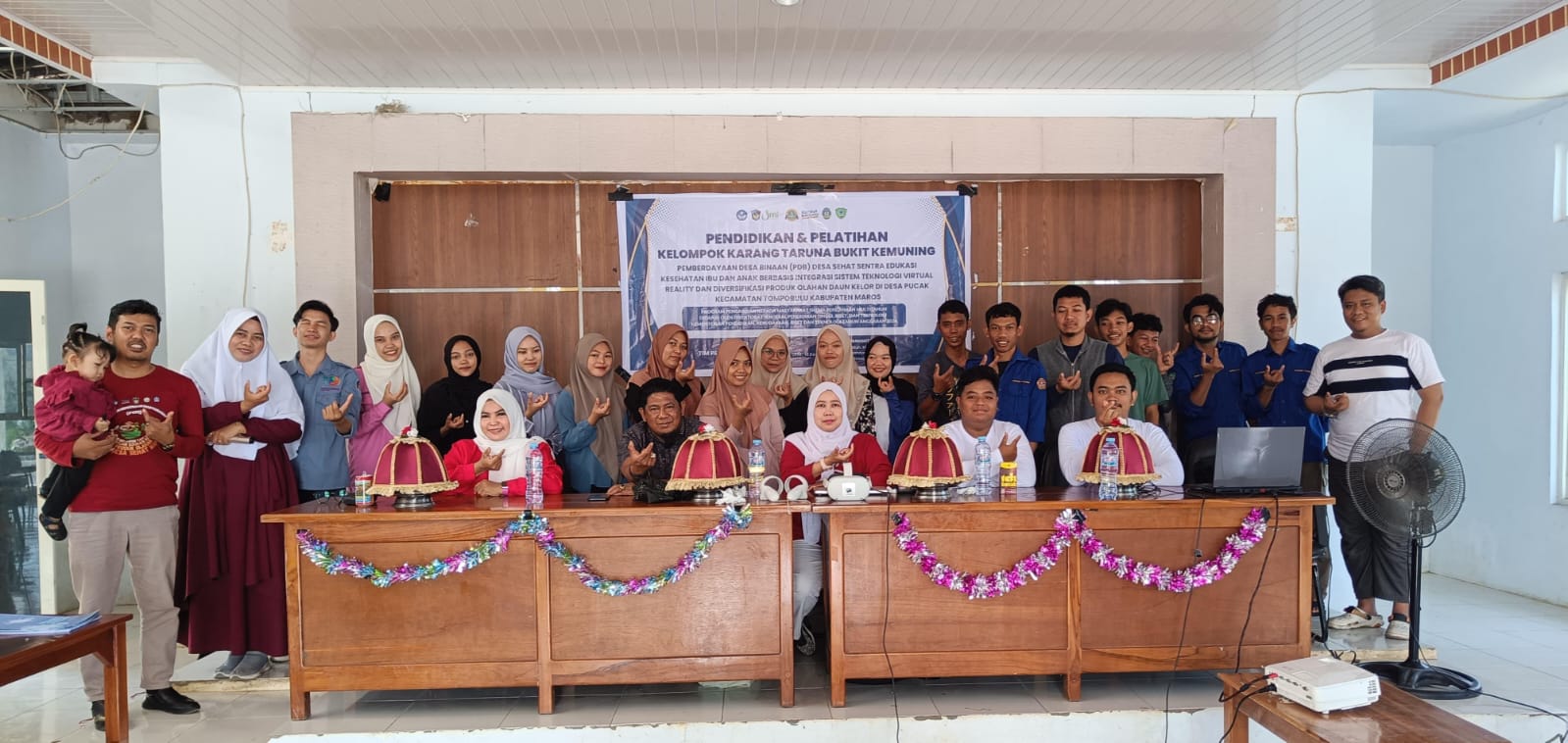
This activity is part of a series of community service programs carried out by the UMI service team and students in order to support government programs to reduce stunting rates in Indonesia. Similar activities are planned to continue to be carried out in various other regions, especially in the South Sulawesi region.