Empowerment of Community Partnerships KEMENDICTISAINTEK: Collaboration Across Disciplines of Science Presents Simple Desalination Solution of Brackish Water into Fresh Water Realizing Independence in Access to Clean Water for the Community of Punaga Village
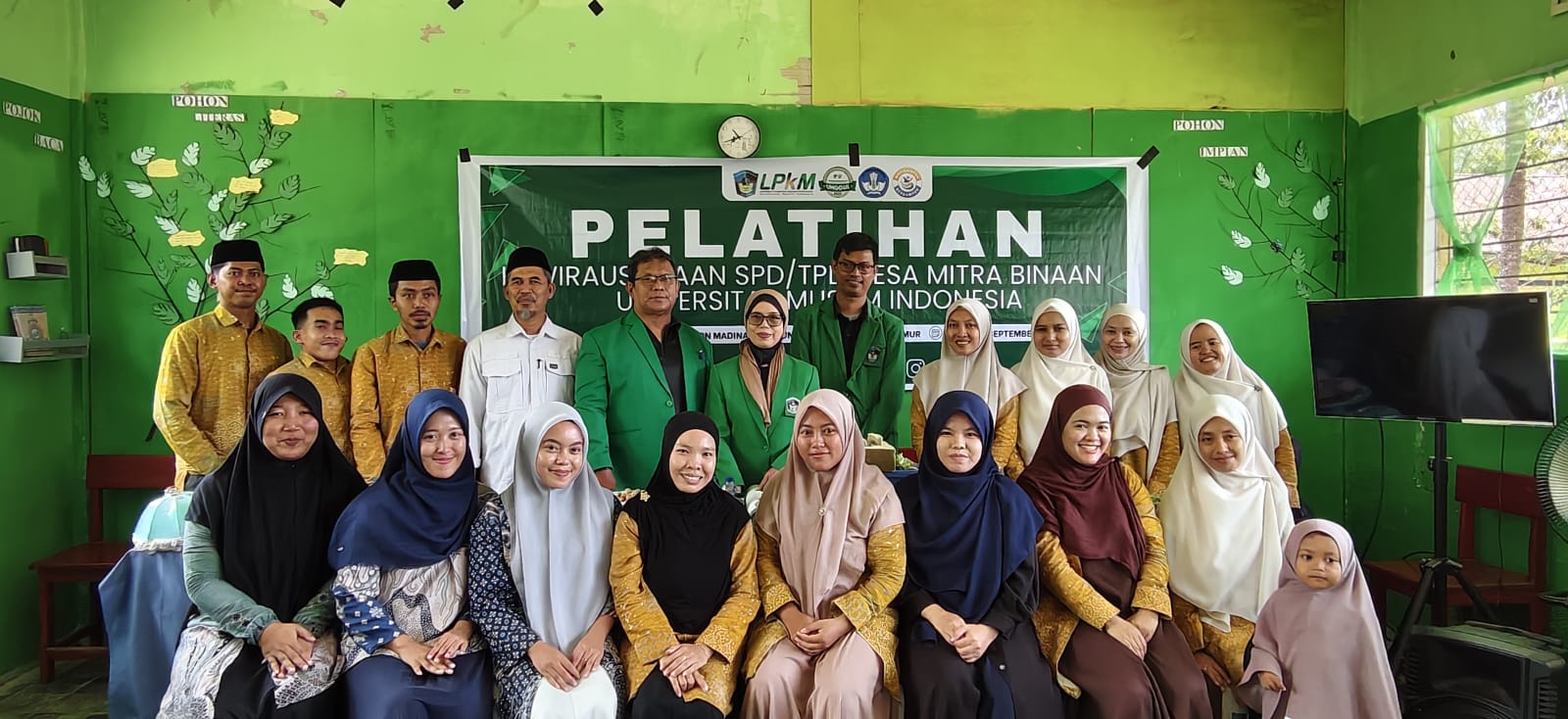
Takalar — Efforts to increase the availability of fresh water for communities in coastal areas continue to be carried out through collaboration across scientific disciplines and across universities. This collaboration was realized through community service activities involving the Indonesian Muslim University (UMI) Community Service Institute (LPKM), lecturers from the Indonesian Muslim University (UMI) and Muhammadiyah Makassar Polytechnic, as well as community partners the Sipakatutui Farmers Group in Punaga Village, Takalar Regency.
This activity is part of the Community Partnership Empowerment Program (PKM) of the Ministry of Higher Education, Science and Technology (Kemendikti Saintek) with the title "Empowerment of Farmer Groups in the Coastal Area of Punaga Village through the Application of Appropriate Technology for Simple Desalination for Providing Fresh Water in Punaga Village, Takalar Regency."
Punaga Village as a coastal area has quite large water resource potential, but the availability of fresh water is still one of the challenges faced by the community. Coastal environmental conditions cause some water sources to potentially have high levels of salt or salinity so that their use for community needs and agricultural activities is limited.
In response to this problem, the service team presented appropriate technology in the form of a simple desalination system designed taking into account the conditions, needs and capabilities of the local community. This technology is expected to be an alternative for processing water with high salt content into fresh water that is more suitable for use.
The uniqueness of this activity lies in the collaboration across scientific disciplines, namely Architectural Engineering, Civil Engineering and Environmental Health. Each field contributes according to its competence. Architectural Engineering plays a role in aspects of designing and adapting technology to environmental conditions and user needs. Civil Engineering contributes to aspects of construction, installation and system reliability, while the Environmental Health sector focuses on aspects of water quality, public health, sanitation and safety of processed water. This synergy is a concrete form of implementing the tridharma of higher education, especially in presenting innovation and technology that can be applied and provide direct benefits to society.
This activity is part of the Community Partnership Empowerment Program (PKM) of the Ministry of Higher Education, Science and Technology (Kemendikti Saintek) with the title "Empowerment of Farmer Groups in the Coastal Area of Punaga Village through the Application of Appropriate Technology for Simple Desalination for Providing Fresh Water in Punaga Village, Takalar Regency."
Punaga Village as a coastal area has quite large water resource potential, but the availability of fresh water is still one of the challenges faced by the community. Coastal environmental conditions cause some water sources to potentially have high levels of salt or salinity so that their use for community needs and agricultural activities is limited.
In response to this problem, the service team presented appropriate technology in the form of a simple desalination system designed taking into account the conditions, needs and capabilities of the local community. This technology is expected to be an alternative for processing water with high salt content into fresh water that is more suitable for use.
The uniqueness of this activity lies in the collaboration across scientific disciplines, namely Architectural Engineering, Civil Engineering and Environmental Health. Each field contributes according to its competence. Architectural Engineering plays a role in aspects of designing and adapting technology to environmental conditions and user needs. Civil Engineering contributes to aspects of construction, installation and system reliability, while the Environmental Health sector focuses on aspects of water quality, public health, sanitation and safety of processed water. This synergy is a concrete form of implementing the tridharma of higher education, especially in presenting innovation and technology that can be applied and provide direct benefits to society.
In its implementation, the Sipakatutui Farmers Group is not only positioned as a beneficiary, but also as an active partner in the empowerment process. The community is given an understanding of water quality problems, the working principles of desalination, technology operation, system maintenance, and the importance of regular water quality monitoring.
This empowerment approach is expected to increase the community's capacity to operate and maintain technology independently. Thus, the application of desalination technology does not stop at providing equipment, but can become a sustainable solution that can be utilized and developed by the community according to needs.
This activity shows that solving water problems in coastal areas requires a multidisciplinary approach. Water problems are closely related to environmental, health, construction, spatial, social and economic aspects. Therefore, collaboration across scientific fields and universities is an important strategy to produce more comprehensive and applicable solutions. Through this Community Partnership Empowerment Program (PKM), the team hopes that the application of simple desalination technology can help increase community access to fresh water while supporting the activities of farmer groups in Punaga Village. It is also hoped that this activity can become a model for empowering coastal communities based on appropriate technology that can be developed and replicated in other areas that face problems with the availability of fresh water.
The synergy between LPKM UMI, Indonesian Muslim University, Makassar Muhammadiyah Polytechnic, and the Sipakatutui Farmers Group is clear proof that universities can be present and contribute to solving the problems faced by society. Through the collaboration of science, technology and community empowerment, simple desalination innovation is expected to be able to have a real impact towards coastal communities that are healthier, more productive and independent in providing fresh water.
Ir. Arinda Wahyuni, ST, M.Ars (UMI Architectural Engineering Lecturer) as Chair of the SERVICE TEAM said, "I hope that with this program, Punaga village can get fresh water and clean and healthy water that is suitable for consumption and daily use, not only clean water. I also hope that with the Management Team from the SIPAKATUTUI 1 Farmers Group, clean water can be distributed and improve the economy in Punaga village and that this Simple Desalination tool can be well maintained," he said.
Ir. Rizki Ayu Saraswati, ST, MT (UMI Civil Engineering Lecturer) also said, "K3 training and operational management are very important in this program, therefore we from the team hope that this training can minimize damage and accidents that will occur to the management team or the community," he said. Sartika Fathir Rahman, SKM, M.KL (Lecturer in Environmental Health at Muhammadiyah Makassar Polytechnic) also highlighted the condition and quality of water, "The condition and quality of water in Punaga village is brackish water, if consumed it can have an impact on people's health. With this program we hope we can overcome things like that with this simple desalination tool," he said. This program also involves 2 students from the Indonesian Muslim University to provide real experience and practice in serving society.
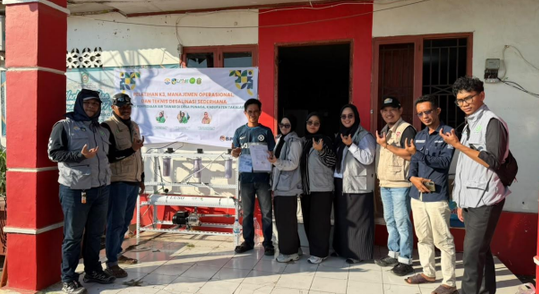
The Village Head also expressed his gratitude during the K3 and operational management training, "I would like to thank the institutions and lecturers who have organized and chosen our village as a form of solving problems in society regarding the availability of clean and fresh water in the form of community service programs. I hope that with this tool our village will be more prosperous and can meet its clean water needs," he said.
This empowerment approach is expected to increase the community's capacity to operate and maintain technology independently. Thus, the application of desalination technology does not stop at providing equipment, but can become a sustainable solution that can be utilized and developed by the community according to needs.
This activity shows that solving water problems in coastal areas requires a multidisciplinary approach. Water problems are closely related to environmental, health, construction, spatial, social and economic aspects. Therefore, collaboration across scientific fields and universities is an important strategy to produce more comprehensive and applicable solutions. Through this Community Partnership Empowerment Program (PKM), the team hopes that the application of simple desalination technology can help increase community access to fresh water while supporting the activities of farmer groups in Punaga Village. It is also hoped that this activity can become a model for empowering coastal communities based on appropriate technology that can be developed and replicated in other areas that face problems with the availability of fresh water.
The synergy between LPKM UMI, Indonesian Muslim University, Makassar Muhammadiyah Polytechnic, and the Sipakatutui Farmers Group is clear proof that universities can be present and contribute to solving the problems faced by society. Through the collaboration of science, technology and community empowerment, simple desalination innovation is expected to be able to have a real impact towards coastal communities that are healthier, more productive and independent in providing fresh water.
Ir. Arinda Wahyuni, ST, M.Ars (UMI Architectural Engineering Lecturer) as Chair of the SERVICE TEAM said, "I hope that with this program, Punaga village can get fresh water and clean and healthy water that is suitable for consumption and daily use, not only clean water. I also hope that with the Management Team from the SIPAKATUTUI 1 Farmers Group, clean water can be distributed and improve the economy in Punaga village and that this Simple Desalination tool can be well maintained," he said.
Ir. Rizki Ayu Saraswati, ST, MT (UMI Civil Engineering Lecturer) also said, "K3 training and operational management are very important in this program, therefore we from the team hope that this training can minimize damage and accidents that will occur to the management team or the community," he said. Sartika Fathir Rahman, SKM, M.KL (Lecturer in Environmental Health at Muhammadiyah Makassar Polytechnic) also highlighted the condition and quality of water, "The condition and quality of water in Punaga village is brackish water, if consumed it can have an impact on people's health. With this program we hope we can overcome things like that with this simple desalination tool," he said. This program also involves 2 students from the Indonesian Muslim University to provide real experience and practice in serving society.
The Village Head also expressed his gratitude during the K3 and operational management training, "I would like to thank the institutions and lecturers who have organized and chosen our village as a form of solving problems in society regarding the availability of clean and fresh water in the form of community service programs. I hope that with this tool our village will be more prosperous and can meet its clean water needs," he said.