PKM: “ENVIRONMENT-BASED EMPOWERMENT THROUGH TRAINING ON THE DIVERSIFICATION OF ECO ENZYME INTO AROMA THERAPY PRODUCTS IN THE MANGGALA ANTANG VILLAGE ASSEMBLY GROUP”
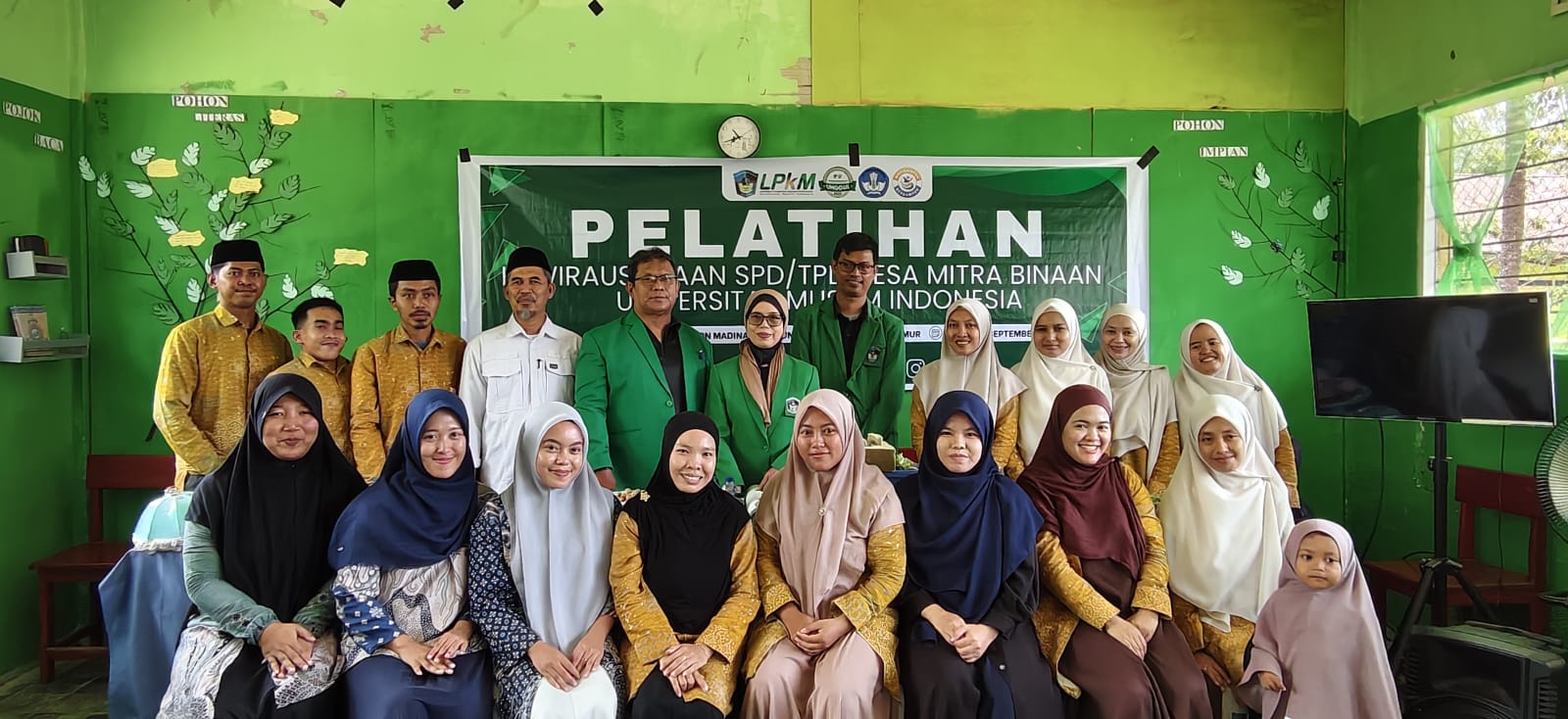
Makassar - As a concrete step in increasing awareness of the environment while fostering community economic independence, a team of Indonesian Muslim University (UMI) lecturers implemented a Community Partnership Program (PKM) with the theme "Environment-Based Empowerment through Training on Eco Enzyme Diversification into Aromatherapy Products." This activity was held at the Nurul Iman Mosque, Manggala Antang Village, Makassar, on Sunday, November 9 2025.

The implementation team was chaired by Zelfia, S.IP., M.M., M.Sos.I (NIDN 0922098102) with members Dr. Abd. Gafur, SKM., M. Kes. (NIDN 0916127801) and Dr. Hadawiah, S.E., M.Si. (NIDN 0307077105). A total of 50 participants from the Nurul Nisa Taklim Council participated in this activity enthusiastically, starting from the Focus Group Discussion (FGD) session, training, to the production assistance stage.
According to Zelfia, this activity stems from concerns about the low level of public awareness in managing household waste and the lack of innovation in environmentally friendly products such as eco enzyme.
"So far, eco enzyme has often been considered to have a strong smell and is less attractive. Through this activity, we want to introduce innovation by processing it into a natural aromatherapy product that is not only healthy for the environment, but also has economic value," he said.
Apart from the aroma problem with eco enzyme, the team also found other obstacles, such as the lack of integration of environmental issues in the taklim assembly activities, limited packaging skills, and low motivation of participants to continue production after the training.
To answer these challenges, the team adopted an educational and participatory approach through training in making aromatherapy eco enzymes, learning about product packaging and branding, as well as preparing practical modules and leaflets so that participants could continue activities independently in the future.
Dr. Abd. Gafur emphasized the importance of collaboration between environmental and household economic aspects.
"Eco enzymes are not only beneficial for the environment, but can also be a means of da'wah, health and a family-based creative economy. Through the taklim assembly, these ecological messages can continue to be disseminated," he said.
During the training, participants learn to directly process kitchen waste such as fruit and vegetable peels into natural aromatic eco enzymes, then package them with a simple but attractive appearance, and present them as products with selling value.
Meanwhile, Dr. Hadawiah emphasized that sustainability is the main focus of this activity.
"We want to ensure that this activity does not stop at theory. Therefore, the team also provides assistance and divides roles between members of the taklim assembly so that production can continue to run together," he explained.
Through this PKM program, the women of the taklim assembly are expected to become drivers of changein protecting the environment as well as being a creative economy actor based on preaching values. Eco productIt is hoped that the aromatherapy enzyme results from this training will become a milestone in the birth of the Assembly movementTaklim Cares for the Environment in Manggala Antang Village and the surrounding area.