UMI LPkM Lecturer Team Conducts Training on Making Herbal Tea from Kersen Leaves and Flowers which is Rich in Health Benefits for PKK Women in Paddinging Village, Kec. Sanrobone District. Takalar
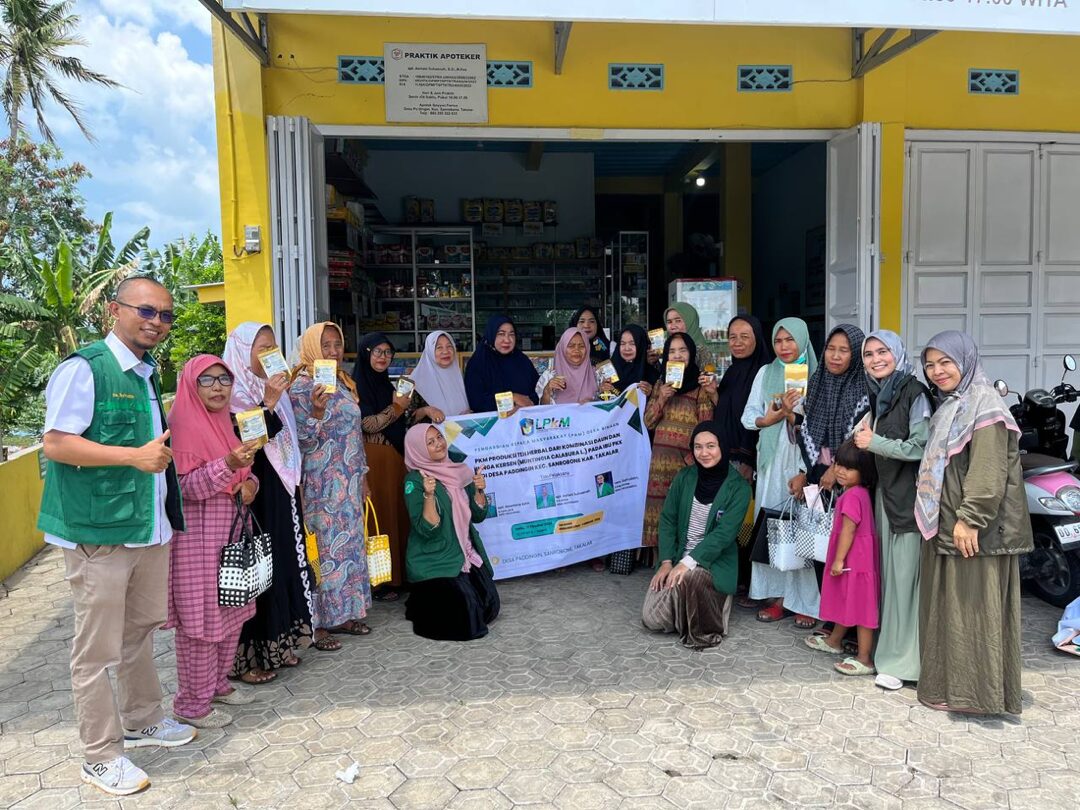
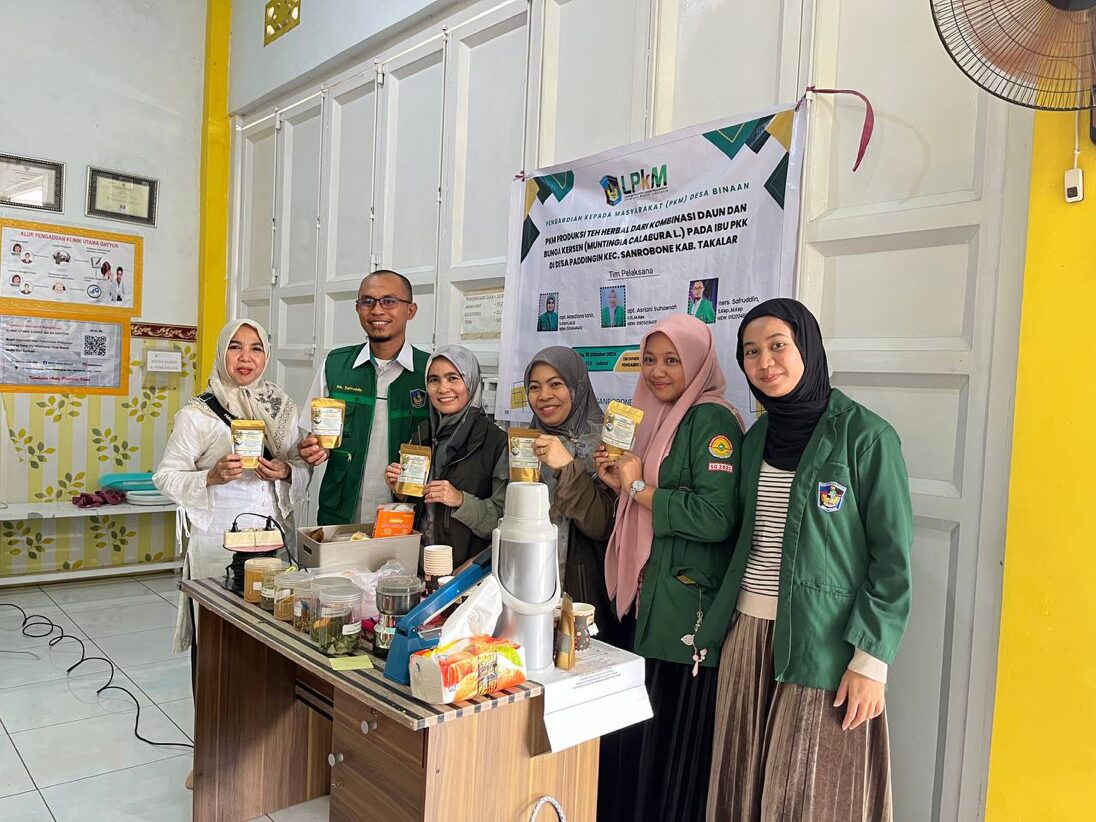
On this occasion, the UMI Community Service Institute (LPkM) provided the opportunity for lecturers to carry out community service in the UMI-assisted village, namely Padding village, Kec. Sanrobone, Kab. Takalar. The LPkM service lecturer team consists of 3 people, namely two lecturers from the Faculty of Pharmacy and one lecturer from the Faculty of Public Health (FKM) chaired by apt. Masdiana Tahir, S. Farm with members apt. Asriani Suhaenah, S.Sc., M.Kes and Ners. Safaruddin, S.Kep., M.Kep and involving two UMI Pharmacy students.
This PkM activity is funded by the UMI Waqf Foundation through LPkM UMI. Based on an analysis of the situation in the village of Padding, it is known that there are many cherry plants growing wild in the Padding village area which can be seen growing along the village road in front of the residents' houses. However, local people do not know much about the benefits and how to process it. And the lifestyle that occurs in society becomes an unhealthy lifestyle which is the driving force for the emergence of various diseases such as diabetes, cholesterol, high blood pressure, gout and other diseases. Based on the results of a survey conducted at one of the clinics in Padding village, sub-district. Sanrobone, Takalar district, it is known that these diseases are among the top 10 most common diseases suffered by people in the Padjangan village area. So the public needs to be educated regarding these diseases on how to prevent and treat them by using the leaves and flowers of the cherry plant as an alternative herbal treatment without using chemical drugs which have many side effects. From the results of a literature review regarding the chemical content and pharmacological activity of cherry leaves, it is known that the chemical contents of cherry leaves are flavonoids, saponins, tannins and terpenoids, which have been scientifically proven to have pharmacological activity as antidiabetic, antioxidant, antibacterial, anthelmintic, antihyperlipidemic and anti-inflammatory. And research has been carried out on cherry blossoms which contain phenolic compounds, flavonoids, tannins, saponins, alkaloids and terpenoids. Test the activity of ethanol extract of cherry blossoms as an inhibitor of the α-glucosidase enzyme which plays a role in the treatment of diabetes mellitus. And antioxidant activity tests have been carried out including very strong antioxidants.And the activity of cherry flower extract has been tested as an inhibitor of the xanthine oxidase enzyme which plays a role in the treatment of gout. From this data, in this PKM activity, products were developed from cherry leaves and flowers into herbal tea which is beneficial for health in dealing with degenerative diseases such as lowering blood sugar for diabetes, gout, cholesterol, and as an antioxidant.

This PKM activity is carried out in several stages, namely the first stage is preceded bypretestto determine participants' understanding of herbal tea and the benefits of cherry leaves and flowers. The second stage is counseling or socialization about the benefits of cherry leaves and flowers as well as other additional ingredients such as stevia leaves as a natural sweetener, ginger and cinnamon which are also beneficial for health. The third stage is training in making herbal tea which is mentored by a team of lecturers from the Faculty of Pharmacy and then practiced by PKK women participants. The fourth stage is packaging. Where participants are taught how to package tea in tea bags and label it in an aesthetic container for commercial use. The fifth stage is the hedogenic test or product preference test by consumers, where the herbal tea from a combination of cherry leaves and flowers that has been made is brewed with hot water and left for a few moments then given to participants to taste and then given a questionnaire to assess the tea product with the parameters of color, aroma, texture, tea taste, sweetness, and overall appearance with a level of liking, namely very like, like, somewhat like, dislike and very dislike. Where the results of this hedogenic test were obtained, 90% of participants liked the product and 10% really liked it. And the final stage is posttest and question and answer as the activity evaluation stage.
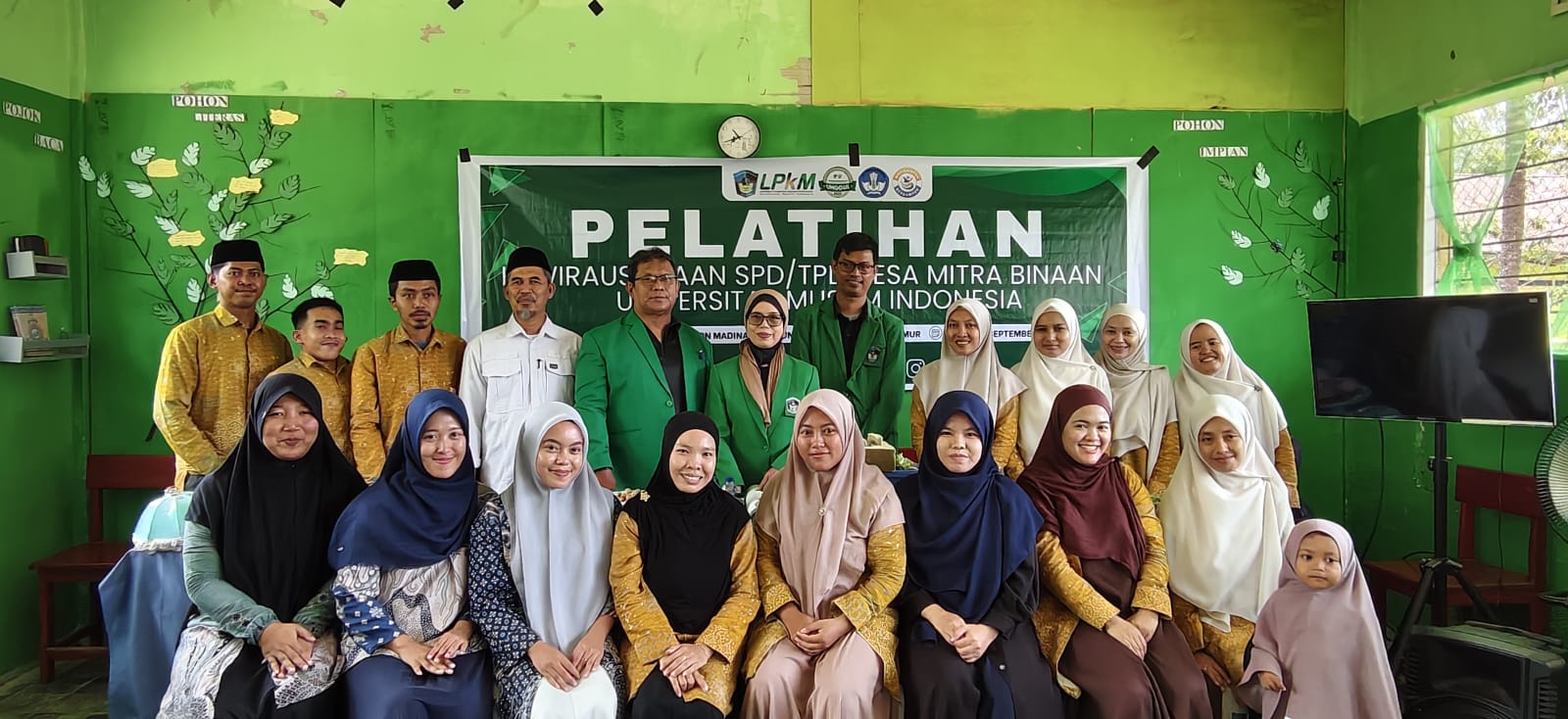
This activity was held on Wednesday, October 16 2024 and was attended by around 20 participants. And they were very enthusiastic about taking part in the training on making herbal tea preparations from a combination of cherry leaves and flowers. This PKM activity is expected to increase the knowledge of PKK mothers regarding the benefits of cherry leaves and flowers as well as increase the skills and creativity of PKK mothers in making herbal tea preparation products. And it is hoped that these PKK women can make it independently at home for self-medication and family treatment, as well as packaging herbal tea bags with economical value which can trigger the spirit of entrepreneurship to be produced to help the family's economy.