UMI PKM Lecturer Team Educates on Utilizing Cardboard Waste into Economically Valued Products
One of the significant environmental problems that needs attention after plastic waste is piles of cardboard waste. However, cardboard waste can be processed and recycled into useful items. It takes knowledge and skills to process cardboard into beautiful and economically valuable handicrafts. For this reason, the team of Community Service (PKM) lecturers at the Indonesian Muslim University (UMI) taught and guided the residents of RT 02 RW 05, Tamangapa Village, Manggala District, Makassar City to make handicraft products made from cardboard waste.
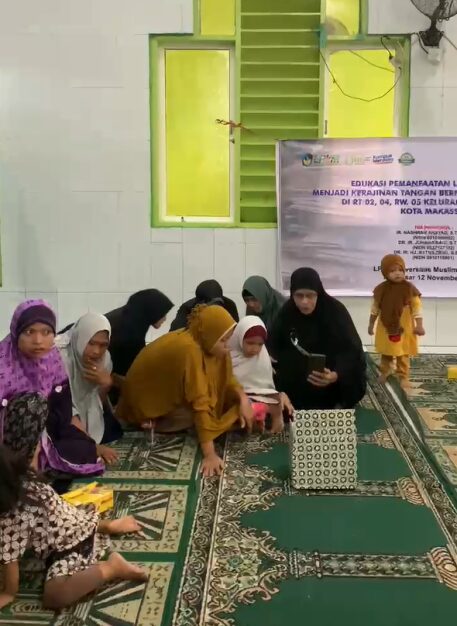
The PKM lecturer team consisting of Ir. Nashrah Arsyad, ST, MSi as chairman, with members Prof. Dr. Hj. Ratna Dewi, SE, M.Si and Dr. Ir. Juhana Said, ST, MSi, through the Community Service Institute (LPkM), seeks to increase public awareness of the importance of waste management.
"Trash is a global problem, including in Makassar," said Nashrah. Cardboard is a type of waste that is produced quite a lot. Cardboard waste that is not managed properly can pollute the environment and diminish the beauty of the city. Therefore, continuous efforts are needed to manage cardboard waste. Recycling cardboard into profitable handicraft products is one solution.
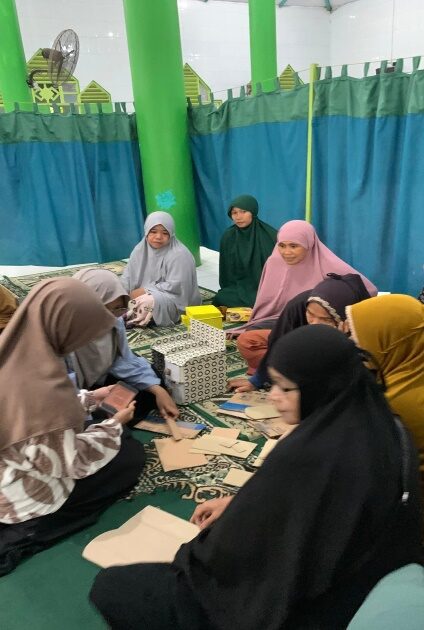
Nashrah explained that, "Using cardboard waste into handicraft products is a wise solution for turning waste into items that have sales and aesthetic value such as pencil holders, photo frames, drawers, room decorations, bed lamps, and so on,"
Nashrah revealed that during the implementation stage, the PKM lecturer team provided counseling and guidance to partner residents, starting from providing materials, discussions, demonstrations and making handicraft products from cardboard waste. Apart from that, it introduces several examples of products made from cardboard waste and practical marketing techniques directly.
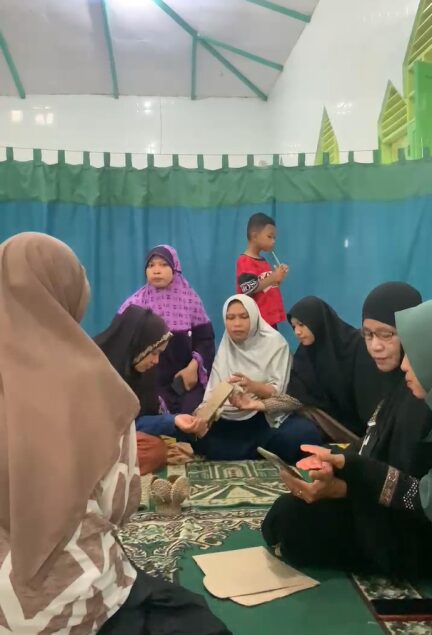
"This training activity is very effective in improving participants' skills in processing cardboard waste into handicraft products. Participants are very enthusiastic about participating in the activity and are able to produce various products that have functional and aesthetic value," he explained.
"Apart from increasing partners' awareness and concern for the environment, this activity also improves the economic welfare of the community, especially for scavengers and housewives. Converting cardboard waste into economically valuable products has shown that the training participants are very interested and creative," he added.