UMI Lecturer Team Conducts Ergonomic Work Environment Improvement Program at the Makassar Tempe Factory
The Indonesian Muslim University (UMI) Lecturer Team consisting of Ir. Nur Ihwan Safutra, Ir. Takdir Alisyahbana, Ir. Asrul Fole, and student Iwan Anzari Rusli carried out a community service program entitled "Improving the Ergonomic Environment to Increase Productivity" at the Tempe Enak Factory, Lorong 4 No.3, Bara-Baraya Utara, Makassar City, Saturday (16/11/24). This activity aims to help workers create an ergonomic work environment, so as to reduce the risk of injury and increase the efficiency of tempeh production.
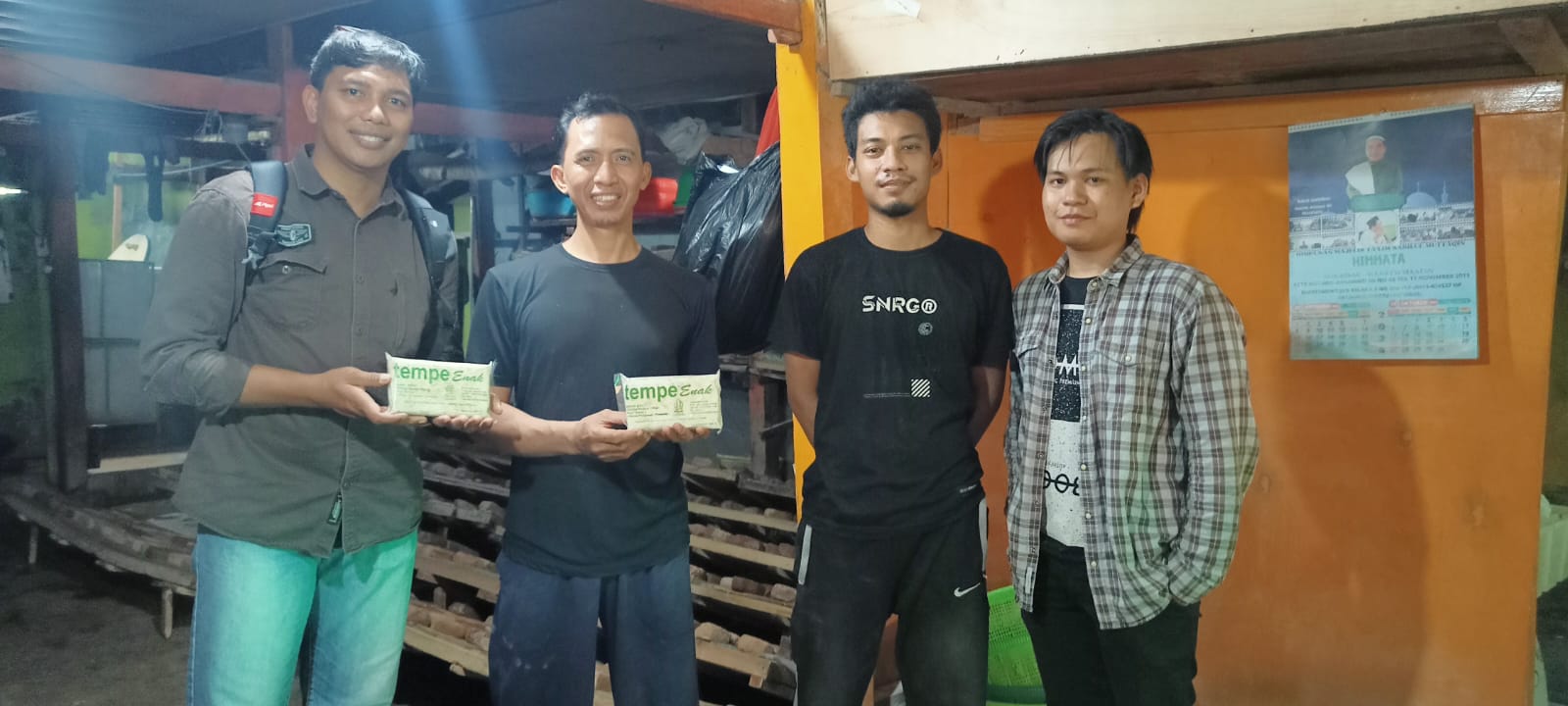
In this activity, the team carried out a comprehensive analysis of various aspects of working conditions in the factory, such as work tool design, work posture, lighting, ventilation and noise. Team leader, Ir. Nur Ihwan Safutra, explained that ergonomics issues are often ignored by small industries such as tempeh factories, so that many workers have to work in uncomfortable positions and in environments that are not optimal. "We want to help them with a simple, cheap, but effective solution," said Nur Ihwan.
The community service team also introduced several innovations to support increased productivity at the tempe factory. Some of the solutions implemented include the use of digital room temperature measuring devices to ensure humidity in the production room is in the range of 60% - 70%, as well as measuring the temperature of tempeh products in the fermentation process so that the temperature is maintained in the optimal range of 30°C - 35°C. In addition, the team redesigned the production process by considering the equipment layout and available land area.
One of the tempeh factory workers, Panji, expressed his appreciation for the innovation implemented. According to him, the tools and work techniques taught by the community service team have helped workers work more quickly and efficiently. "Usually failure occurs when measuring temperature and heat during long work processes. With this tool, our work becomes faster and easier," said Panji.
This program is part of the Community Service Grant funded by the Indonesian Muslim University. Apart from introducing innovation, the team also provides education to factory workers about the importance of ergonomics in supporting productivity and maintaining worker health. It is hoped that this activity can become a model for other traditional tempeh industries in South Sulawesi.
The community service team hopes that the solutions that have been implemented can inspire other traditional tempe factories to start paying attention to ergonomic aspects in the workplace. "With an ergonomic working environment, worker welfare will increase, productivity will be better, and the quality of tempe products will be more optimal," concluded Nur Ihwan.