UMI Lecturers Implement PKM by Training Maros Coastal Communities to Make Brains and Entrepreneurs
Umi lecturers carry out PKM as part of the Tri Dharma of Higher Education in the form of Community Service (PKM) activities. Communication Science Lecturers at Indonesian Muslim University (UMI) again show their commitment.

This is what is meant by empowering the community through PKM activities with the theme "Educative Communication for Coastal Communities Making Brains as Entrepreneurs in Production Houses in Pajukukang Village, Bontoa District, Maros Regency".
It was stated that the activity carried out on Tuesday (7/10) focused on training in making otak-otak, a typical South Sulawesi food, which has great potential to be developed as a home business.
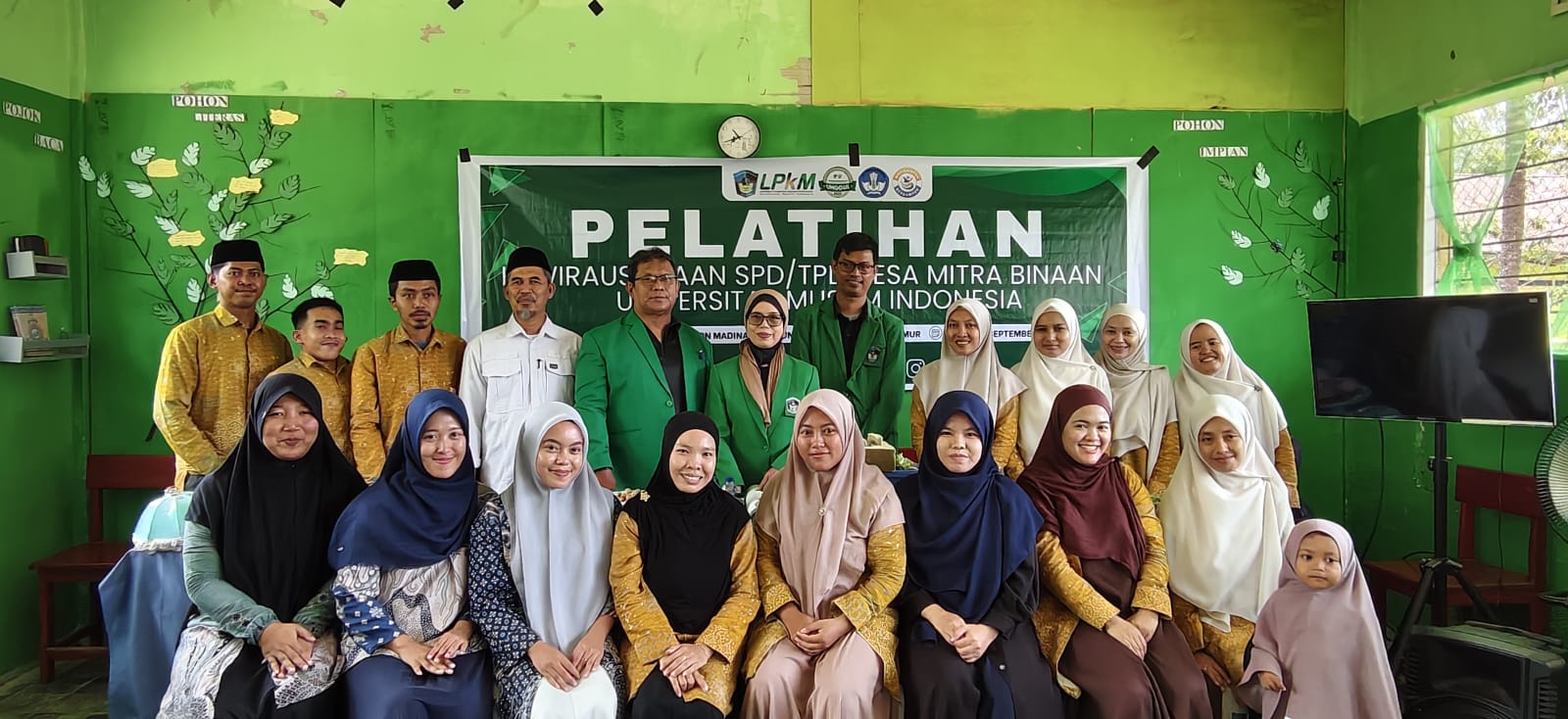
Activities led by Dr. Hadawiah, S.E, M.Si with members Dr. Mustamin Tajuddin, M.Si and Dr. Ahdan, S.Sos, M.Si was held at the Pajukukang Maros Village Production House. This event involved the majority of housewives in the area.
Training participants are provided with material on techniques for making hygienic brains with high selling value, including digital marketing strategies so that these products can penetrate a wider market.
According to Dr. Hadawiah, the main aim of this training is to improve the skills of residents so that they can exploit local potential and in the future can become independent entrepreneurial activities.

"Pajukukang Village has very supportive resources, starting from raw materials to basic skills in making otak-otak. What is needed is capacity development, both in the production process and in the marketing process," he said.
This outreach activity is part of the community service program routinely carried out by UMI lecturers to encourage local entrepreneurship. This is in line with the university's vision to become an institution that not only excels academically, but also has a direct impact on society.
The enthusiasm of the residents of Pajukukang Village was felt throughout the training. They not only gain new knowledge, but also the motivation to start their own business. Apart from training, UMI also provides production equipment in the form of fish grinders and ready-to-use packaging, which is expected to make it easier for participants to start a business more professionally.
Through this training, Pajukukang Village can become a model village in the field of local food-based entrepreneurship. With support from UMI academics and the community's entrepreneurial spirit, this can help increase people's income in Pajukukang Village.
As a university that has an impact on society, Indonesian Muslim University continues to innovate in responding to the challenges of the times and ensuring that science can be a driving force for socio-economic change in society.