Education on Verticulture Technology for Vegetable Plants in Yards for the Nurhidayah Taklim Assembly in Pai Village, Makassar City
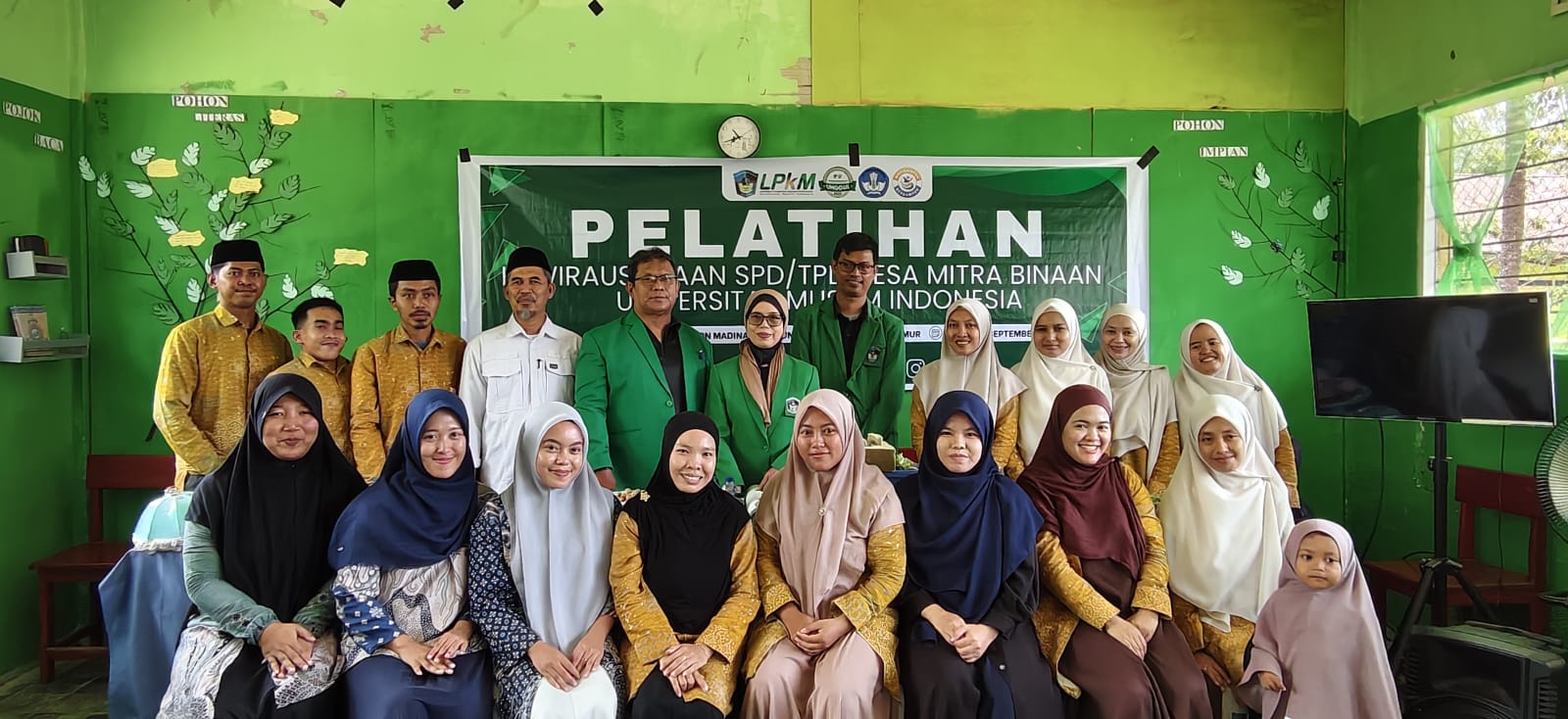
In order to support household food security in urban areas, the Community Service Team (PKM) of the Indonesian Muslim University (UMI) chaired by Dr. Ir. Suraedah Alimuddin and Dr. Ir. A. Fatmawati, MSi and two students as companions carried out verticultural technology education and training activities for members of the Nurhidayah Taklim Council (MT), Pai Village, Biringkanaya District, Makassar City. This activity is part of UMI's efforts to transfer technology to the community so that they can utilize small plots of land to become a source of healthy and productive food.
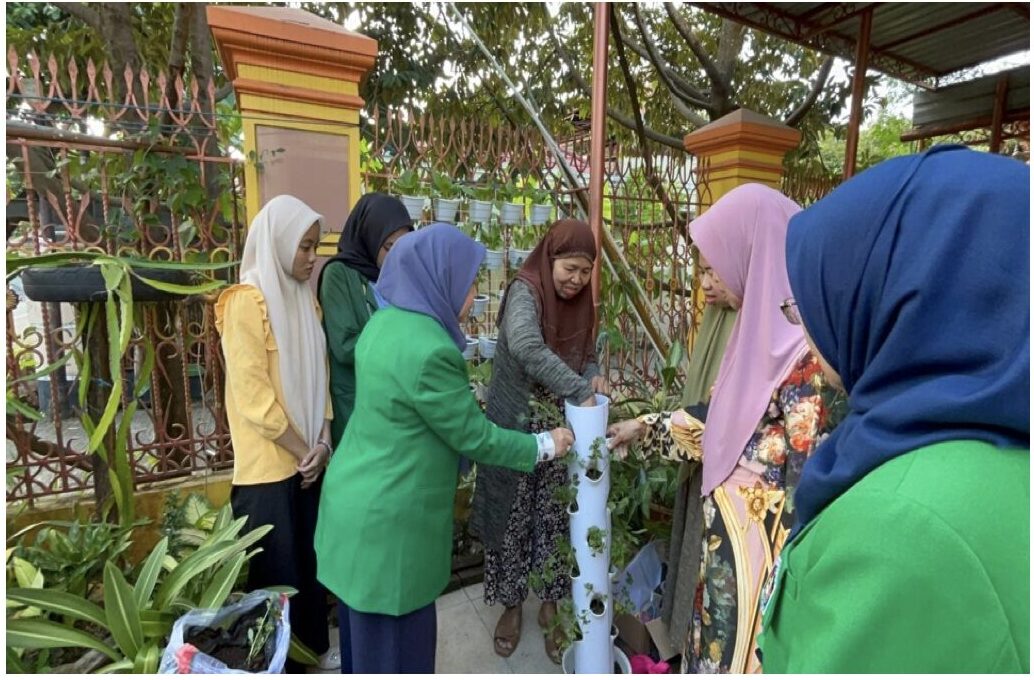
Verticulture is a method of cultivating plants vertically that utilizes upward space, so it is very suitable to be applied in urban environments with limited land. This system is not only efficient in terms of space, but also has aesthetic value and is environmentally friendly because it can use used materials such as bottles or plastic cups as planting containers. However, before this activity was carried out, most of the members of the Nurhidayah Taklim Council did not have sufficient knowledge and skills in implementing the verticulture planting system.
This PKM activity is carried out through several stages, including counseling, training and demonstrations, direct mentoring, as well as evaluation and monitoring of partners' capacity building. Through counseling, participants gain an understanding of the basic concepts of verticulture, its benefits for food security, as well as basic techniques for caring for vegetable plants. The training and demonstration stages were carried out directly with the practice of installing verticulture installations, sowing seeds, planting seeds, and maintaining plants. Meanwhile, mentoring plays an important role in ensuring participants are able to apply this technology independently in their respective homes.
The results of this activity show a significant positive impact. Partners' knowledge and skills have increased significantly, marked by their ability to maintain plants using a simple verticulture system. Partners are also increasingly creative in utilizing household plastic waste into functional and aesthetic planting containers. More than that, this activity raised the spirit of food independence among members of the taklim assembly, who are now able to grow fresh vegetables such as kale, spinach and mustard greens in their own yards.
Partners expressed high appreciation for the implementation of this PKM activity. They expressed their satisfaction and gratitude for the knowledge and assistance provided by the UMI lecturer team. This enthusiasm is also reflected in their commitment to continue the practice of verticulture independently and even expand it to the surrounding environment. This activity received full support from the surrounding community because it was considered capable of providing real solutions in utilizing limited land and supporting household food security programs in urban areas.
With the success of this activity, the UMI PKM Team hopes that verticulture technology can continue to be developed as a model for sustainable urban community empowerment. Through collaboration between universities and the community, simple agricultural innovations such as verticulture can be a real step towards food independence and improving family welfare in urban environments.
We, from the service team, would like to thank the Indonesian Muslim University Waqf Foundation as the funder and the UMI Community Service Institute (LPkM) for all their guidance so that the implementation of this activity can run well. To the chairman and members of MT. Nurhidayah, thank you for your cooperation.