UMI Innovation: Gummy Candy from Local Plants to Prevent Stunting
Indonesian Muslim University (UMI) through the community service team from the Directorate of Research and Community Service (DPPM) has succeeded in presenting unique innovations in efforts to prevent stunting. By utilizing local plants, the UMI team developedgummy candynutritious that is not only delicious and liked by children, but also economical and rich in health benefits.
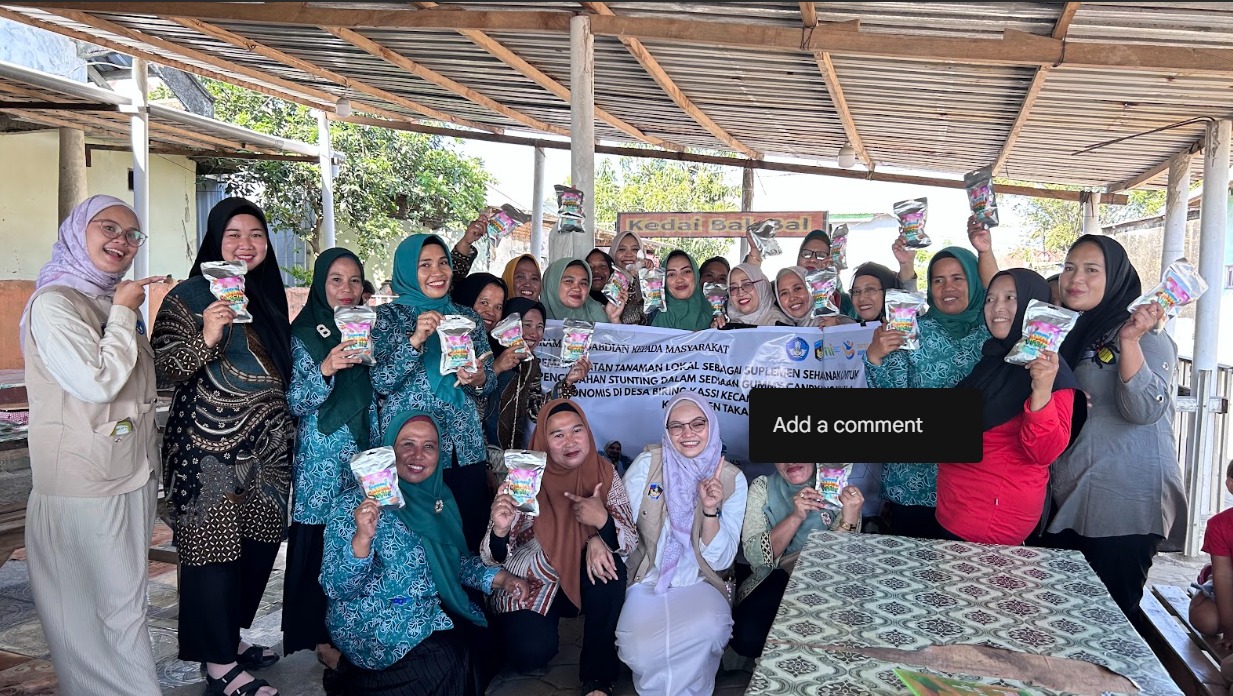
This service activity was carried out at the Biring Kassi Village office, North Galesong District, Takalar Regency. The service team is led byapt. Hamsinah, S.Farm., M.Si.with membersAminah, S.Farm., M.Sc., Prof. Dr. Suriyanti, SE., MM., and supported by studentsTeza SwastikaAndNur Afni Rahmadani.
According to the service team leader, selectiongummy candyas an innovation product is not without reason.
"Our main goal is to increase public knowledge, especially PKK women, about how to process local plants into nutritious food that is popular with children. Gummy candy was chosen because children like it, so that nutritional intake can be met in a fun way,"said apt. Hamsinah.
This program received a warm welcome from the people of Biring Kassi Village. Village head,H. Murdalin, S.Pd., M.Pd., and Chairman of the PKK,Hj. Marin, S.Pd., present directly to provide support. The PKK women and the community seemed enthusiastic about participating in every stage of the training, from counseling to manufacturing practicegummy candy.
This community service is carried out through several stages of activities, including:
- Socialization and education regarding stunting and its prevention.
- Introduction to the benefits of local plants with high nutritional value.
- Manufacturing traininggummy candyaccording to food safety standards.
- Standardized product packaging.
- Assistance and evaluation so that village partners are able to producegummy candyindependently.
- Planning for program continuity even though the service team has completed its tasks.
Apart from contributing to reducing stunting rates, this innovation also encourages the use of local plants as a source of functional food with economic value. That way, the community will not only be helped in terms of health, but also by increasing family income.