UMI DPPM TEAM Encourages PKK Economic Independence Through Production Training in Making Herbal Capsules from Moringa and Coriander Leaves, Benteng Gantarang Village, Bulukumba Regency
Bulukumba, 22 August 2025 – Indonesian Muslim University (UMI) through the Directorate of Research and Community Service (DPPM) is back with real steps in empowering village communities, especially PKK women. After the first stage of socializing the benefits of Moringa and coriander plants as herbal ingredients, now the UMI DPPM TEAM is continuing the program at the implementation stage by holding training on the production of Moringa and Coriander Leaf herbal capsules in Benteng Gantarang Village, Bulukumba Regency.

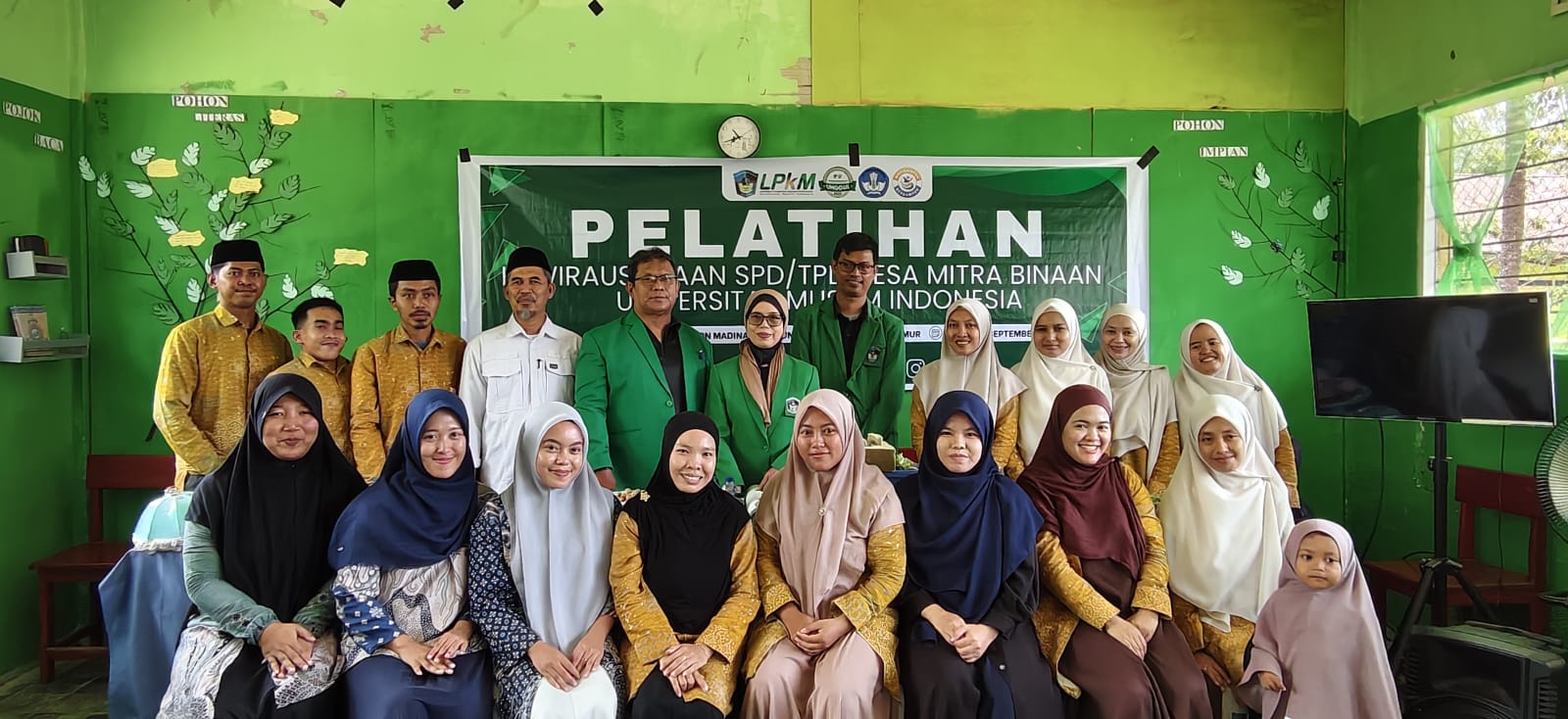
This activity, which received full support from the Institute for Research and Community Service (LPkM), took place on Friday, August 22 2025, and was enthusiastically attended by PKK women and village health cadres. In this training, participants not only get theory, but also directly practice the entire process of making capsules, starting from drying moringa and coriander ingredients, grinding until smooth, sieving to produce quality powder, to the capsule packaging stage by paying attention to hygiene standards.
The activity implementing team consists of Dr. Ir. Sitti Rahbiah, M.Si, Dr. Asdar Djamereng, SE., MM, and Lilis Nur Hayati, S.Kom., M.Eng., MTA, who were also accompanied by three students, namely Andi Citra Paraswati, Vikria, and Mush'ab Al Mubarak. The presence of students is not only as a companion, but also as a form of field learning so that they are able to directly experience the process of community service
as well as being a knowledge transfer agent.
In his speech, Dr. Sitti Rahbiah emphasized the importance of herbal processing based on local potential. According to him, the combination of moringa and coriander is very promising. Moringa is known as a superfood because it is rich in protein, vitamins and antioxidants, while coriander has bioactive compounds that are beneficial for digestive health, metabolism and immune system. "Through this implementation, we hope that the people of Benteng Gantarang Village can produce herbal products that are hygienic, useful, and competitive in the market. This activity will not only improve the quality of health, but also strengthen economic independence based on local potential," he said.
Apart from technical aspects, participants were also given insight into production cost analysis, marketing strategies, and opportunities for developing herbal products in an increasingly open market. This is important so that the Moringa-coriander capsule product does not stop at the household production stage, but can develop into a sustainable micro-enterprise.
Chairman of the PKK Benteng Gantarang Village, Hj. Mariyani, S.Pd, expressed her gratitude for this training. According to him, PKK women now understand more and more how to use moringa and coriander which have grown in abundance around the village, but have not been processed optimally. "We feel very helpful. This activity opened our eyes to the fact that simple ingredients found around us can actually be processed into health products with economic value. We hope that this can be the start of a new business that can support the family's economy," he explained.

This training is clear evidence of UMI's commitment to implementing the Tri Dharma of Higher Education, especially in the field of community service. With ongoing assistance and guidance, it is hoped that Benteng Gantarang Village can develop into a competitive herbal production center and become an inspiring model for other villages in Bulukumba Regency. This program also emphasizes the role of universities in bridging science with community needs, while providing real solutions for improving health and the economy based on local potential.